
Trump's 300,000-ton beef import quota draws GOP rancher backlash
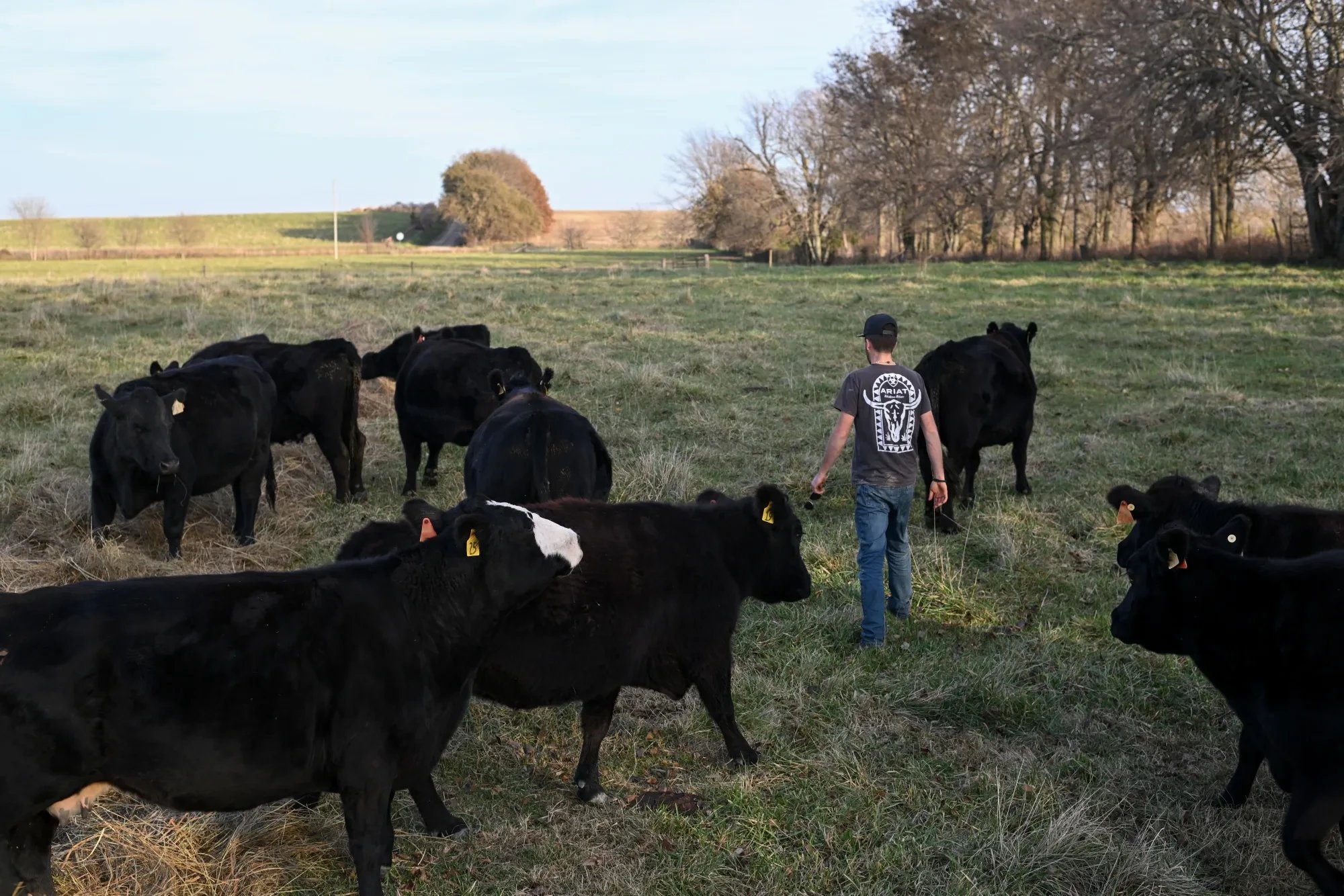
This digest was compiled by AI from multiple sources — links to the originals are below.
President Donald Trump's Aug. 26 proclamation adds 300,000 metric tons of lean beef trimmings to the lower-tariff quota for 90 days beginning Sept. 1. Rep. Troy Downing (R-Mont.) warned the move risks pulling 'the rug out from underneath' U.S. ranchers. The White House says the imports are for ground beef and encouraged sales at a 25% discount.
Key Facts
- Trump's Aug. 26 proclamation adds 300,000 metric tons of lean beef trimmings to the lower-tariff quota for 90 days beginning Sept. 1, split into three 100,000-ton tranches.
- Rep. Troy Downing (R-Mont.) warned that the import expansion risks pulling 'the rug out from underneath' U.S. ranchers.
- USDA counted 94.2 million cattle and calves on U.S. farms July 1, including 28.5 million beef cows, down 1% from a year earlier.
- Kansas State University agricultural economist Glynn Tonsor said the added imports equal roughly 3% of annual U.S. beef consumption, calling the scale 'pretty small'.
- The National Cattlemen's Beef Association said the move sacrifices 'long-term stability for short-term messaging'.
Rancher Backlash
Rep. Troy Downing (R-Mont.) told NewsNation on Tuesday that ranchers 'need to have market stability' and that falling prices 'hurt them' when Washington changes markets as cattle reach buyers. Sen. Deb Fischer (R-Neb.) said last week that cheaper groceries cannot come 'at the expense of American producers'. Montana Sen. Tim Sheehy said Trump's 'heart is in the right place' but warned imports could harm ranching families. The National Cattlemen's Beef Association blasted the import plan as election-year politics and said it sacrifices 'long-term stability for short-term messaging'.
Market Impact
USDA counted 94.2 million cattle and calves on U.S. farms July 1, including 28.5 million beef cows, down 1% from a year earlier. Reuters reported that drought, wildfires and Mexican cattle restrictions helped drive supplies to a 75-year low and beef prices to records. Kansas State University agricultural economist Glynn Tonsor told the Associated Press in August that the added imports equal roughly 3% of annual U.S. beef consumption, calling the scale 'pretty small'. David Anderson, a professor of agricultural economics at Texas A&M University, questioned whether exporters could redirect that volume within 90 days.
Administration Response
Trump has defended the policy, saying, 'We want to get the beef prices down,' while insisting ranchers 'need a little help'. His administration has rolled out support for smaller processors and herd rebuilding, including a $500 million meatpacking initiative and new USDA loan and grazing measures.
1 source
Time · lag behind first