
Nepal's military stretched beyond limits as climate disasters mount
This digest was compiled by AI from multiple sources — links to the originals are below.
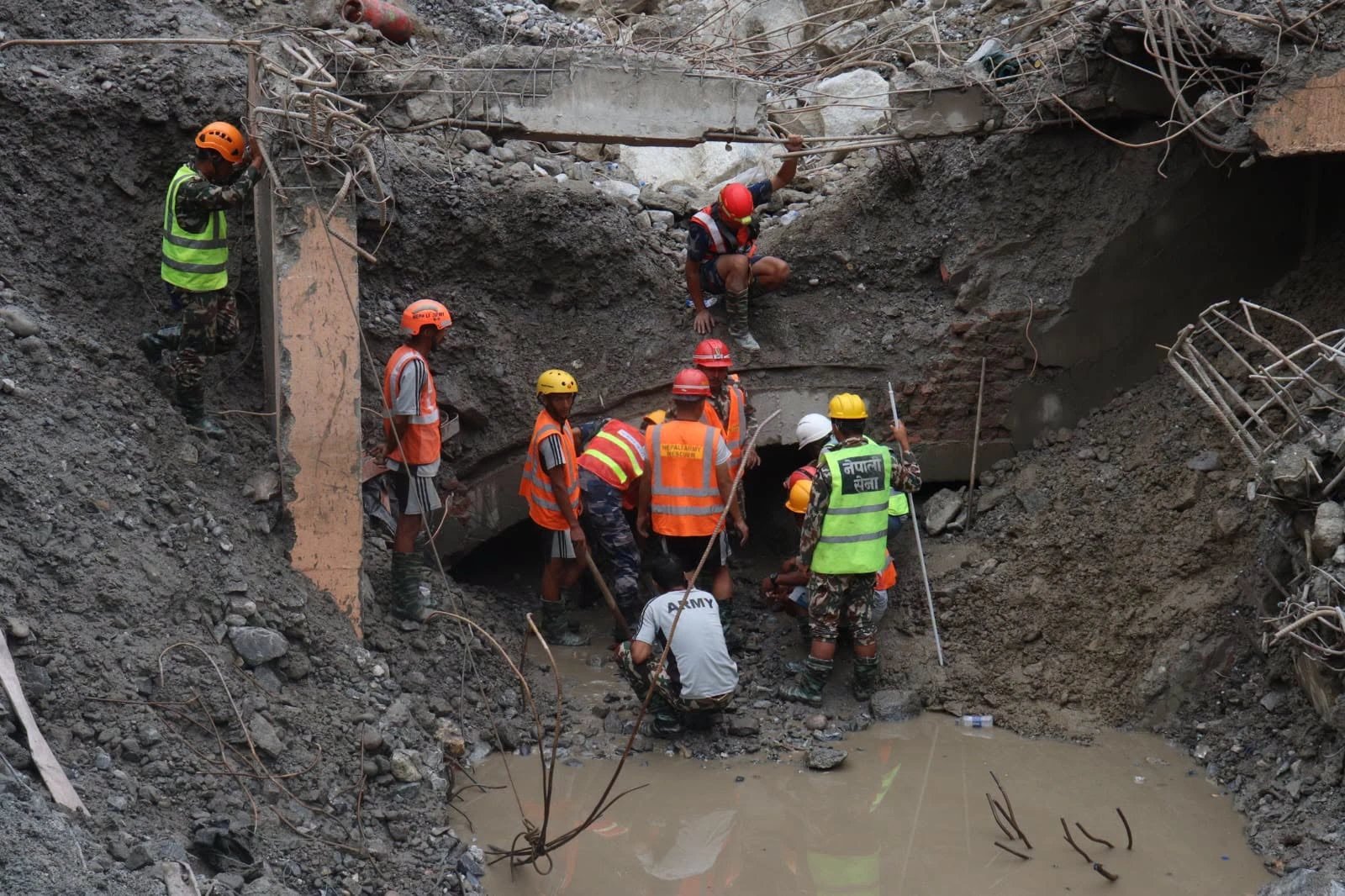
Nepal deployed more than 20,000 security personnel after an August 26 avalanche-triggered flood destroyed border infrastructure along the Bhotekoshi and Trishuli rivers. At least 85 security force members remain unaccounted for a week after the disaster. The deployment is possibly the largest since the 2015 earthquake response.
Key Facts
- More than 20,000 Nepali security personnel were deployed after the August 26 flood, possibly the largest such deployment since the 2015 earthquake.
- 85 security force members — 45 Nepal Army, 28 Nepal Police, and 13 Armed Police Force — remain unaccounted for a week after the incident.
- Three police posts in Timure, Rasuwagadhi, and Syafrubesi were damaged or swept away.
- The National Security Policy of 2016 identifies climate change and the environment as part of Nepal's national interest.
Disaster Response Deployment
The Nepali government deployed the Nepal Army, Nepal Police, and Armed Police Force as first responders after the August 26 flood. More than 20,000 security personnel were assigned to the response, possibly the largest such deployment since the aftermath of the 2015 earthquake. The collapse of local and provincial governments and the inaccessibility of flood-affected areas prompted the government to rely on security forces. The Constitution of Nepal 2015 includes a provision for deploying the military in national crises arising from disasters and development projects.
Casualties and Missing Personnel
A week after the flood, 85 security force members remain unaccounted for, including 45 from the Nepal Army, 28 from the Nepal Police, and 13 from the Armed Police Force. Nepal Police personnel went missing while circulating a notice to downstream communities near the border and customs area. Nepal Army personnel were on duty at Langtang National Park and stationed at multiple hydropower projects. Armed Police Force members went missing from a border post, and three police posts in Timure, Rasuwagadhi, and Syafrubesi were damaged or swept away.
Climate Crisis and Military Capacity
The National Security Policy of 2016 considers climate change and the environment as part of Nepal's national interest. The ad hoc stretching of security forces into disaster response can expose them to vulnerabilities and capacity constraints amid the climate crisis. The absence of an early warning system and the lack of cross-border disaster communication complicated the response. The recent flood must serve as a case study in the growing complexity of military engagement in disaster governance and preparedness.
1 source
Time · lag behind first