
Physicists measure quantum shift from falling atoms in first
This digest was compiled by AI from multiple sources — links to the originals are below.
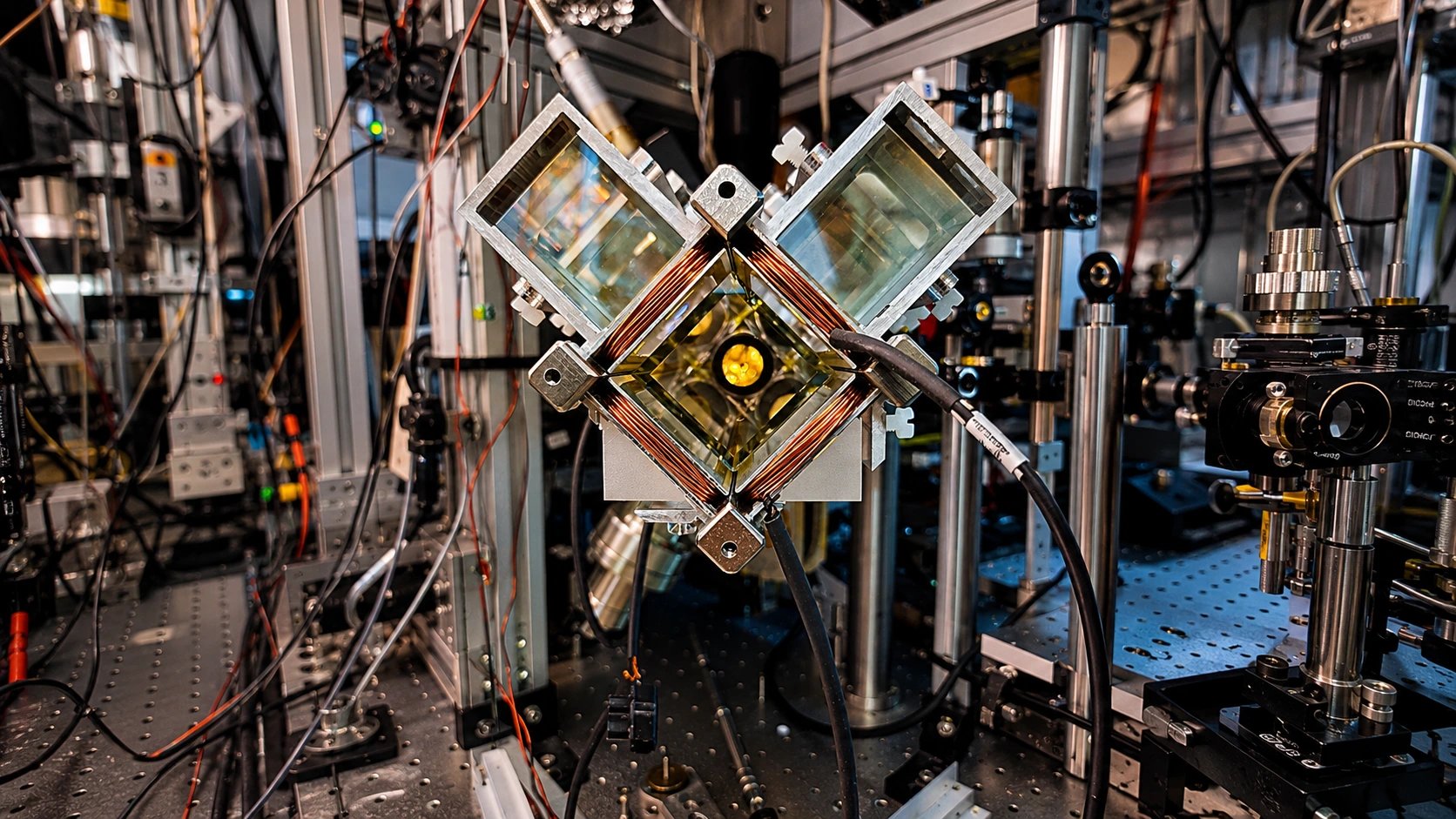
Physicists measured the quantum shift an object acquires by falling through Earth's gravity for the first time. Researchers placed ultracold rubidium atoms into a superposition, with one path in free fall and the other motionless. Recombining the atoms revealed an almost imperceptible difference between the two paths.
Key Facts
- Physicists measured the quantum shift an object acquires by falling through Earth's gravity for the first time.
- Researchers placed ultracold rubidium atoms into a superposition, with one path in free fall and the other motionless.
- Recombining the atoms revealed an almost imperceptible difference between the two paths.
The Experiment
Researchers placed ultracold rubidium atoms into a superposition, a quantum state in which a single particle takes two paths at once. One path put the atom in free fall while the other kept it motionless. Recombining the atoms revealed an almost imperceptible difference between the two paths.
Einstein's Prediction
The effect was predicted almost a century ago by Einstein's relativity but never observed until now. The measurement confirms Einstein's 'happiest thought' that gravity and quantum physics are compatible.
1 source
Time · lag behind first