
Czech D35 excavation uncovers 22,000 bags of Iron Age artifacts
This digest was compiled by AI from multiple sources — links to the originals are below.
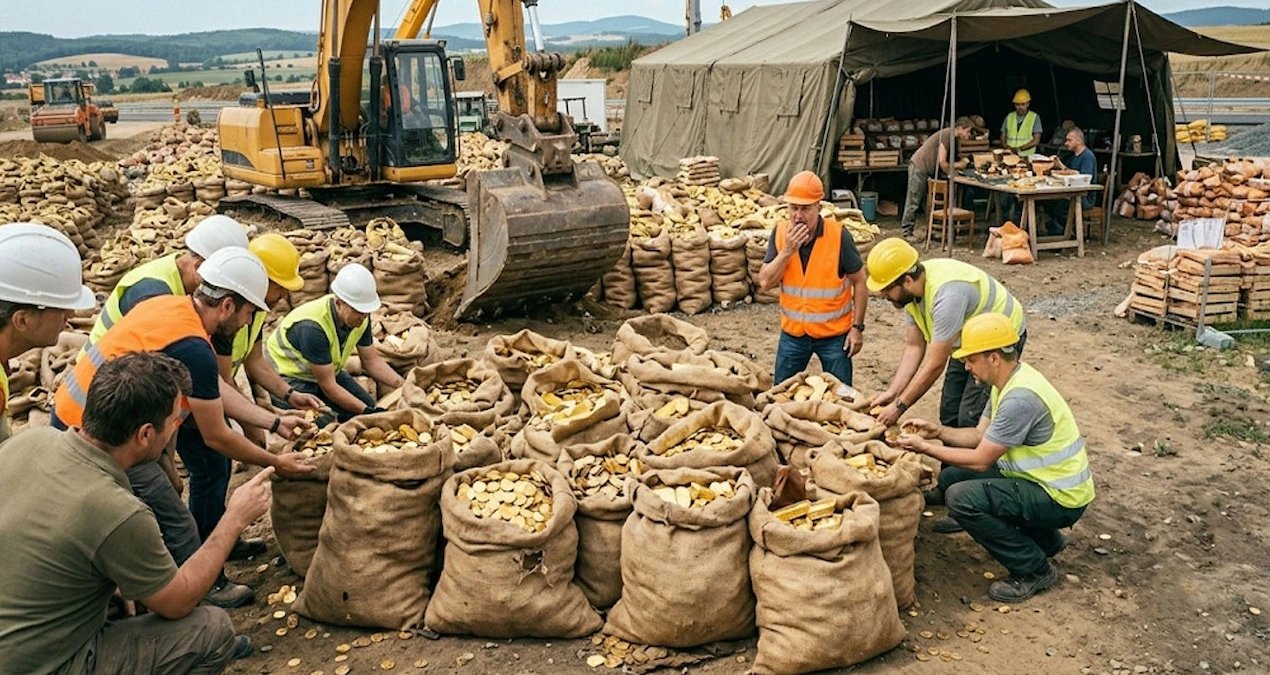
Archaeologists excavating along the D35 motorway in eastern Bohemia have uncovered a large Iron Age settlement and a hoard of Celtic coins, amber jewelry, and luxury ceramics. The finds, dated to the 2nd century BC, fill approximately 22,000 bags. The site is described as one of the largest artifact collections ever found in Bohemia.
Key Facts
- The excavation along the D35 motorway in eastern Bohemia uncovered a settlement dated to the 2nd century BC.
- Approximately 22,000 bags of artifacts were recovered, including hundreds of gold and silver Celtic coins, coin molds, amber jewelry, and luxury ceramics.
- The East Bohemian Museum stated the site is one of the largest artifact collections ever found in Bohemia.
- The settlement served as a key trading hub on the ancient Amber Road connecting the Baltic Sea and the Mediterranean.
- No defensive walls were found at the site, indicating a trade-focused settlement rather than a fortified stronghold.
The Excavation
Routine archaeological surveys before construction of the D35 motorway in eastern Bohemia revealed a large Iron Age settlement. The excavation was led by the East Bohemian Museum. Researchers uncovered hundreds of gold and silver Celtic coins, coin molds, amber jewelry, luxury ceramics, house foundations, workshops, and at least one religious temple. The recovered artifacts filled approximately 22,000 bags. Excavation director Prof. Dr. Tomas Mangel noted that the density of finds in the upper soil layer far exceeded standard levels.
Trade Hub on the Amber Road
The settlement is dated to the 2nd century BC. The East Bohemian Museum stated the site was a critical trading center on the ancient Amber Road linking the Baltic Sea and the Mediterranean. Bronze and iron pins, bracelets, belt fittings, and glass beads were among the finds. Researchers noted the absence of defensive walls, which became common in later periods. The settlement is assessed as a key node before the emergence of centralized fortified areas.
Artifact Preservation and Display
The recovered artifacts are now held at the East Bohemian Museum. A temporary exhibition is planned, followed by a more comprehensive display after cataloging is completed. The exact identity of the Celtic group remains unconfirmed due to the absence of written documents. The region is traditionally associated with the Boii tribe, but current data only indicate a general Central European settlement.
1 source
Time · lag behind first