
Croatian shipwreck yields over 600 grams of Byzantine gold
This digest was compiled by AI from multiple sources — links to the originals are below.
Underwater excavations near Croatia's Mljet Island recovered over 600 grams of gold artifacts from a shipwreck dated to the late 7th or early 8th century. The finds include four gold belt sets, coins from four Heraclian emperors, and a gold signet ring depicting an emperor. Researchers believe the ship carried a high-ranking Byzantine official and sank while seeking shelter in Polače Bay.
Key Facts
- The gold artifacts recovered from the wreck weigh more than 600 grams in total.
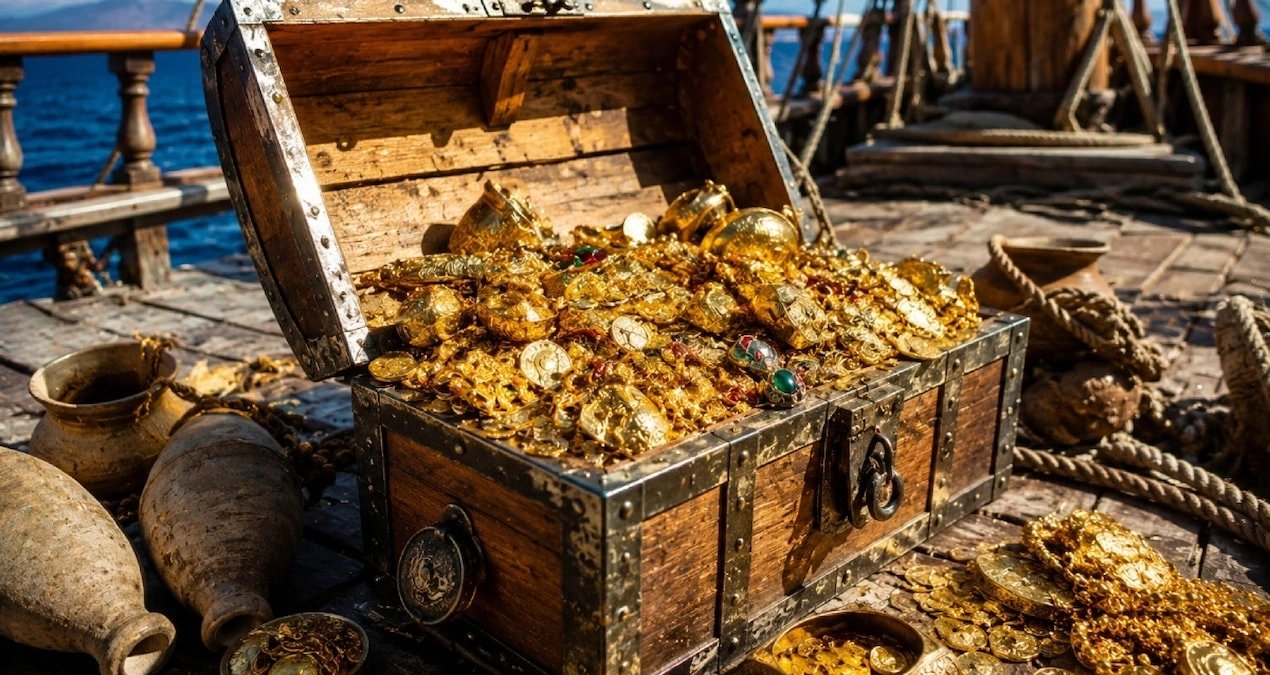
- Four gold belt sets with buckles and fittings set with rubies, emeralds, and pearls were among the most striking finds.
- Gold coins from four different emperors of the Heraclian dynasty were found in the wreck.
- A gold signet ring bearing an imperial portrait suggests the presence of a high-ranking official authorized to seal documents in the emperor's name.
- The ship also carried amphorae, ceramic bowls, jugs, plates, trade scales, and ivory fragments, indicating both passenger and commercial cargo.
The Gold Finds
The most notable items recovered from the wreck are four gold belt sets. Some of the gold buckles and belt fittings are set with rubies, emeralds, and pearls. Such ornate belts were used by high-ranking Byzantine officials of the period. After cleaning and restoration, the gold artifacts weigh more than 600 grams in total. According to research director Igor Miholjek, this is the largest amount of gold ever recovered from a Mediterranean shipwreck.
Imperial Connection
Gold coins from four different emperors of the Heraclian dynasty were found in the wreck. The coins provided researchers with important clues for dating the ship's sinking. Among the most significant finds is a gold signet ring bearing an imperial portrait. Researchers believe such a ring could not have been used by an ordinary person. The ring's owner may have been a high-ranking official with authority to seal documents in the emperor's name.
Ship and Cargo
The ship carried not only gold and jewelry but also amphorae, ceramic bowls, jugs, plates, trade scales, and ivory fragments. This indicates the vessel transported both passengers and commercial cargo. Researchers believe the ship may have sunk while trying to reach the sheltered Polače Bay near Mljet. The exact cause of the sinking is unknown, but sudden and violent winds in the area are considered a possible factor. Examination of the recovered artifacts continues, with researchers focusing on ceramics and amphorae to determine the ship's origin, destination, and the identity of the person traveling with the gold.
1 source
Time · lag behind first