
Toxic wildfire haze spreads across Southeast Asia as Indonesia fires intensify
This digest was compiled by AI from multiple sources — links to the originals are below.
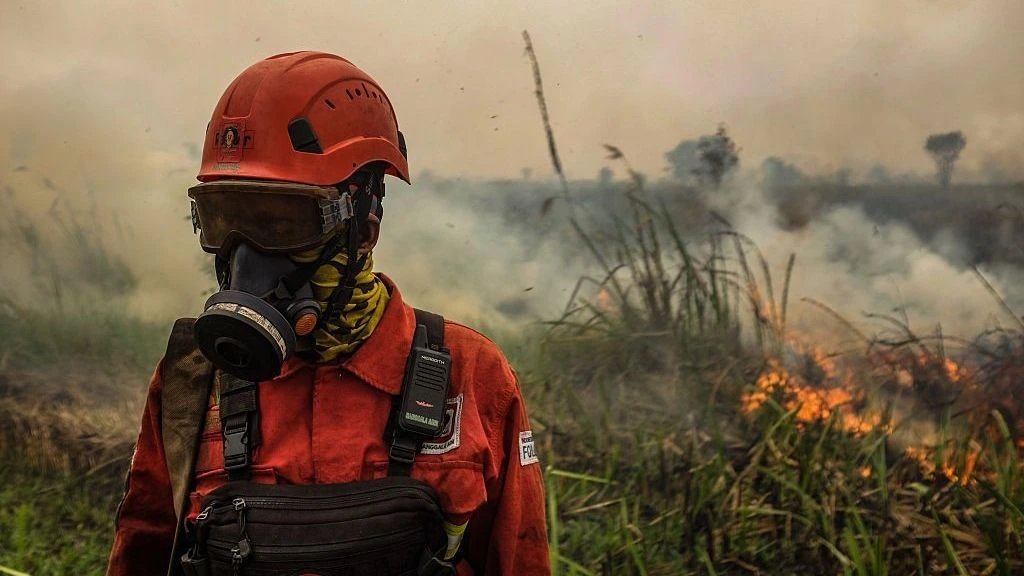
Toxic wildfire haze from Indonesia has spread across Malaysia, Singapore, and the Philippines, exposing millions to pollution more than 15 times WHO recommended levels. Indonesia's Health Ministry recorded over 50,000 respiratory infection cases linked to the fires between July and August. The crisis is exacerbated by a 'super' El Niño intensifying drought conditions.
Key Facts
- Indonesia's Health Ministry recorded over 50,000 respiratory infection cases linked to land and forest fires between July and August.
- More than 12,000 of those cases are children under the age of five.
- Pollution in some areas has exceeded 15 times the World Health Organization's recommended level.
- Fires have been burning across Sumatra and Indonesian Borneo since mid-July, underpinned by a 'super' El Niño.
- Malaysia has reported rising cases of asthma and conjunctivitis amid worsening air quality nationwide.
Regional Health Impact
Millions of people across large swathes of South East Asia have been exposed to the smog. In Banjarbaru, South Kalimantan, 19-year-old teaching assistant Rizma Nur Fatimah said the smog in her classroom was so thick 'you couldn't even see your own feet'. In Palawan, Philippines, residents reported itchy eyes, nose, and throat, with Dr Precious Bañas-Melad noting mild headaches among locals. Malaysia has reported rising cases of asthma and conjunctivitis as smoke drifts across the border.
Fire Origins and Drivers
Many of the ongoing fires have been burning across Sumatra and Indonesian Borneo since mid-July. A so-called Super El Niño is exacerbating drought conditions, helping the fires spread. Experts say the crisis is rooted in decades of land-use change dating back to the Suharto era, when vast areas of rainforest and peatland in Kalimantan were opened for logging and plantations. Environmental groups and government investigations have repeatedly alleged that some companies use fire as a cheap way to clear land.
2 sources
Toxic wildfire haze spreads across Southeast Asia as Indonesia fires intensify