
Archaeologists find garden traces at Jerusalem's Church of the Holy Sepulchre
This digest was compiled by AI from multiple sources — links to the originals are below.
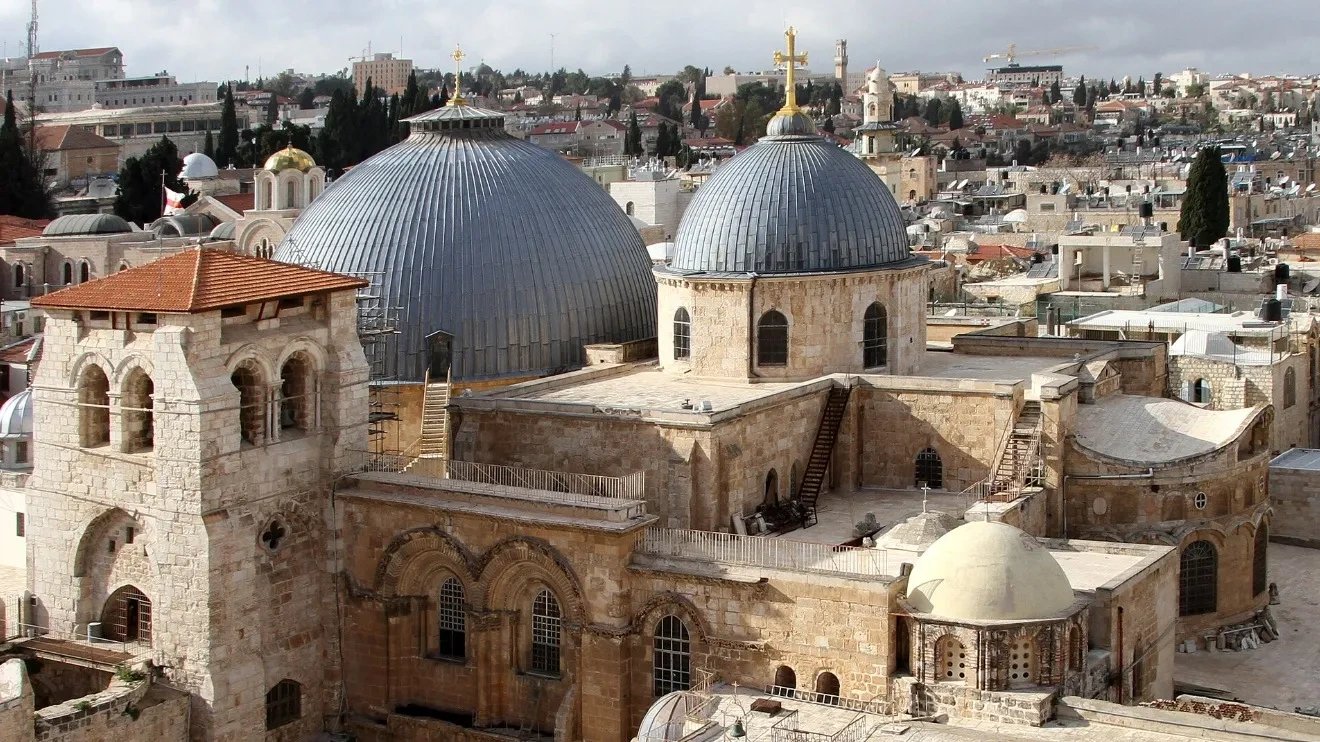
Archaeologists completed excavations beneath the Church of the Holy Sepulchre in Jerusalem and found seeds and pollen indicating a garden existed near the site of Jesus's crucifixion and burial. The findings were published in the journal Liber Annuus in a preliminary 98-page report. The evidence aligns with the Gospel of John's description of a garden and a new tomb, though researchers note it does not prove the events themselves.
Key Facts
- Excavations beneath the Church of the Holy Sepulchre in Jerusalem were completed in 2025 by a team led by Professor Francesca Stasolla of Sapienza University of Rome.
- Seeds and pollen found in layers dating to the 1st century AD indicate the area was used for agriculture and tombs after quarrying ceased.
- The findings were published in the archaeological journal Liber Annuus as a preliminary 98-page report.
- Historian Douglas Estes, not involved in the excavation, called the results significant and noted that archaeology has repeatedly confirmed geographical and historical details from the Gospel of John.
Excavation Findings
The excavation was conducted in 2025 under the direction of Professor Francesca Stasolla of Sapienza University of Rome. Plant remains were discovered in layers dating between the site's use as a quarry and its later Roman development. According to Stasolla, after quarrying stopped, the area was gradually used for agriculture and burial. The results were published in the journal Liber Annuus as a preliminary 98-page report.
Biblical Context
The Gospel of John describes a garden and a new tomb near the place of Jesus's crucifixion. The newly found evidence is consistent with that description, according to the researchers. Historian Douglas Estes, who was not involved in the excavation, said the findings are significant. Estes added that archaeology has repeatedly confirmed individual geographical and historical details mentioned in the Gospel of John. However, the evidence indicates the character of the area in antiquity and does not prove the events described in the New Testament.
1 source
Time · lag behind first