
Scientists identify why snake embryos coil into right-handed spirals
This digest was compiled by AI from multiple sources — links to the originals are below.
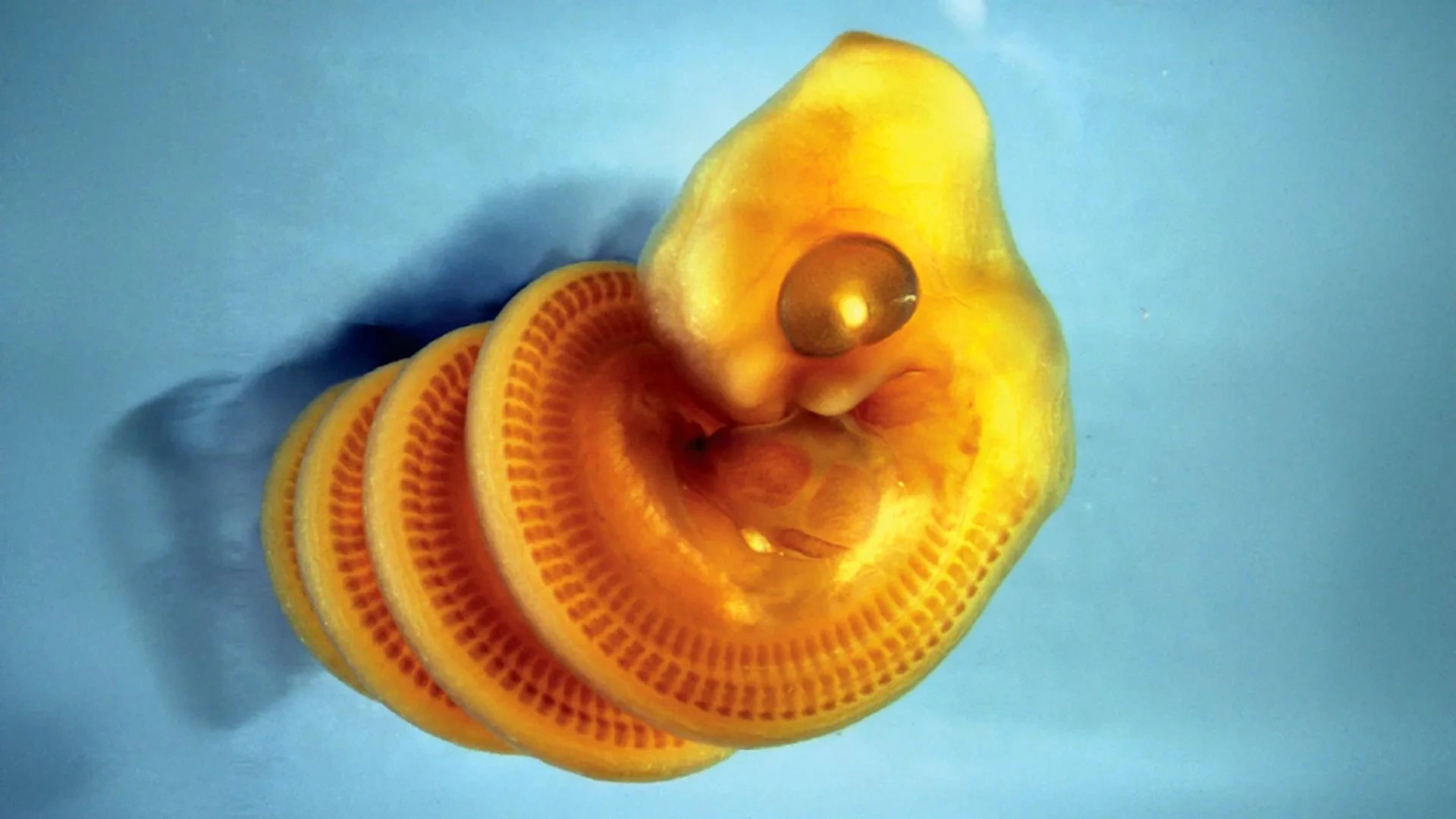
An international research team led by Canadian scientists has identified why snake embryos curl into tight spirals before hatching. The coiling appears to accommodate the exceptionally long bodies that distinguish snakes from other vertebrates. The findings, published in Current Biology, are based on examination of more than 900 embryos from 39 species.
Key Facts
- The study examined more than 900 embryos from 39 snake and other limbless squamate species.
- During the first several weeks after eggs were laid, embryos coiled only dextrally, or to the right, as viewed from head to tail.
- The research was led by Dr. Tetsuto Miyashita, evolutionary biologist at the Canadian Museum of Nature.
- Lead author Alexandra Weber is now a graduate student in zoology at the University of British Columbia.
- The project originated during the COVID lockdown in 2020 when Miyashita sought a research question students could investigate without lab access.
The Coiling Mechanism
The spiral forms as the embryo's body rapidly lengthens while its gut acts as a tether. That physical constraint causes the growing body to buckle and twist into a right-handed coil. Senior author Dr. Tetsuto Miyashita compares the process to adjusting a strap, where the longer, buckling side of the loop twists. At early stages, embryos lack muscles to move, so external physical forces drive the right-handed coiling.
Study Origins and Sample
The project grew out of the 2020 COVID lockdown when Miyashita worked from home and sought a research question for students without lab access. Miyashita asked Alexandra Weber, then at Carleton University, and two University of Ottawa undergraduates to search published research and museum databases for photographs of developing snakes. The team obtained pictures for more than 900 embryos from 39 snake and other limbless squamate species, which Miyashita calls a statistically robust sample. A clear pattern emerged: during the first several weeks after eggs were laid, embryos coiled only dextrally, or to the right, as viewed from head to tail.
Spirals in Nature
The discovery adds snake embryos to a long list of naturally occurring spiral structures that scientists are still working to understand. Lead author Alexandra Weber notes that researchers are only beginning to understand how such shapes are produced in animals, including looping intestines and snail shells. Miyashita adds that spiral forms in nature have inspired human creations ranging from rotini pasta to a barber's pole or portrayals of the biblical Tower of Babel.
1 source
Time · lag behind first