
Cambridge researchers map 124 million neural connections in male fruit fly brain
This digest was compiled by AI from multiple sources — links to the originals are below.
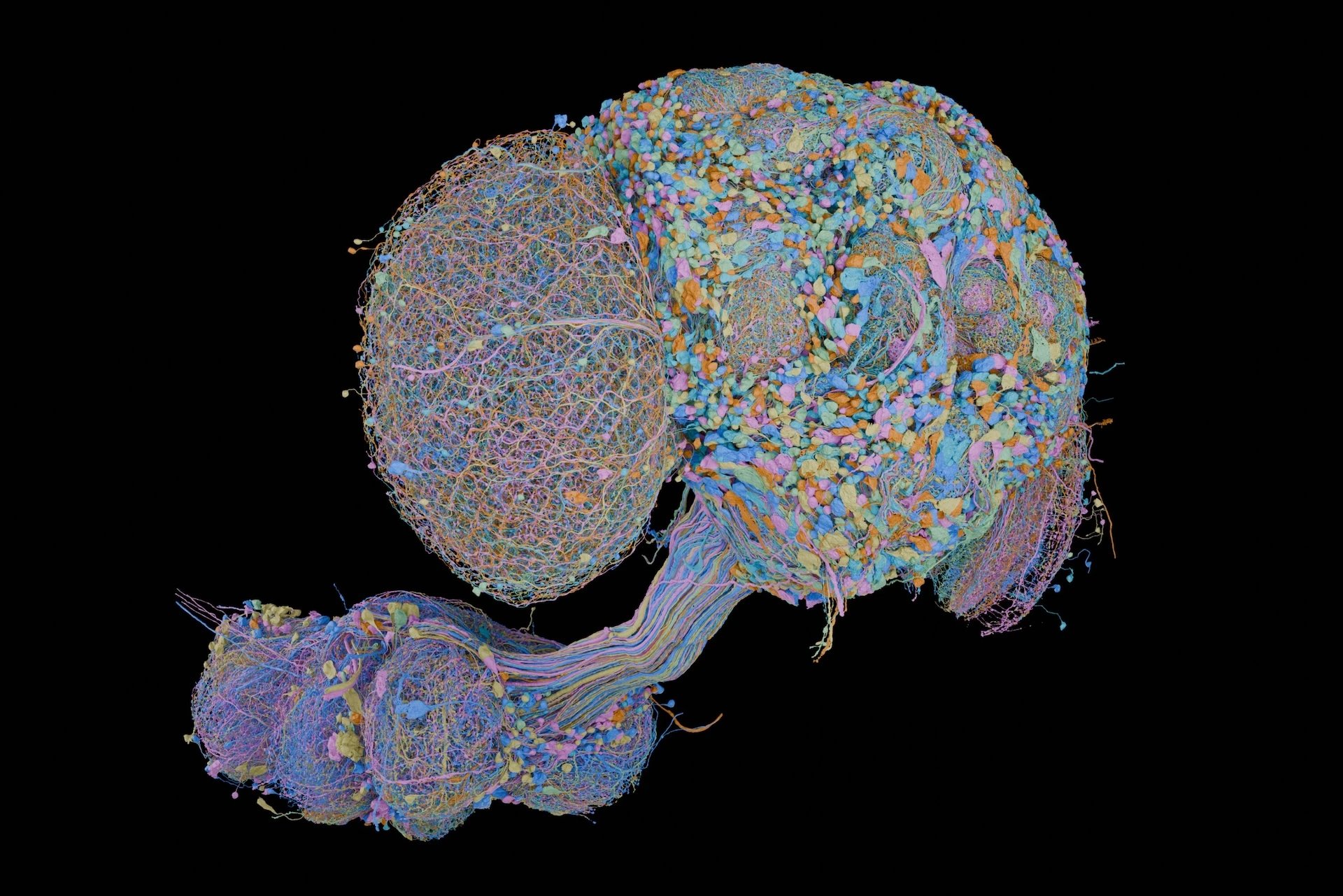
Researchers at the University of Cambridge and the MRC Laboratory of Molecular Biology have mapped all 124 million neural connections in the male fruit fly brain. The map, combined with a female brain map completed two years ago, reveals that 95% of brain cells are shared between sexes, with a 5% circuit difference underlying distinct behaviors. The work is likened to the invention of a powerful telescope for biology.
Key Facts
- The male fruit fly brain contains 124 million mapped neural connections.
- Female and male fruit fly brain cells are 95% identical, with a 5% circuit difference driving behavioral variation.
- The map is expected to aid research into autism spectrum disorder and schizophrenia.
- The fruit fly brain is the size of a pinhead yet more energy-efficient than current supercomputers.
The Brain Map
Researchers at the University of Cambridge and the MRC Laboratory of Molecular Biology mapped all 124 million neural connections in the male fruit fly brain. The map was combined with a female fruit fly brain map completed two years ago. The combined dataset reveals that 95% of brain cells are shared between the sexes. The remaining 5% of circuit differences correspond to distinct behaviors such as mating pursuit, aggression, and courtship song.
Behavioral Circuits
Male-specific visual circuits enable males to follow females during mating. Connections governing aggressive fighting behavior and wing-vibration courtship melodies were also identified. Two key genes were found to control these behaviors through specific physical connections in the brain. Researchers observed for the first time how these gene-driven behaviors map to precise neural wiring.
Medical and Technological Implications
The study clarifies how genetic differences directly influence brain wiring and behavior patterns. Experts believe this mechanism will help illuminate the origins of autism spectrum disorder and schizophrenia. The fruit fly brain, though the size of a pinhead, operates more efficiently than current supercomputers. Its energy efficiency and problem-solving capacity could inspire next-generation AI and processor designs.
1 source
Time · lag behind first