
Ant brain study reveals parental care evolved from feeding circuits
This digest was compiled by AI from multiple sources — links to the originals are below.
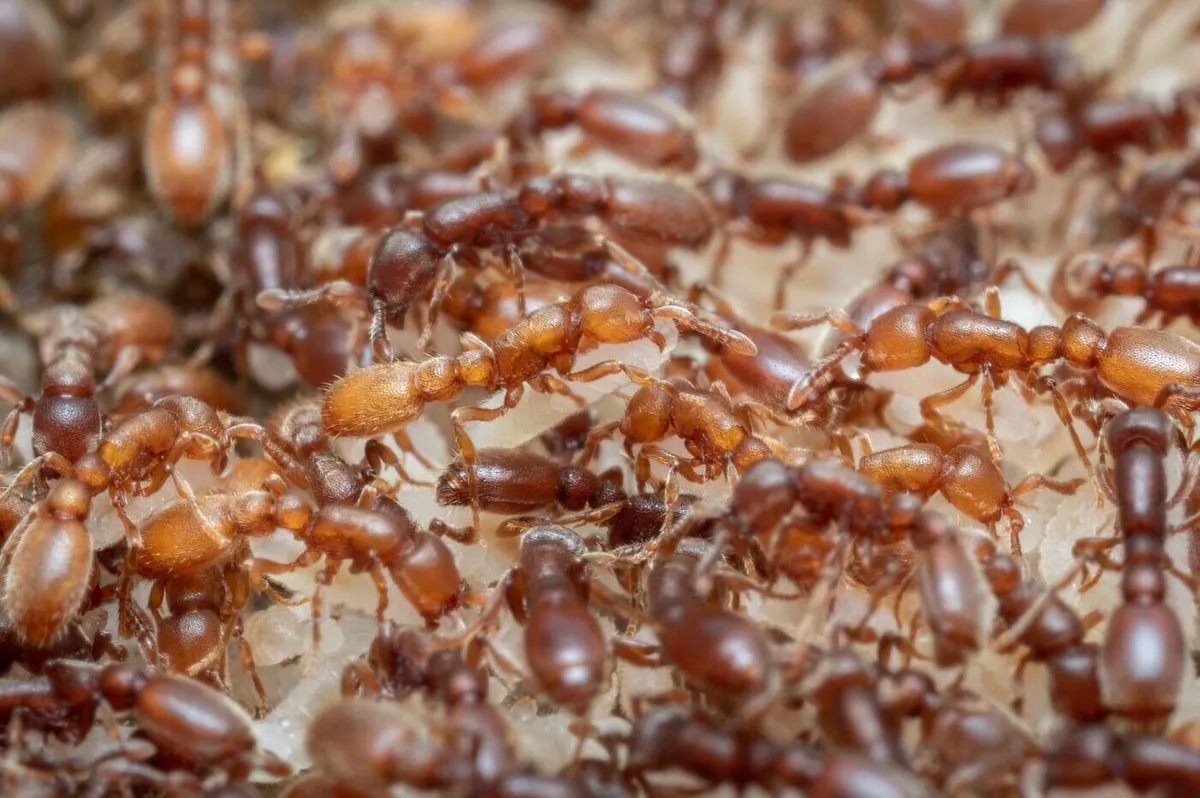
A study published in Nature on clonal raider ants found that parental care evolved by repurposing ancient neural circuits for feeding, not by developing entirely new brain systems. The research, led by scientists at Rockefeller University, mapped 60,000 neurons to show how hunger-regulating networks were co-opted to trigger social behaviors.
The Study Design
Researchers at Rockefeller University used clonal raider ants (Ooceraea biroi), a species where workers reproduce clonally and care for larvae. They mapped the entire brain of 60,000 neurons using electron microscopy and genetic tools. The team identified specific neural circuits that originally regulated feeding behavior in solitary insects.
Key Findings
The study, published in Nature on July 8, 2026, showed that the same neurons controlling hunger in ancestral insects were repurposed to trigger caregiving in ants. When the team activated these feeding circuits artificially, ants began to feed larvae even without hunger cues. The finding suggests a conserved evolutionary mechanism across social insects.
Zombie Ant Fungus Mechanism
Ophiocordyceps unilateralis, a parasitic fungus, controls ant behavior without infecting the brain. It targets specific muscles and manipulates the ant to climb vegetation at precise times of day, ensuring optimal spore dispersal.
2 sources
Time · lag behind first