
Rahmon departs for Seoul to attend Central Asia-Korea summit
This digest was compiled by AI from multiple sources — links to the originals are below.
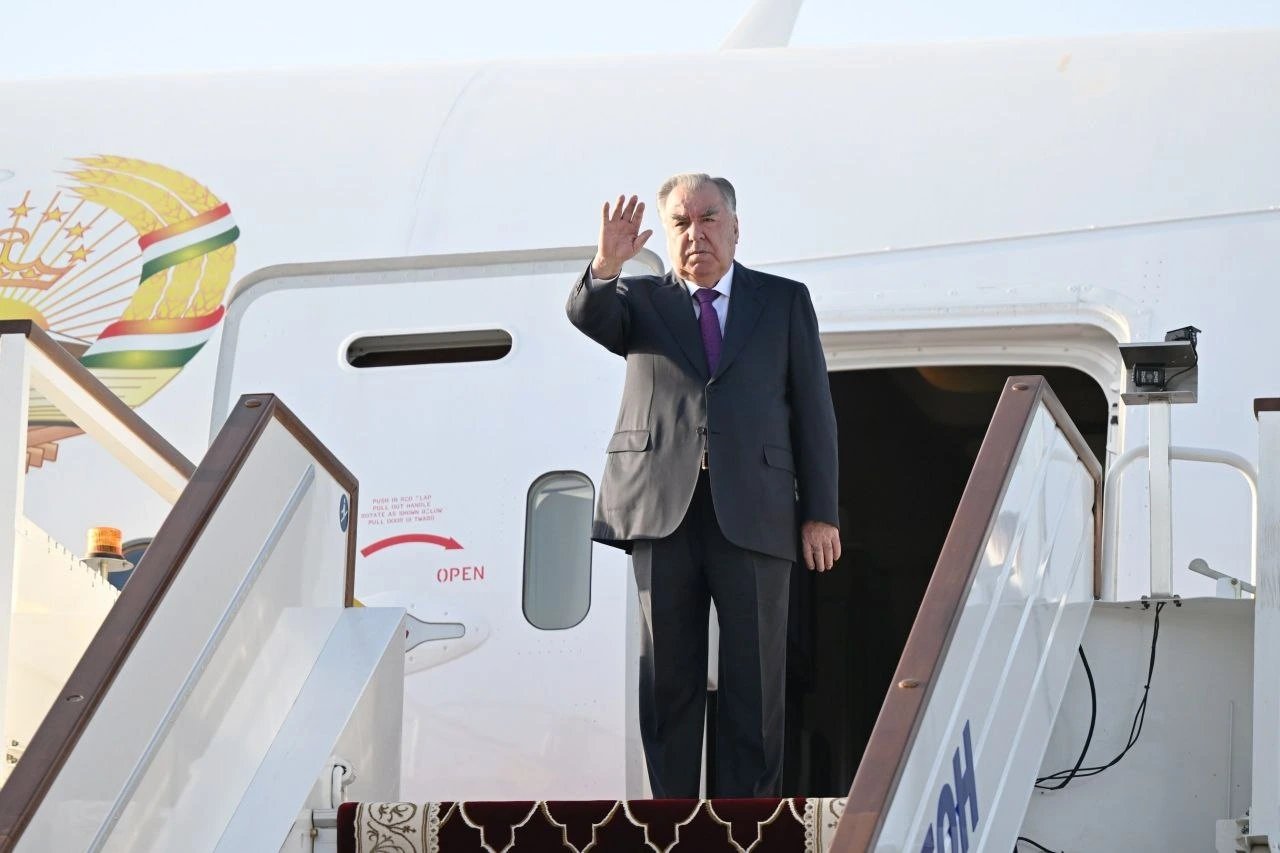
Tajik President Emomali Rahmon departed for South Korea on September 15 for an official visit and to attend the Central Asia–Republic of Korea summit. He is accompanied by a delegation including the foreign minister, economy minister, and central bank chairman. The summit is expected to adopt the Seoul Declaration on long-term cooperation.
Key Facts
- Rahmon departed from Dushanbe International Airport on September 15, seen off by the speakers of both houses of parliament and the prime minister.
- The delegation includes the foreign minister, economy minister, energy minister, and National Bank chairman.
- The summit agenda covers critical minerals, energy, infrastructure, artificial intelligence, digital technology, science, water resources, and climate change.
- The Seoul Declaration is expected to be adopted at the summit, defining long-term cooperation between South Korea and Central Asian states.
- On September 14, Seoul hosted the first Korea–Central Asia C5+1 industry ministers' meeting, attended by Tajik Industry Minister Sherali Kabir.
Summit Agenda
The Central Asia–Republic of Korea summit will focus on cooperation in critical minerals, energy, infrastructure, artificial intelligence, and digital technologies. Science, water resources, and climate change are also on the agenda. The Seoul Declaration is expected to set long-term cooperation directions between South Korea and Central Asian countries.
Ministerial Meeting
On September 14, Seoul hosted the first Korea–Central Asia C5+1 industry ministers' meeting. Tajikistan was represented by Minister of Industry and New Technologies Sherali Kabir. The meeting brought together representatives from South Korea, Tajikistan, Kazakhstan, Kyrgyzstan, Turkmenistan, and Uzbekistan. Participants agreed to expand industrial and trade cooperation and work on sustainable supply chains. Critical strategic minerals, including lithium and rare earth elements, were identified as a key cooperation area.
3 sources
Time · lag behind first