
Japan, South Korea pursue divergent Central Asia strategies
This digest was compiled by AI from multiple sources — links to the originals are below.
Japan and South Korea both view Central Asia as critical to their economic security, but pursue contrasting strategies. Tokyo emphasizes long-term infrastructure and energy projects, while Seoul focuses on rapid trade and investment deals.
Strategic Convergence
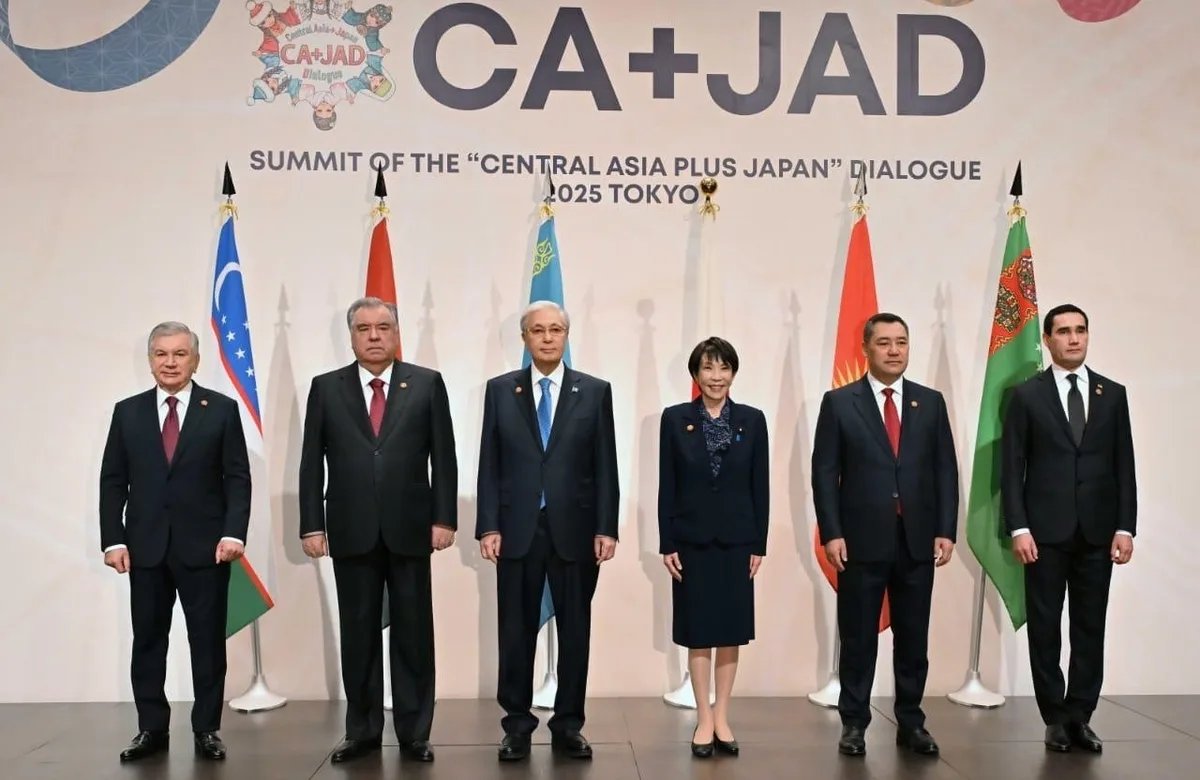
Both Japan and South Korea have identified Central Asia as vital to their economic security, driven by supply chain diversification and resource access. Tokyo's approach, however, prioritizes patient capital through multilateral platforms like the Central Asia Plus Japan dialogue, funding infrastructure such as the $2.7 billion TAPI gas pipeline project. Seoul, by contrast, pursues bilateral deals, exemplified by the $1.2 billion contract for Hyundai to build a petrochemical plant in Kazakhstan.
Divergent Tactics
Japan's strategy relies on official development assistance (ODA) and long-term loans from the Japan International Cooperation Agency (JICA), with a focus on energy and transport corridors. South Korea leverages its corporate giants—Samsung, LG, Hyundai—to secure quick returns, often in manufacturing and ICT. In 2025, South Korean exports to Central Asia grew 18% year-on-year, while Japan's grew 6%, reflecting Seoul's faster pace.
1 source
Time · lag behind first