
NASA's Roman Telescope to Search 100 Million Stars for 100,000 Planets
This digest was compiled by AI from multiple sources — links to the originals are below.
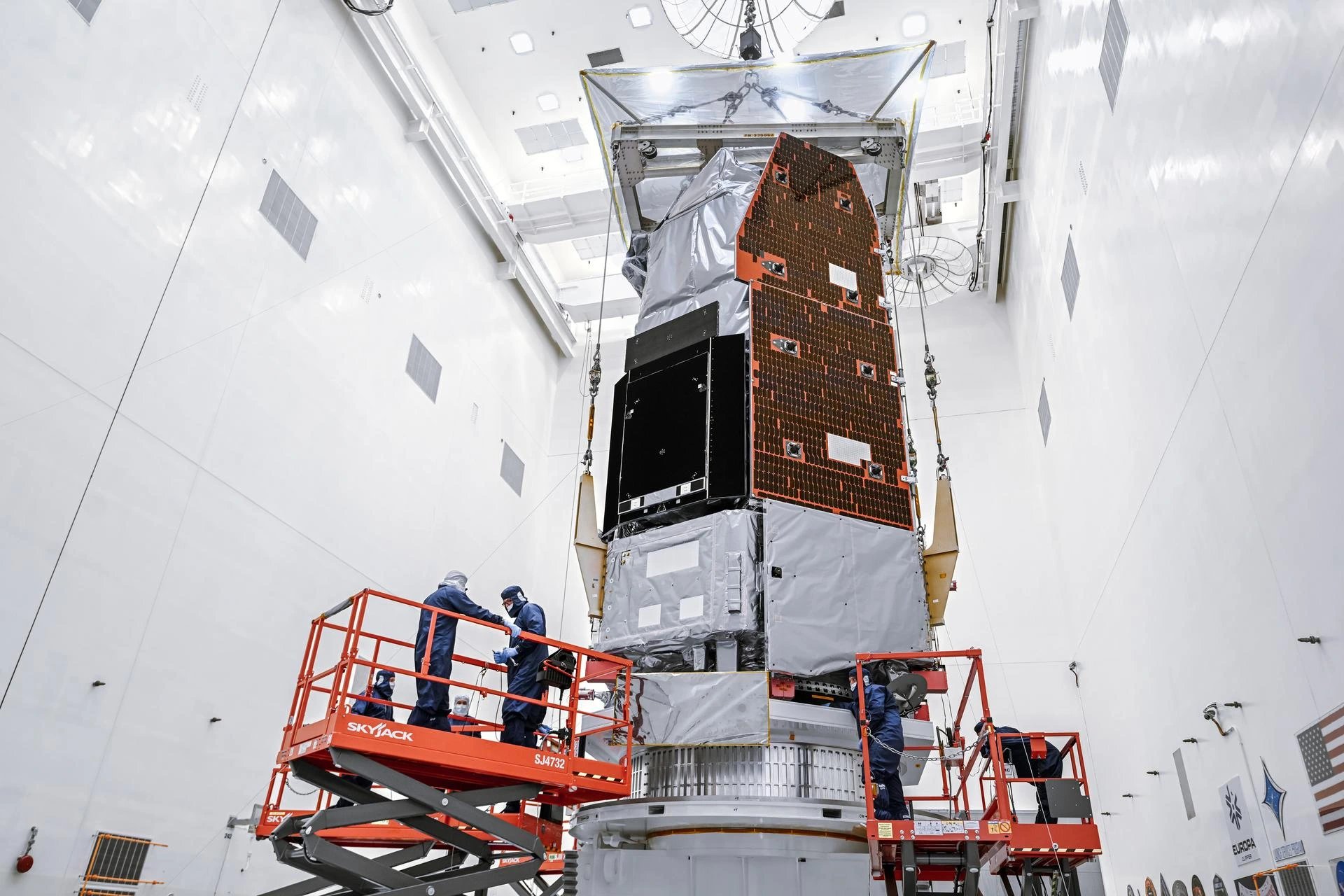
NASA's Nancy Grace Roman Space Telescope is scheduled to launch on August 30, 2026, to survey more than 100 million stars toward the Milky Way's galactic bulge. The mission aims to discover around 100,000 transiting exoplanets and over 1,000 via gravitational microlensing, according to NASA's working estimate. The telescope was encapsulated in its payload fairing on August 21, but the launch date remains subject to weather and technical conditions.
Key Facts
- NASA's Nancy Grace Roman Space Telescope is targeting liftoff at 7:26 am EDT on August 30, 2026, aboard a SpaceX Falcon Heavy from Launch Complex 39A at Kennedy Space Center.
- The telescope will monitor more than 100 million stars toward the galactic bulge, searching for planets through transits and gravitational microlensing.
- NASA's working estimate projects around 100,000 transiting planets and more than 1,000 found through microlensing, with a detailed simulation placing the transit range from roughly 60,000 to 200,000.
- The NASA Exoplanet Archive listed 6,324 confirmed planets in its July 16, 2026 update, a benchmark that will be compared against Roman's future discoveries.
- After launch, Roman will travel to a quasi-halo orbit around the second Sun-Earth Lagrange point, roughly 1.5 million kilometers from Earth, followed by about three months of commissioning.
Mission Profile
NASA is targeting 7:26 am EDT on August 30, 2026, for liftoff of the Roman Space Telescope on a SpaceX Falcon Heavy from Launch Complex 39A at Kennedy Space Center. The telescope was encapsulated in its payload fairing on August 21, 2026. Roman will travel to a quasi-halo orbit around the second Sun-Earth Lagrange point, approximately 1.5 million kilometers from Earth. Deployments, calibration, and commissioning will occupy about three months after launch, with a primary mission planned for five years and a possible five-year extension.
Exoplanet Survey
Roman's wide infrared camera will monitor more than 100 million stars toward the galactic bulge, searching the same images for planets through transits and gravitational microlensing. Transits make a star slightly dimmer, while gravitational microlensing temporarily makes a background star brighter. NASA's working estimate is around 100,000 transiting planets plus more than 1,000 found through microlensing. A detailed simulation has placed the transit range anywhere from roughly 60,000 to 200,000.
Confirmed Exoplanet Baseline
The NASA Exoplanet Archive listed 6,324 confirmed planets in its July 16, 2026 update. The field began with planets around the pulsar PSR B1257+12 in 1992, followed by the 1995 discovery of 51 Pegasi b, the first planet around a Sun-like star. Radial-velocity surveys, Kepler, TESS, ground-based transit searches, microlensing programs, and direct imaging have built a catalog containing rocky planets, hot Jupiters, mini-Neptunes, circumbinary worlds, and planets orbiting stellar remnants. Confirmation means a signal has survived specified tests, with some planets having independent mass and radius measurements and others statistically validated against astrophysical false positives.
1 source
Time · lag behind first