Webb telescope resolves two Dyson-sphere candidates into background galaxies
This digest was compiled by AI from multiple sources — links to the originals are below.
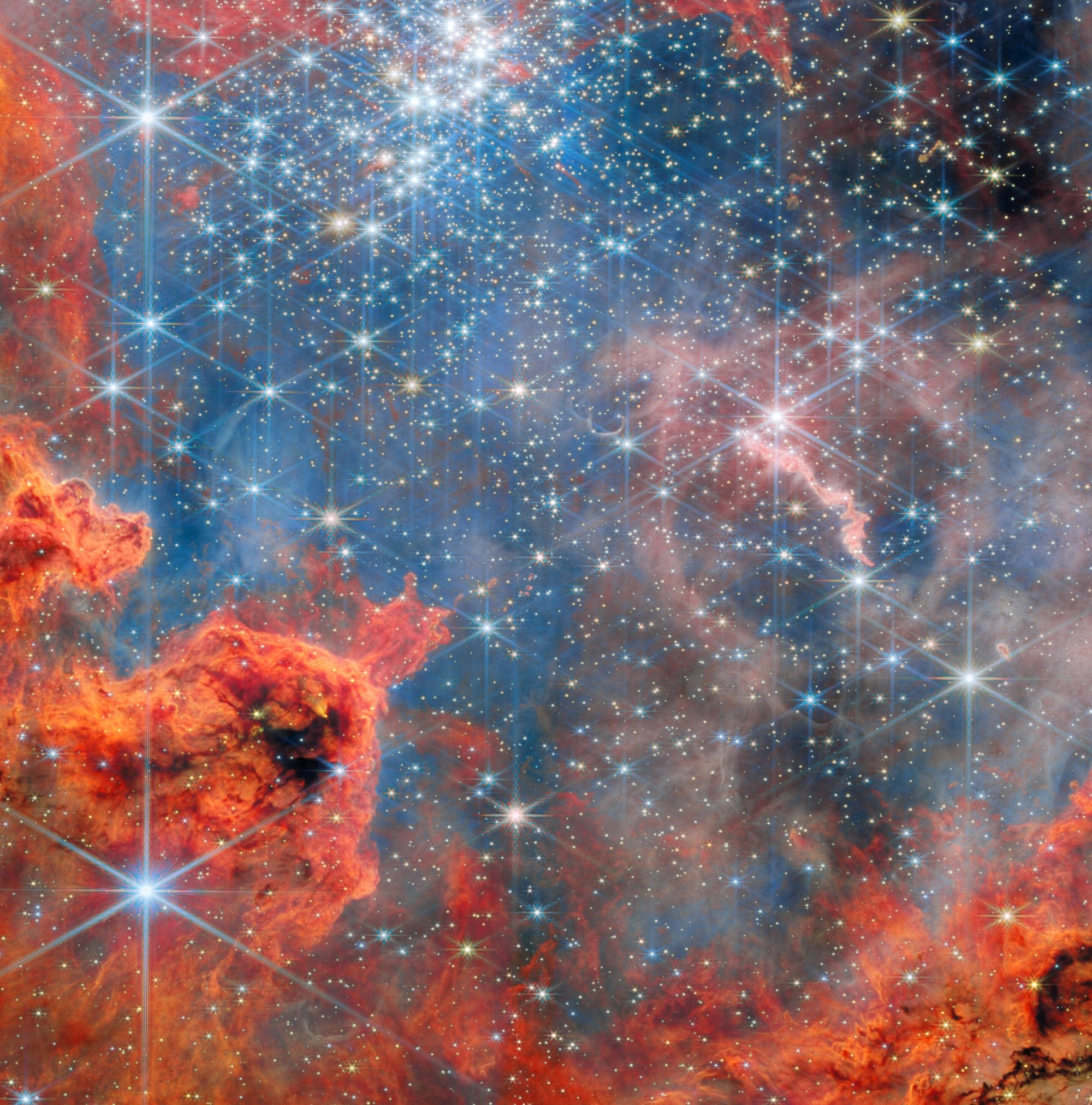
The James Webb Space Telescope resolved two of seven Dyson-sphere candidates into chance alignments of red dwarfs with distant dust-filled galaxies. The observations, posted as a preprint in July 2026, provide direct astrophysical explanations for candidates D and E. Five of the original seven candidates still lack confirmation at this level.
Key Facts
- Project Hephaistos selected seven Dyson-sphere candidates from about five million sources using Gaia, 2MASS, and WISE data.
- Webb imaging and spectra show that candidates D and E are each a nearby red dwarf almost directly in front of a distant, dust-filled galaxy.
- The Webb follow-up was posted as a preprint in July 2026 and has not yet completed peer review.
- Five of the original seven candidates still lack confirmation at this level.
The Webb Follow-up
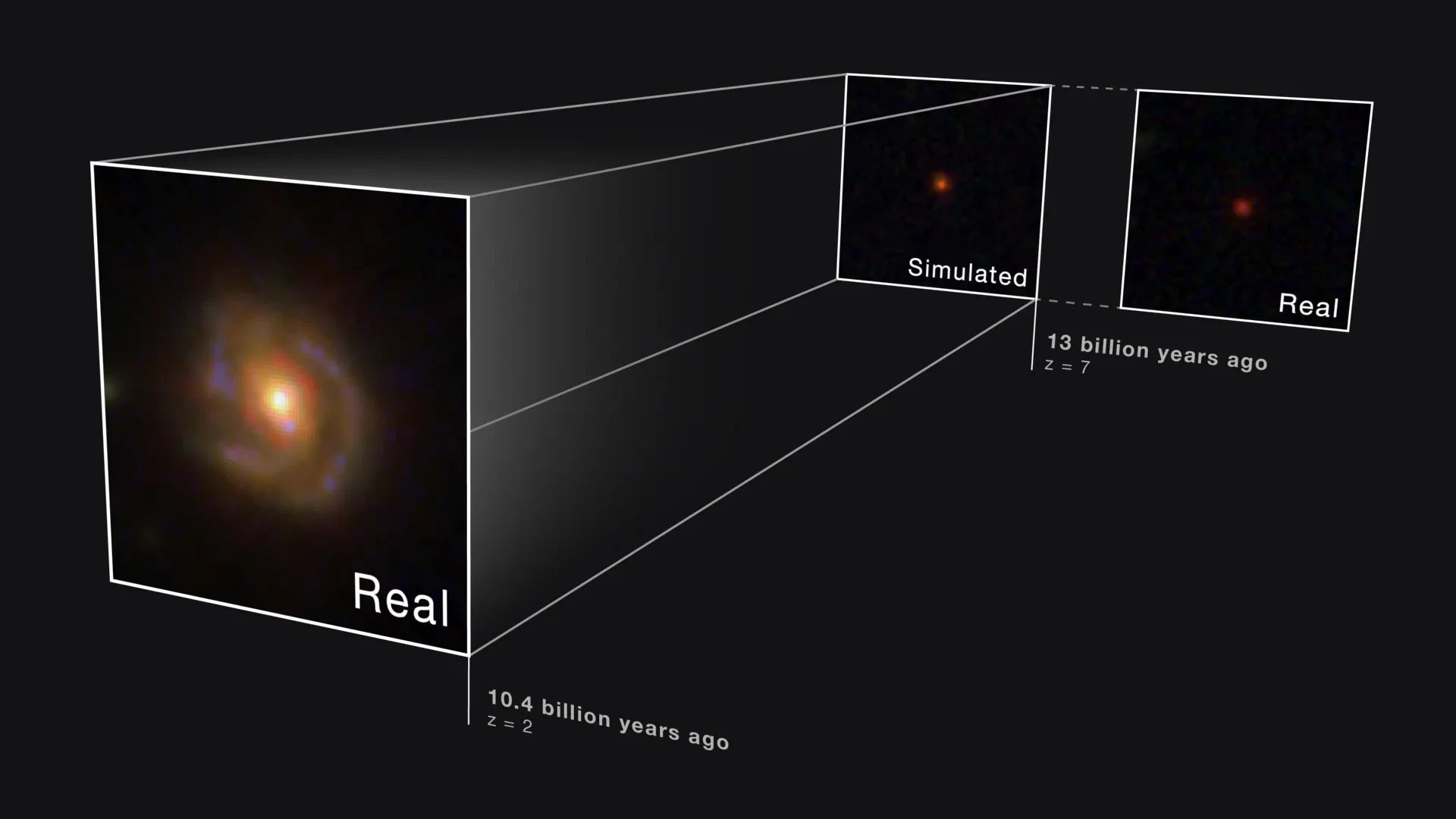
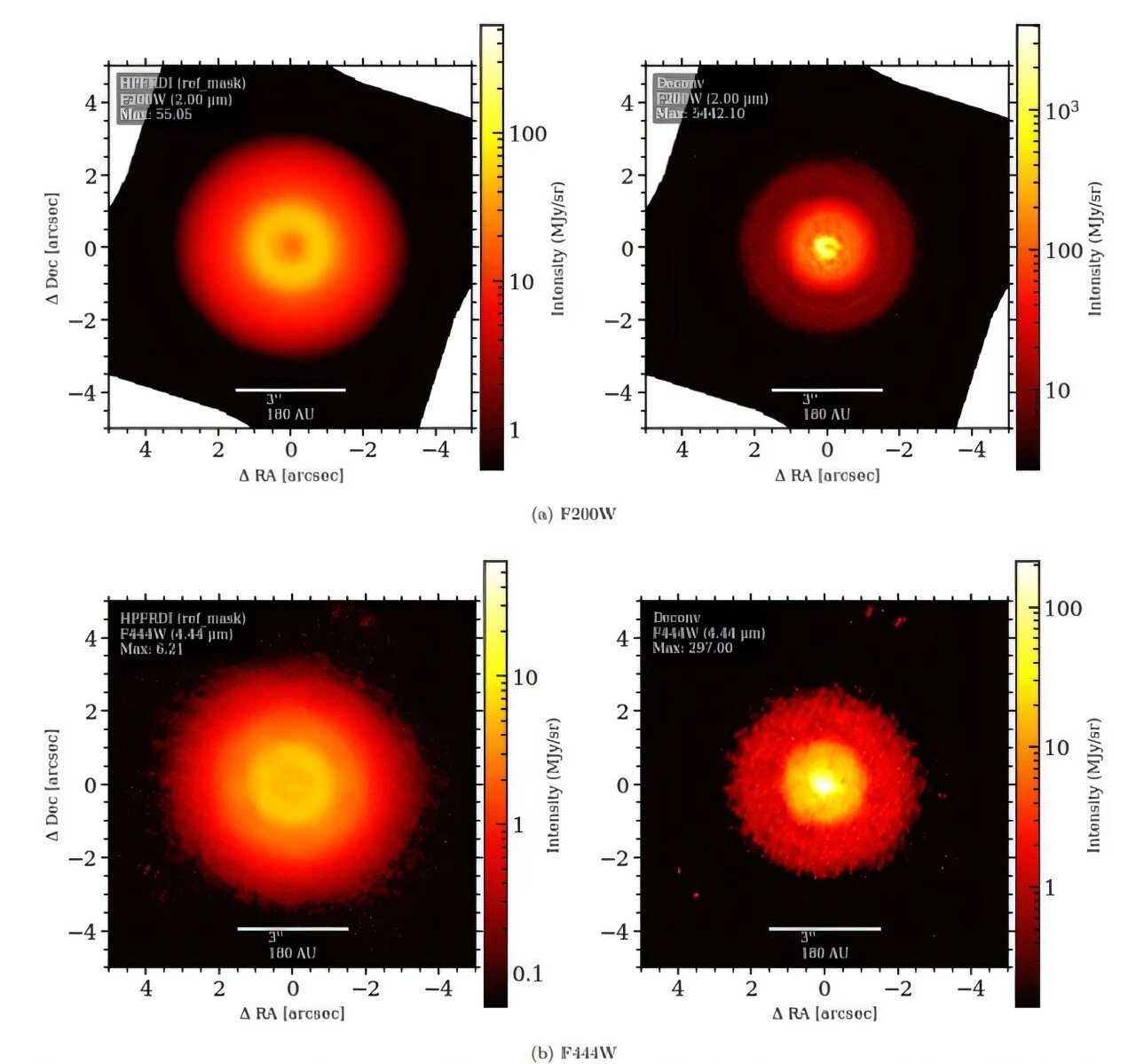
Two points of light that once looked like stars radiating far too much infrared energy have become four objects under the sharper eye of the James Webb Space Telescope. In each case, a nearby red dwarf sits almost directly in front of a much more distant, dust-filled galaxy. NASA’s Wide-field Infrared Survey Explorer could not separate the pairs at the wavelengths where the galaxies shine most strongly. Its catalogue therefore attached the galaxies’ infrared light to the stars. That chance alignment created two of the seven anomalies selected by Project Hephaistos as possible Dyson-sphere candidates.
Dyson Sphere Search Method
Physicist Freeman Dyson’s 1960 proposal began with thermodynamics rather than a literal rigid shell. A civilisation using energy on a stellar scale might place a swarm of collectors around its star. The structures could intercept some fraction of the visible and ultraviolet light, use part of it to perform work, and eventually release the energy as heat. The star would then appear fainter at shorter wavelengths while the combined system produced an infrared excess. The temperature of that waste heat and the fraction of starlight intercepted would determine its location across infrared survey bands.
Candidate Selection and Remaining Work
Project Hephaistos combined positions and optical measurements from Gaia Data Release 3, near-infrared data from 2MASS and mid-infrared photometry from WISE for about five million sources. Its 2024 peer-reviewed search in Monthly Notices of the Royal Astronomical Society compared the observed light with millions of partial-Dyson-sphere models. Those models varied the temperature of the reradiated heat and the covering factor, the share of the star’s output supposedly intercepted. The pipeline removed stars already known to have infrared excesses, variable sources, objects in nebulosity and images likely to contain blends. A convolutional neural network helped flag confused WISE fields. Visual inspection then examined 368 late survivors and classified 328 as blends, 29 as irregular, and four as nebular. Five of the original seven still lack confirmation at this level, but that does not make them five surviving detections of alien technology. It means the telescope work is unfinished.
1 source
Webb telescope resolves two Dyson-sphere candidates into background galaxies