
NASA scientist warns 'super' El Niño to bring difficult period
This digest was compiled by AI from multiple sources — links to the originals are below.
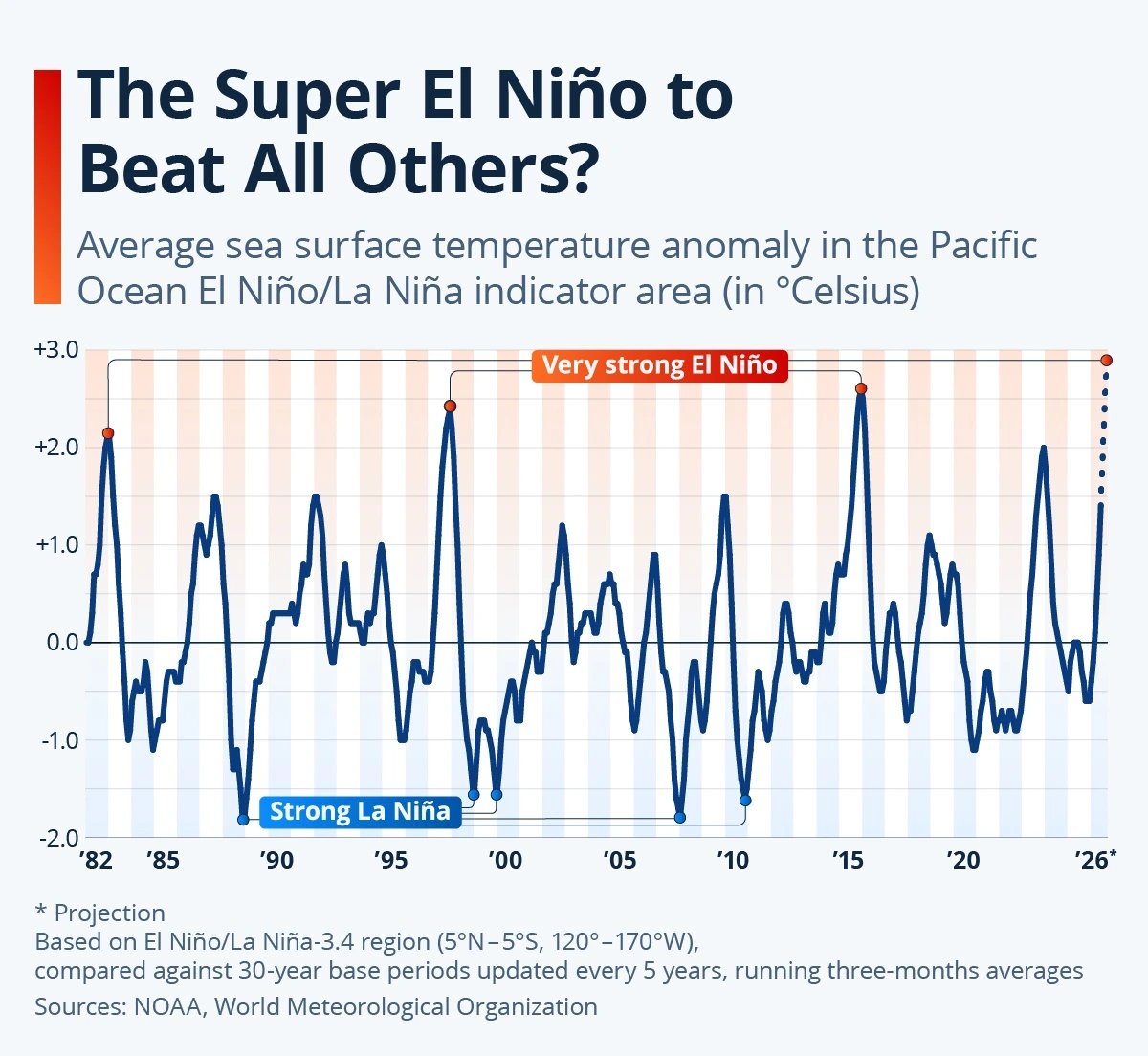
A 'super' El Niño is developing and could rival the strongest events on record, according to climate scientists. NASA's Josh Willis warned to 'be prepared, because this process will be quite difficult.' The phenomenon is expected to amplify extreme weather already intensified by fossil-fuel-driven climate change.
Key Facts
- July 2023 was the hottest July on record in North America and Europe, with heatwaves causing thousands of deaths, drying rivers, and burning forests.
- NASA Jet Propulsion Laboratory climate scientist Josh Willis said El Niño's impacts will be large over a wide area and warned to 'be prepared.'
- Columbia University scientist Muhammad Azhar Ehsan said this El Niño is unprecedented in size and could rival the strongest events of 2015-16 and 1997-98.
- Scientists say El Niño creates a temporary rise on the long-term warming trend and its effects could last until 2027.
Record Heat and Impacts
July 2023 was the hottest July on record in North America and Europe, with successive heatwaves causing thousands of deaths, drying rivers, and burning forests. The scorching summer coincided with the arrival of El Niño, but climate scientists say the devastating extreme weather cannot be directly attributed to El Niño. Experts note that extreme weather already intensified by fossil-fuel-driven climate change may be further amplified by this natural phenomenon.
El Niño Development
El Niño occurs naturally every three to seven years, typically starting in spring and lasting into the following year. When ocean surface temperature rises at least 0.5 degrees Celsius above average, atmospheric air flows change, causing dry regions to receive heavy rainfall and wet regions to dry out. Columbia University scientist Muhammad Azhar Ehsan said this El Niño is unprecedented in size and is progressing to a level that could rival the strongest El Niño events recorded in 2015-16 and 1997-98.
Climate Change Context
The primary cause of extreme heat and fires is human-induced climate change, which has led to the last four years being recorded as the hottest years. Scientists say El Niño creates a temporary rise on this long-term warming trend and its effects could last until 2027.
2 sources
Time · lag behind first