
Webb finds ancient massive galaxies hold far more small, faint stars than expected
This digest was compiled by AI from multiple sources — links to the originals are below.
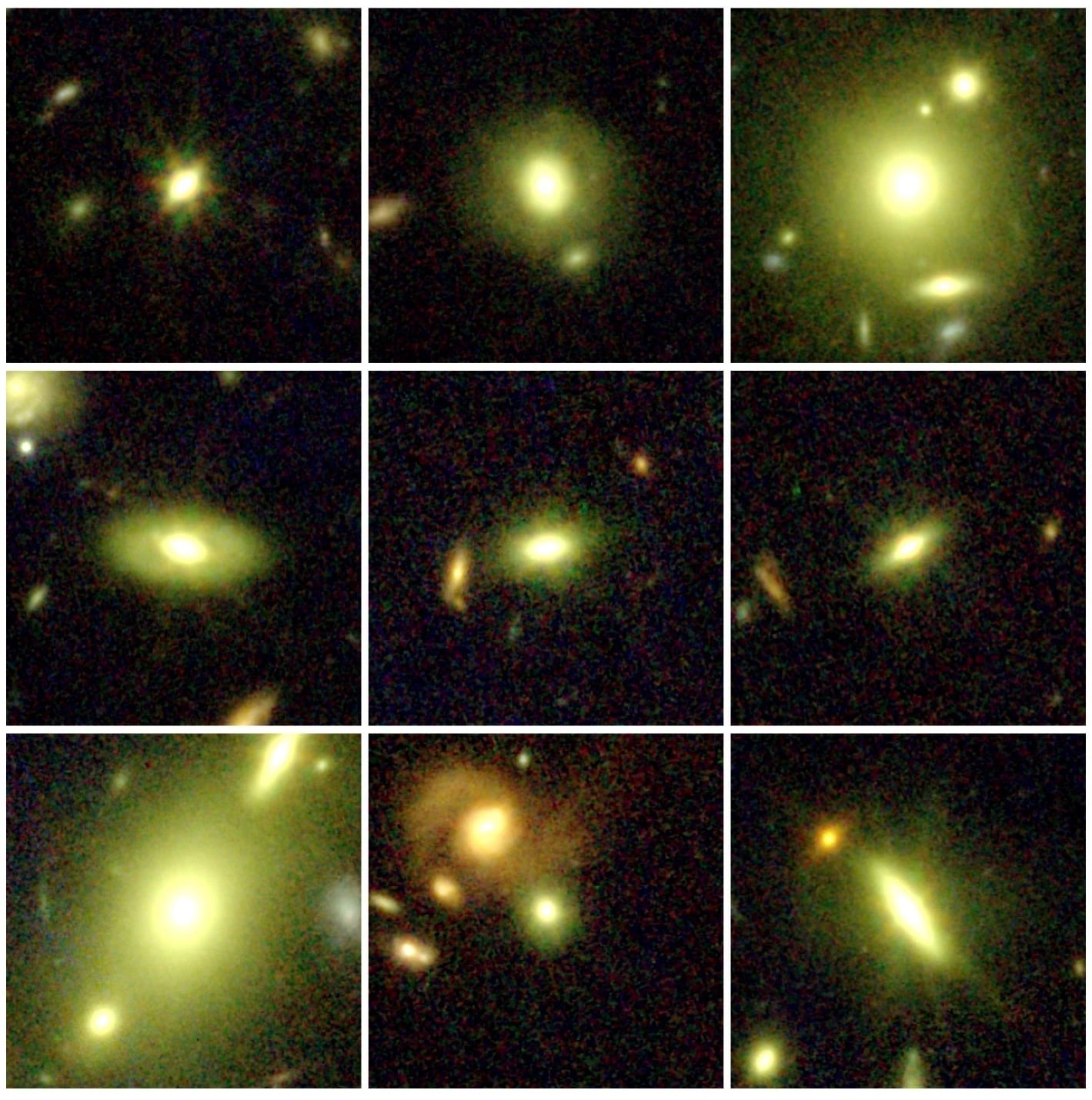
A James Webb Space Telescope study of nine massive, quiescent galaxies found their spectra contain far more low-mass stars than expected. The oldest system implies an early progenitor roughly four times more massive than standard estimates. The finding, published in Nature Astronomy on August 18, 2026, sharpens Webb's puzzle of rapid early galaxy assembly.
Key Facts
- The study of nine massive, quiescent galaxies was published in Nature Astronomy on August 18, 2026.
- The oldest system implies an early progenitor roughly four times more massive than estimates based on the usual assumption.
- Webb observed the galaxies at a redshift of about 0.7, seen as they were roughly seven billion years ago.
- The international team was led by Chloe Cheng and Mariska Kriek of Leiden University.
The Hidden Stellar Mass
A galaxy can hide most of its stellar weight in the stars that contribute least to its light. The exceptionally deep spectra of nine massive, quiescent galaxies contain the faint collective fingerprints of far more low-mass stars than astronomers would expect if these systems were scaled-up versions of the Milky Way. In the oldest case, the inferred stellar population could make the galaxy's early progenitor roughly four times more massive than estimates based on the usual assumption. Massive galaxies already appear to have assembled remarkably quickly in the young universe, and if some of them also concealed an enormous population of small, dim stars, the amount of matter they turned into stars may have been substantially underestimated.
Light as an Imperfect Scale
For a nearby star, astronomers can measure brightness, temperature and motion, then estimate its mass, but a distant galaxy is different: even Webb usually sees its stars blended into one unresolved glow. Researchers divide that glow into a spectrum and compare it with synthetic populations containing different ages, elements and mixtures of stellar masses. The hidden assumption is called the initial mass function, or IMF, which describes the relative numbers of stars born at different masses. In the Milky Way, low-mass stars greatly outnumber Sun-like and massive stars, live for a very long time and retain much of a galaxy's stellar mass, but each one is faint, so a small number of luminous giants can dominate the light while a much larger population of dim stars carries the weight. When astronomers estimate the mass of a remote galaxy, they normally extrapolate below what the telescope can easily detect using a Milky Way-like IMF, which is reasonable as a baseline but not a directly observed law of nature.
Absorption Reveals Dwarf Stars
The international team, led by Chloe Cheng and Mariska Kriek of Leiden University, selected massive galaxies that had already stopped making significant numbers of new stars. That quiescence matters because it allows the faint absorption features of low-mass stars to be detected without the glare of ongoing star formation. Webb did not directly count dwarf stars inside a galaxy photographed during the first 1.5 billion years after the Big Bang; instead, the telescope observed later descendants at a redshift of about 0.7, seen as they were roughly seven billion years ago. The oldest system contains stars whose formation history reaches back to the early universe, and the fourfold figure is the implication for that earlier progenitor if the measured stellar population was built during its ancient formation episode.
2 sources
Time · lag behind first