
JWST finds early black holes too massive for standard growth models
This digest was compiled by AI from multiple sources — links to the originals are below.
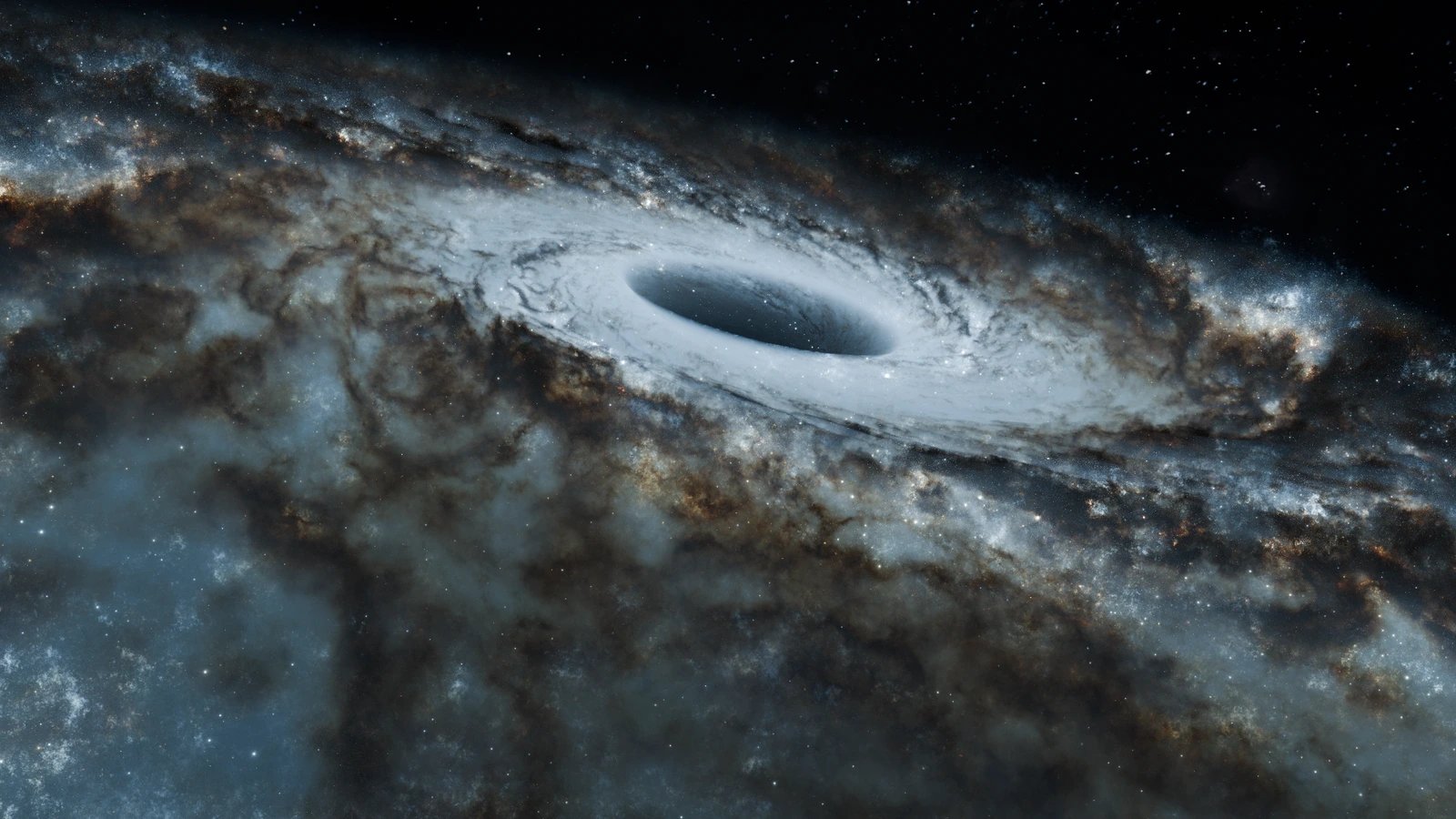
The James Webb Space Telescope has repeatedly detected supermassive black holes in the early universe whose masses rival or exceed the total stellar mass of their host galaxies, a mismatch that current formation theories struggle to explain. The findings challenge the standard picture where black holes grow gradually through accretion and mergers over billions of years. The puzzle deepens as astronomers probe closer to the Big Bang, where some objects appear to have grown to a billion solar masses within a few hundred million years.
The JWST Overmassive Black Hole Puzzle
The James Webb Space Telescope has identified multiple supermassive black holes at redshifts beyond 6, when the universe was less than 1 billion years old. These objects, some with masses exceeding 1 billion solar masses, appear to outweigh the combined stellar mass of their host galaxies. Standard accretion models predict that such growth should take far longer than the available time, given the Eddington limit on radiation-powered feeding. The detections have forced astrophysicists to reconsider how black holes seed and grow in the early universe.
Standard Formation Scenarios
For decades, the prevailing view held that supermassive black holes grow from stellar-mass seeds through mergers and gas accretion over billions of years. The first direct images of black holes, from the Event Horizon Telescope in 2019 and 2022, confirmed their existence but did not resolve the growth puzzle. The M87 black hole, at 6.5 billion solar masses, and Sagittarius A*, at 4 million, represent present-day endpoints. JWST's early-universe findings suggest that either initial seeds were far more massive—possibly from direct collapse of gas clouds—or growth rates exceeded theoretical limits, or both.
The Galaxy–Black Hole Connection
Observations show a tight correlation between a galaxy's central black hole mass and the velocity dispersion of stars in its bulge, suggesting co-evolution. The Nobel Prize-winning work of Genzel and Ghez tracked stars whipping around Sagittarius A*, providing the strongest evidence for a supermassive black hole at the Milky Way's center. Yet JWST sees black holes that are already disproportionately large when their host galaxies are barely assembled, hinting that the black hole may form first and dominate the galaxy's mass budget early on.
1 source
Time · lag behind first