
Hubble survey probes massive stars in metal-poor galaxies to explain Webb's early-universe findings
This digest was compiled by AI from multiple sources — links to the originals are below.
Astronomers led by the University of Utah are using the Hubble Space Telescope to survey massive stars in nearby metal-poor galaxies, aiming to explain unexpected properties of early galaxies seen by the James Webb Space Telescope. The Treasury of Extremely Metal-Poor O Stars (TEMPOS) survey, published Sept. 21, 2026, in The Astrophysical Journal Supplement Series, relies on ultraviolet measurements from Hubble's Cosmic Origins Spectrograph. The project addresses discrepancies between Webb's observations of early galaxies and existing models of massive star evolution.
Key Facts
- The TEMPOS survey uses ultraviolet measurements from Hubble's Cosmic Origins Spectrograph to study massive stars in nearby metal-poor galaxies.
- The survey was published on Sept. 21, 2026, in The Astrophysical Journal Supplement Series.
- Grace Telford, assistant professor at the University of Utah, is the lead author of the study.
- Stars more than 10 times the mass of the sun end their lives as supernova explosions that deposit energy and material into surrounding gas.
- Early galaxies had far fewer elements heavier than hydrogen and helium than galaxies like the Milky Way contain today.
Survey Design and Data
The Treasury of Extremely Metal-Poor O Stars (TEMPOS) project relies on ultraviolet measurements from Hubble's Cosmic Origins Spectrograph (COS). The survey targets massive stars in nearby galaxies that resemble the environments found in the early universe. The unusually large TEMPOS dataset could allow researchers to improve models of massive stars and better understand how these powerful objects influenced young galaxies. The survey was published on Sept. 21, 2026, in The Astrophysical Journal Supplement Series.
Massive Stars and Galaxy Evolution
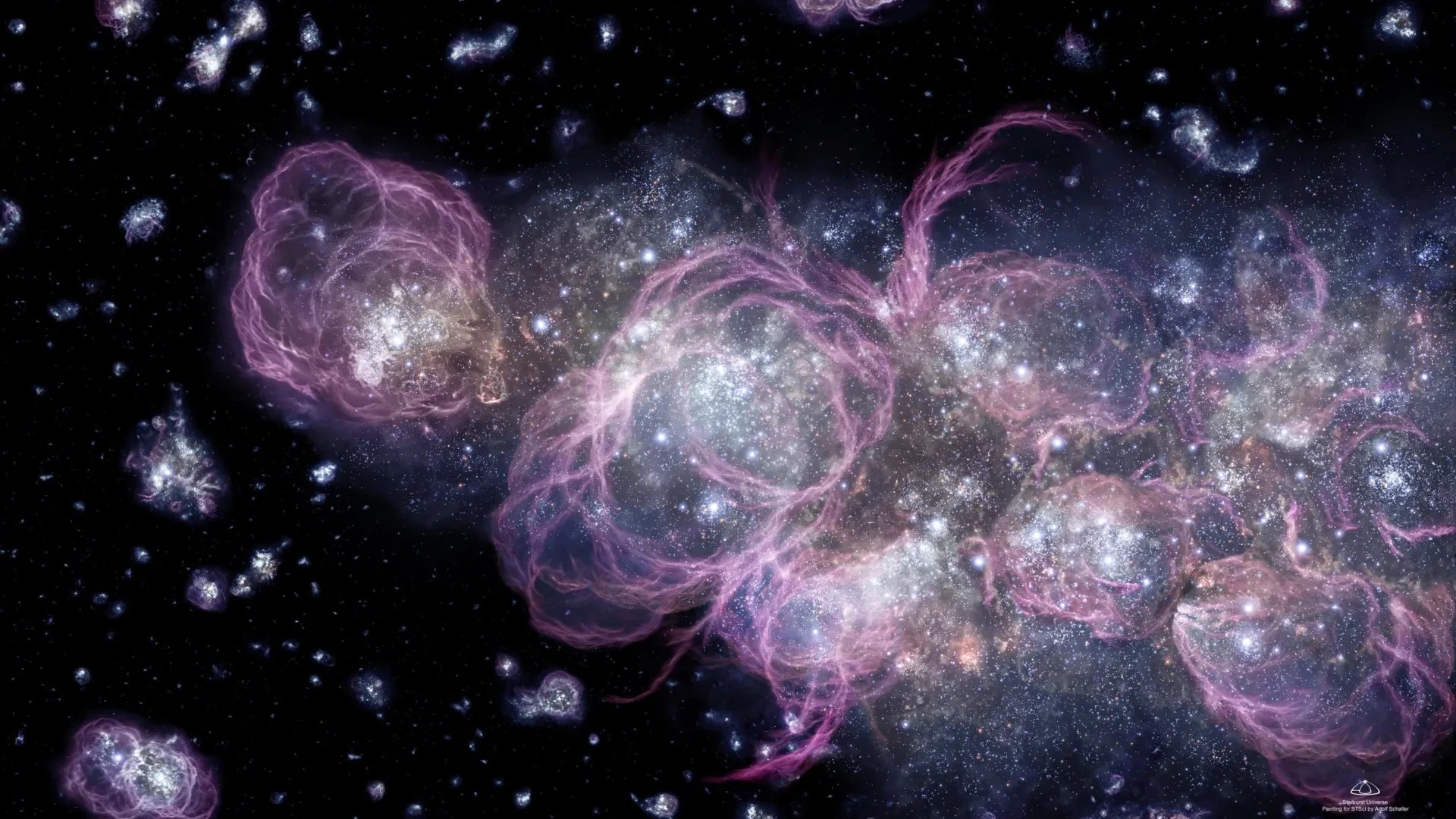
Stars more than 10 times as massive as the sun are uncommon, but their influence can extend across an entire galaxy. They emit enormous amounts of radiation, continuously lose material through stellar winds, and eventually end their lives in supernova explosions. Grace Telford, assistant professor in the Department of Physics & Astronomy at the University of Utah, said massive stars 'govern the evolution of their host galaxies by heating and essentially regulating the gas that's then available to cool and form into new stars.' The earliest galaxies had produced far fewer elements heavier than hydrogen and helium than galaxies such as the Milky Way contain today. As a result, massive stars born during that era may have had physical properties that differ substantially from massive stars astronomers can study closer to home.
Motivation from Webb Observations
The James Webb Space Telescope, launched in 2021, continues to uncover unexpectedly complex galaxies from the universe's early history. Grace Telford said Webb 'opened up a whole bunch of new questions about the evolution of these early galaxies -- they're weird.' Telford stated that massive stars at low metallicity are particularly important for building accurate models of early galaxies. She added that astronomers cannot just study how metal-rich massive stars in the Milky Way behave to interpret those observations.
1 source
Time · lag behind first