Australia's 1935 cane toad release became a 200-million invasive species crisis
This digest was compiled by AI from multiple sources — links to the originals are below.
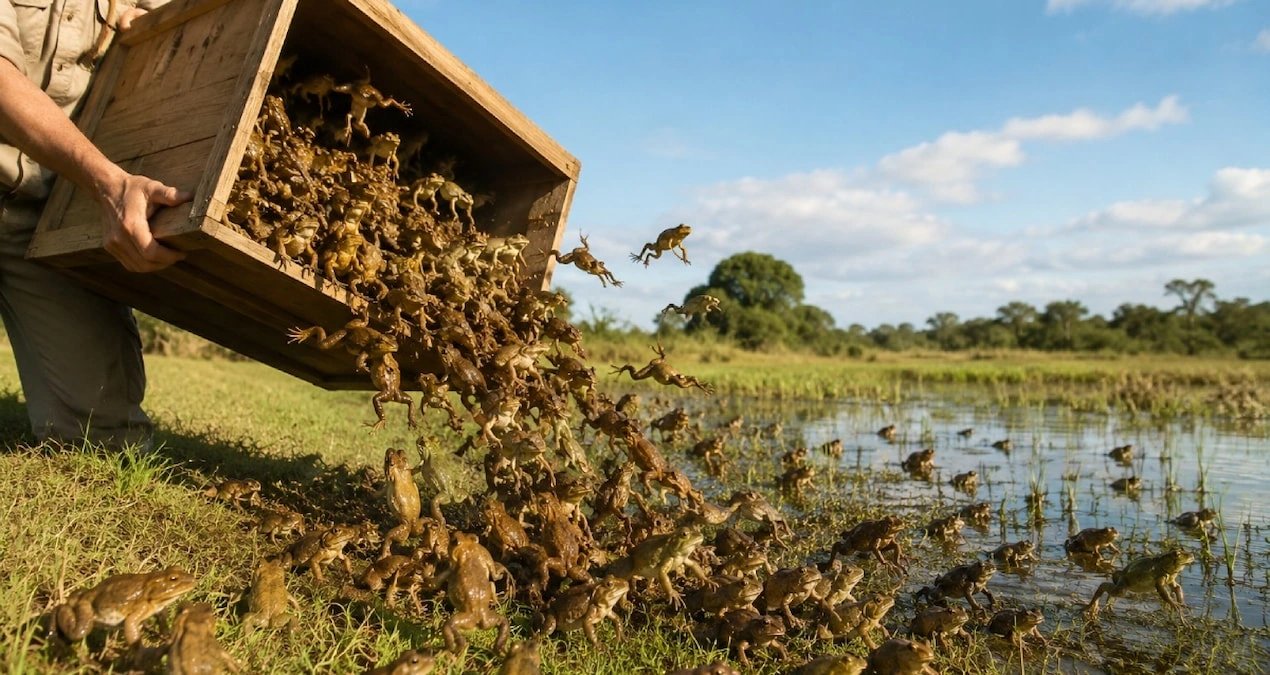
In 1935, Australian authorities released 2,400 cane toads in Gordonvale, Queensland, to control sugar cane beetles. The toads failed to control the beetles and instead multiplied to an estimated 200 million, spreading across northern Australia. The species is now one of the country's most serious invasive threats, with no broad-scale control method considered likely.
Key Facts
- In 1935, 2,400 cane toads were released near Gordonvale, Queensland, to control sugar cane beetles.
- The cane toad population in Australia is now estimated to exceed 200 million.
- Cane toads have spread from Queensland to the Northern Territory and Western Australia's Kimberley region.
- The Australian government has stated that a broad-scale method to control cane toads nationwide is unlikely to be found.
- Current control efforts focus on reducing impacts on vulnerable native species and managing tadpole numbers.
The 1935 Release
Sugar cane growers had long struggled with beetle larvae that damaged crop roots. Authorities seeking an alternative to chemical control imported cane toads, a species known to be used in other regions. A group of cane toads brought from Hawaii to Australia in 1935 was bred in a special area in Queensland. Shortly afterward, 2,400 toads were released into sugar cane fields around Gordonvale. The intended target was the cane beetle, but no research had been conducted on the toads' potential impact on the Australian ecosystem or their effectiveness against the beetles.
Ecological Fallout
The toads adapted to the wild and multiplied rapidly but had no significant effect on sugar cane beetles. Their main impact emerged on native wildlife: cane toads carry potent toxins, and native predators that attempt to eat them can be poisoned and die. The toads also feed on a wide range of organisms and compete with native species, increasing pressure on the ecosystem. From the initial Queensland release, the toads eventually reached the Northern Territory and the Kimberley region of Western Australia. The area occupied by the invasive species continues to expand each year.
Control Efforts
Given the scale of the problem, the Australian government has previously stated that finding a broad-scale method to control cane toads nationwide is unlikely. Current work focuses especially on reducing the toads' impact on vulnerable native species and controlling their numbers at the tadpole stage. The initiative that began with releasing 2,400 toads to protect sugar cane fields failed to solve the targeted insect problem and instead became a decades-long invasive species crisis.
1 source
Australia's 1935 cane toad release became a 200-million invasive species crisis