
Hittite ritual remains found in L-shaped rooms at Şapinuva
This digest was compiled by AI from multiple sources — links to the originals are below.
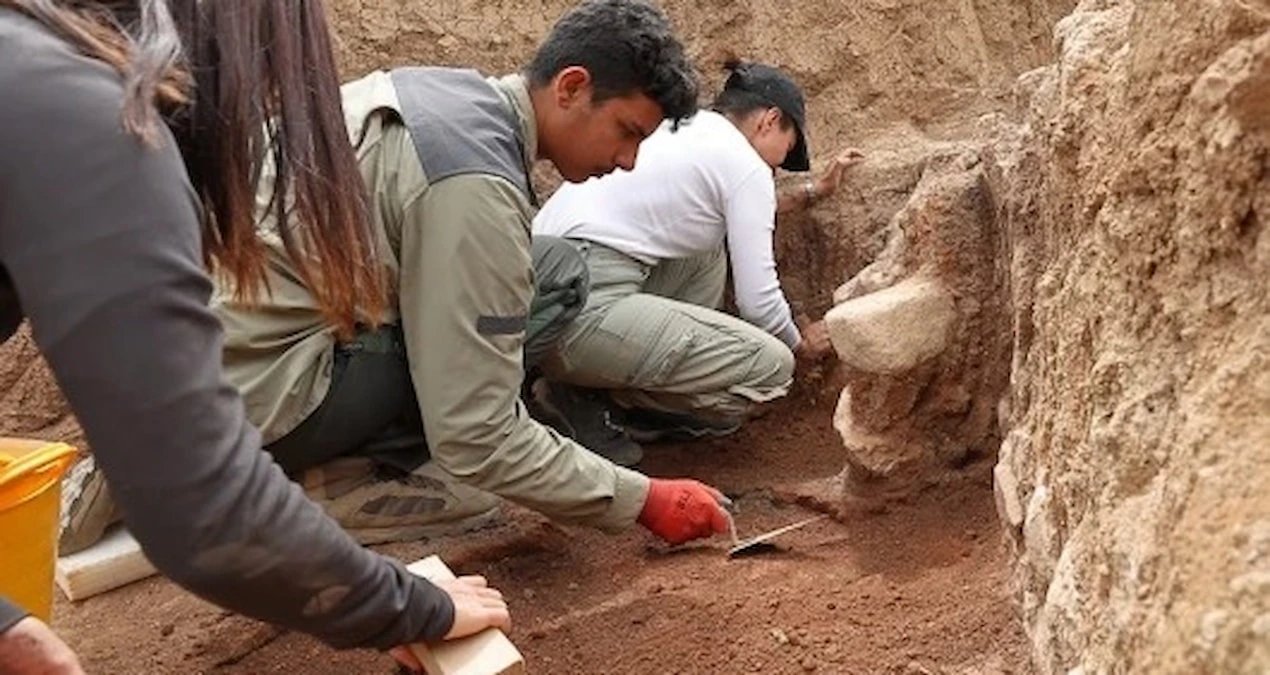
Archaeologists at the Hittite site of Şapinuva have uncovered a large building dating to around 1380 BC, with ritual animal remains in L-shaped rooms. The team found a headless lamb or kid skeleton last year and a cattle skull this year, both placed on stone paving. The discoveries align with written sources describing sacrifices during building renovations.
Key Facts
- The building was constructed around 1380 BC, according to excavation director Önder İpek.
- Excavations at Şapinuva have continued uninterrupted for 36 years since 1990.
- A headless lamb or kid skeleton was found in one L-shaped room last year, and a cattle skull in another this year.
- Approximately 4,000 tablets from Şapinuva provide insights into Hittite administration, daily life, and cultural practices 3,500 years ago.
The Excavation
The structure was detected in 2024 using geophysical methods and has been largely exposed after three years of work. Excavation director Önder İpek, a faculty member at Hitit University, stated that the building dates to the 1380s BC. He noted that Hittite King Tudhaliya II came to this city with his wife, and that Şapinuva once served as a Hittite capital. The building's function—whether public, temple, or administrative—remains unclear, and interior work is expected to clarify it.
Ritual Remains
In one L-shaped room, a headless lamb or kid skeleton was found last year; in another, a cattle skull was found this year. Both remains were placed on stone paving. İpek said written sources indicate that Hittites performed sacrifices during building renovations, and the animal body and skull likely correspond to such rituals in different phases of the building.
Multidisciplinary Team
The excavation team includes archaeologists, philologists, restoration specialists, geologists, archaeobotanists, and zooarchaeologists. The work is supported by Çorum Municipality. The approximately 4,000 tablets found at Şapinuva offer important clues about the state's administrative structure, daily life, and cultural habits 3,500 years ago.
2 sources
Time · lag behind first