
German Archaeological Institute team unearths 3,800-year-old storage center at Hattuşa
This digest was compiled by AI from multiple sources — links to the originals are below.
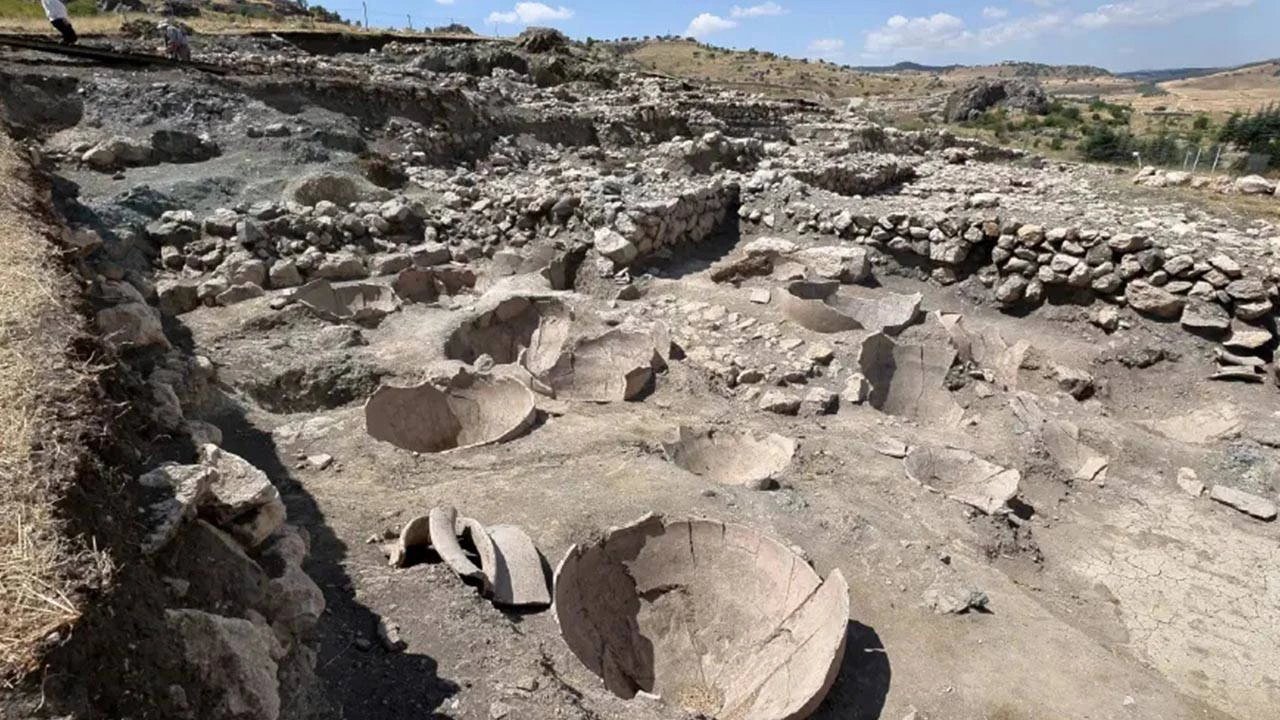
The German Archaeological Institute’s team at Hattuşa in Çorum’s Boğazkale district has uncovered a storage and trade center with 16 large jars dating to about 3,800 years ago. The structure lies on the Büyükkale Northwest Slope between the royal palace and the Great Temple and is dated to 1800–1750 BC in the Assyrian Trade Colonies period. Archaeobotanical examinations of residues inside the jars are planned to identify stored products.
The Storage Center Discovery
The excavation led by Prof. Dr. Andreas Schachner for the German Archaeological Institute identified the remains on the Büyükkale Northwest Slope, between Hattuşa’s royal palace and the Great Temple. Sixteen large jars were set into a steep slope using terracing, and the area is described as a storage and trade center from the Assyrian Trade Colonies period. The site is part of Hattuşa, which has an 8,000-year history and is listed on UNESCO’s World Cultural Heritage and Memory of the World registers. The jars contained mud and soil residues, and work is continuing.
Dating and Historical Context
Schachner said the storage center may date to 1800–1750 BC, when the settlement was known as Hattuş before the Hittite period. During the Karum period of the Middle Bronze Age, Assyrian merchants maintained a colony in the Lower City, and the large jars were used to store provisions and field produce. The discovery is the oldest phase found so far in the current excavations. Similar architecture was recorded in excavations in the 1960s.
Landslide Damage and Analysis
Schachner noted that the structure was destroyed by a major landslide, and later Hittite buildings on the same slope were also affected. The remains show how people on the slope struggled against natural forces and continued to rebuild. The excavation team reported that mud and soil residues inside the jars will be examined through archaeobotanical studies to determine what products were stored. The excavation work is continuing at the site.
1 source
Time · lag behind first