
NASA targets late 2028 launch for nuclear reactor Mars flyby
This digest was compiled by AI from multiple sources — links to the originals are below.
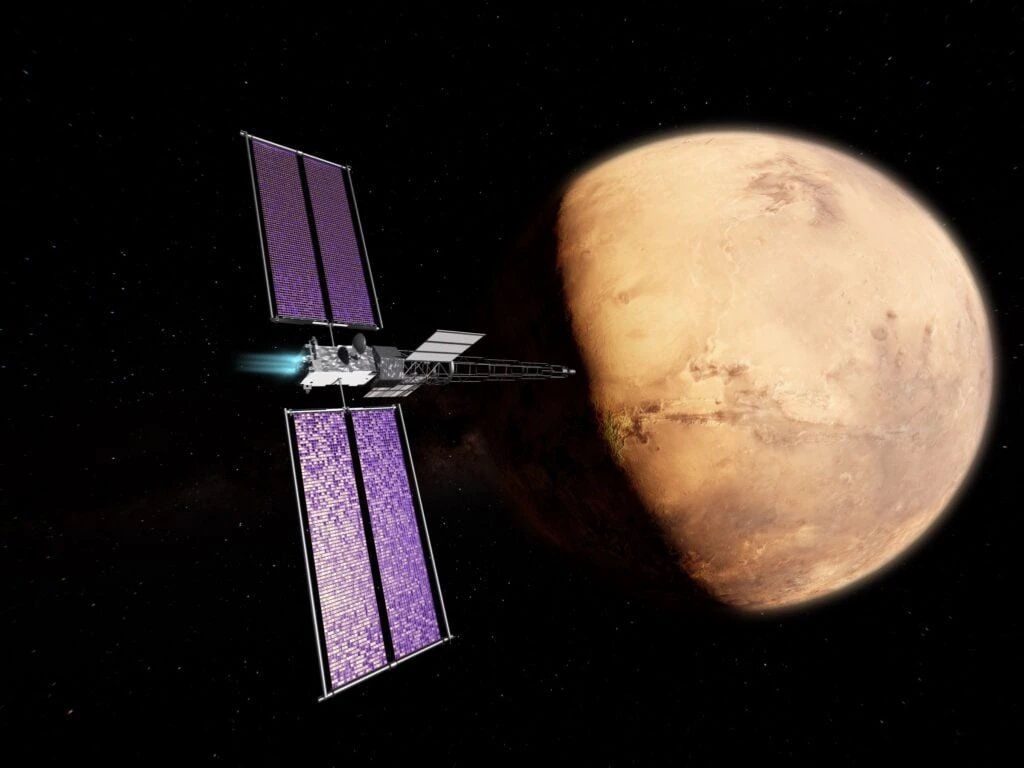
NASA has set a target of late 2028 for Space Reactor-1 Freedom, a roughly 12-tonne spacecraft that would start a uranium fission reactor in deep space and use the electricity for electric propulsion on a Mars flyby. The mission is a plan, not a booked launch, with a 2028 launch and 2029 Mars encounter. The agency is repurposing the Power and Propulsion Element from the Gateway lunar station and working with the Department of Energy on the reactor.
Key Facts
- NASA targets late 2028 for Space Reactor-1 Freedom, a 12-tonne spacecraft that would start a uranium fission reactor in deep space and use electric propulsion for a Mars flyby.
- The mission is planned for a 2028 launch and a 2029 Mars encounter, with December identified in detailed programme material.
- SR-1 Freedom would use high-assay low-enriched uranium (HALEU) fuel and a 20-kilowatt-electric closed Brayton-cycle power system.
- NASA is repurposing the Power and Propulsion Element developed for the Gateway lunar station and working with the Department of Energy on the reactor.
Mission Architecture
Space Reactor-1 Freedom is designed as a flyby, payload-delivery and technology-demonstration mission, not a crewed prototype or a surface lander. The spacecraft is expected to weigh about 12,000 kilograms, communicate through the Deep Space Network in X-band, and deliver its payload at a Mars intercept. NASA has not stated that the main nuclear spacecraft will land or settle into a permanent Mars orbit. The central experiment is to operate a coupled reactor, power-conversion system and Hall-effect thruster beyond Earth orbit, then keep the reactor running long enough to establish useful flight experience.
Schedule and Reuse
The late 2028 target exploits a favourable Earth-Mars alignment, with similar launch opportunities recurring about every 26 months. NASA is repurposing the Power and Propulsion Element developed for the Gateway lunar station, working with the Department of Energy on the reactor, and drawing on electric-propulsion hardware already far along in testing. The reactor, converter, radiators, shielding, spacecraft bus and thruster still have to work as one vehicle, and the schedule is exceptionally compressed.
Reactor Technology
SR-1 Freedom is intended to split uranium atoms in a sustained fission process, unlike radioisotope power systems on Voyager, New Horizons, Curiosity and Perseverance that collect heat from natural decay of plutonium-238. NASA lists high-assay low-enriched uranium, or HALEU, as the fuel and a 20-kilowatt-electric closed Brayton-cycle power system. The Department of Energy describes radioisotope devices as long-lived space batteries that contain no controlled chain reaction.
1 source
Time · lag behind first