
NASA's Dragonfly to launch on SpaceX Falcon Heavy in July 2028, reach Titan in 2034
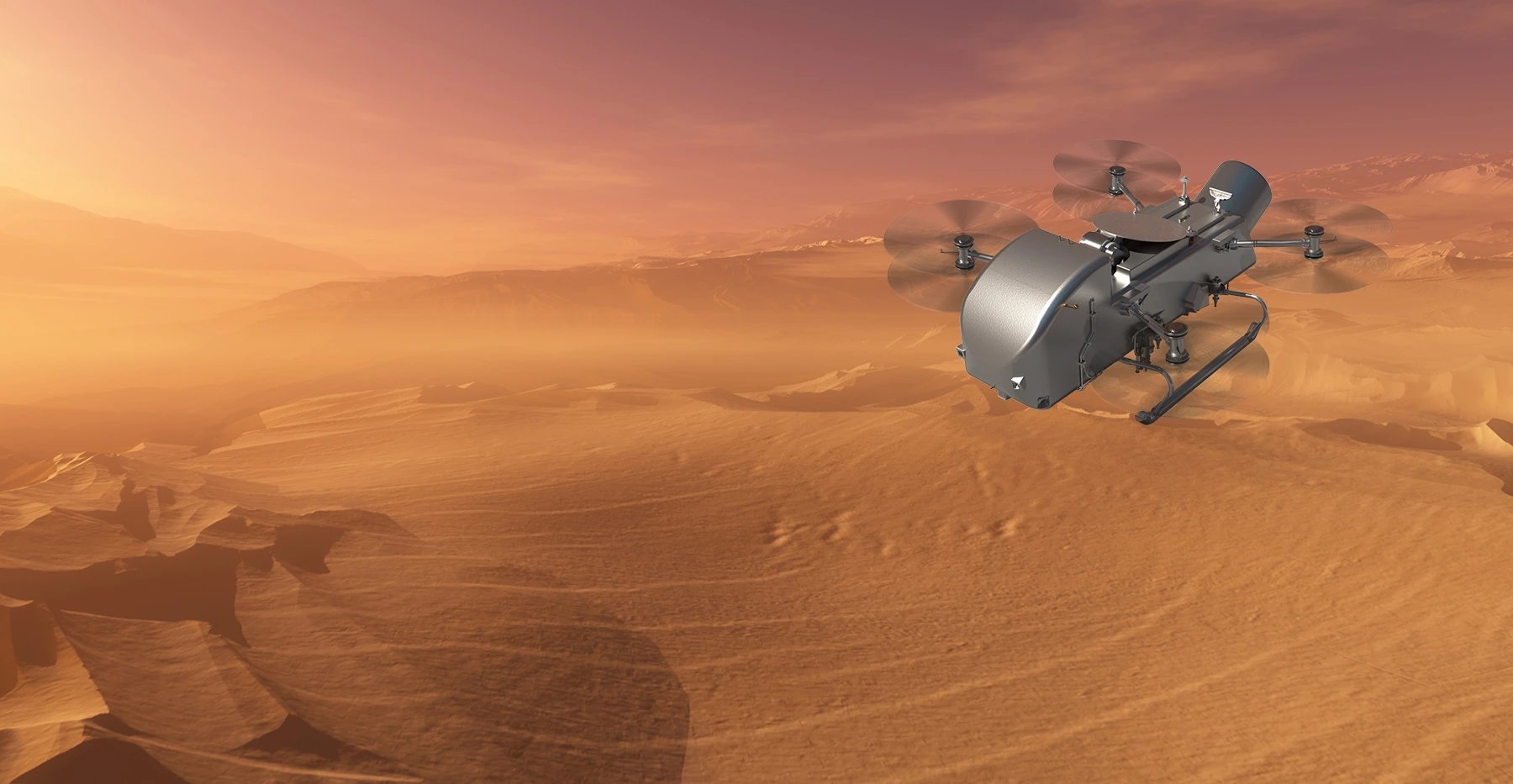
This digest was compiled by AI from multiple sources — links to the originals are below.
NASA's Dragonfly nuclear-powered rotorcraft is scheduled to launch on a SpaceX Falcon Heavy from Kennedy Space Center between 5 and 25 July 2028. The spacecraft will spend six and a half years in cruise and is expected to reach Titan in late 2034.
Key Facts
- NASA selected SpaceX in November 2024 to launch Dragonfly on a Falcon Heavy under a firm-fixed-price contract worth about $256.6 million.
- NASA's Office of Inspector General set a 2024 life-cycle cost baseline of about $3.35 billion for the mission.
- Dragonfly is a nuclear-powered rotorcraft designed to fly through Titan's atmosphere, land, drill into the ground, and analyse samples.
- Dragonfly's interplanetary trajectory will include an Earth gravity assist before entry, descent and landing at Titan.
Launch Contract and Schedule
NASA selected SpaceX in November 2024 to launch Dragonfly on a Falcon Heavy from Launch Complex 39A at Kennedy Space Center. The firm-fixed-price launch-services contract is worth about $256.6 million and includes mission-related costs as well as the rocket. The stated launch period runs from 5 to 25 July 2028. NASA's current Dragonfly mission page gives the launch as no earlier than July 2028 and arrival as late 2034.
Spacecraft and Titan Mission
Dragonfly is a nuclear-powered rotorcraft built to fly through Titan's dense atmosphere, land, drill into the ground, analyse samples, recharge, and fly again. It will carry its whole laboratory between sites rather than asking scientists to infer an entire world from the patch of ground beneath one stationary lander. The journey is expected to take six and a half years, and the spacecraft will follow an interplanetary trajectory that includes an Earth gravity assist. Titan has clouds, weather and seasons, river channels, and lakes and seas fed by methane and ethane rain. On Titan, water is cold enough to be part of the bedrock, while methane and ethane are the liquids moving through the landscape.
Cost and Schedule Risk
Dragonfly has already moved from earlier launch dates because of funding constraints, pandemic effects, supply-chain pressure and development challenges. NASA's Office of Inspector General traced the schedule replans and established a 2024 life-cycle cost baseline of about $3.35 billion. The agency's July 2028 date is a target window, not a guaranteed day. A launch window is the working plan around which the spacecraft, rocket, range and trajectory are coordinated, not a promise immune to hardware findings, weather or programme decisions.
1 source
Time · lag behind first