
NASA to send 3 autonomous rovers to Moon in 2026 CADRE mission
This digest was compiled by AI from multiple sources — links to the originals are below.
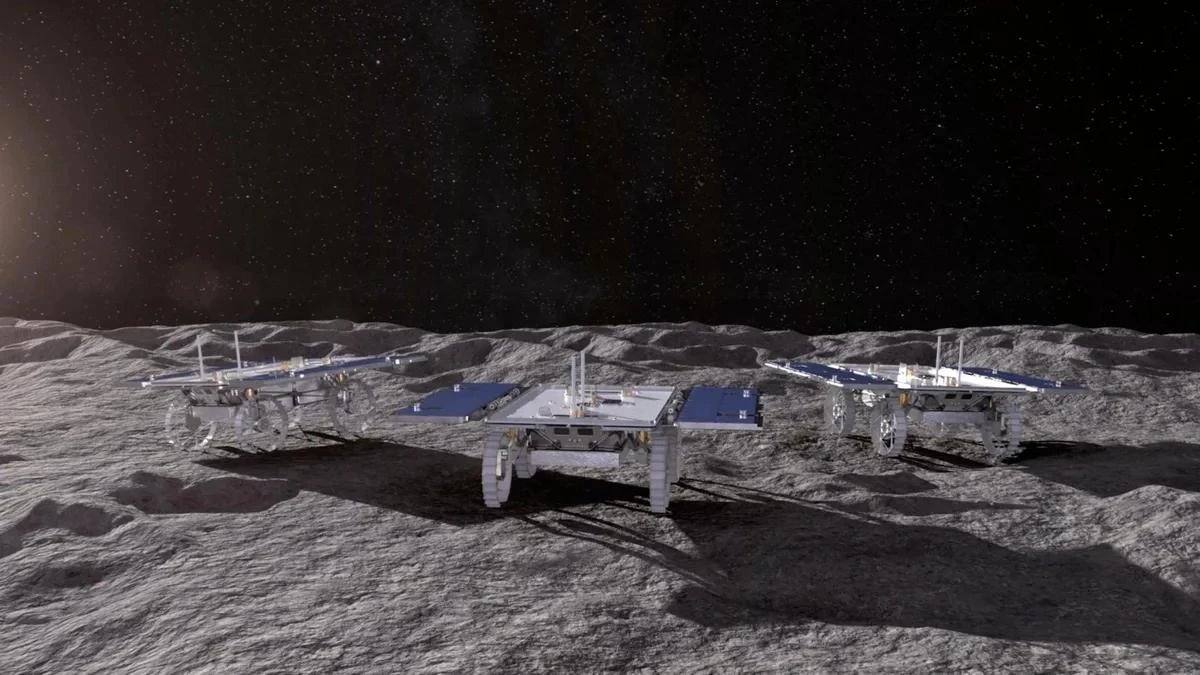
NASA plans to launch the CADRE mission in 2026, sending three autonomous rovers to explore the Moon's Reiner Gamma region. The rovers will operate with minimal Earth control, coordinating tasks and sharing data through a base station on the lunar lander.
Key Facts
- The CADRE mission is scheduled for launch in 2026.
- Three autonomous rovers will explore the Reiner Gamma region in the Ocean of Storms on the Moon's near side.
- The rovers will operate in 30-minute cycles to manage heat from solar radiation and onboard computing, with daytime surface temperatures reaching 114°C.
- The mission is designed to last 14 days and test cooperative autonomous operation of multiple rovers on the lunar surface.
- Over 90% of the Perseverance rover's drives on Mars are already performed autonomously, though its overall route is set by humans.
Mission Overview
NASA is preparing the CADRE (Cooperative Autonomous Distributed Robotic Exploration) mission, in which three autonomous rovers will jointly explore the lunar surface for the first time with almost no direct control from Earth. The launch is scheduled for 2026. Each rover is equipped with solar panels, cameras, and a computing system for autonomous control. After landing in the Reiner Gamma area on the Moon's near side in the Ocean of Storms, the rovers will investigate the surface and subsurface layers using cameras and ground-penetrating radar.
Autonomous Operations
The rovers will independently decide when to move, which route to take, and how to avoid obstacles. Upon receiving a general task from operators, such as 'explore this area', the rovers will divide the territory and work among themselves based on available resources and conditions. Each rover will then plan a safe route to its assigned target. They will exchange data and coordinate actions through a base station on the lunar lander.
Thermal Challenges
Autonomy creates a distinct engineering challenge for CADRE because the Moon has no atmosphere, exposing the rovers to solar radiation and daytime surface temperatures up to 114°C. The computations needed for autonomous navigation generate additional heat. To manage this, the rovers will operate in 30-minute cycles: after a period of activity they will shut down, cool off, and recharge batteries from sunlight, then wake up, re-establish contact with each other, and resume work. The mission is planned to last 14 days and will test the ability of multiple rovers to work cooperatively and autonomously in real lunar conditions.
1 source
Time · lag behind first