
Live Science projects US days above 105 F to triple
This digest was compiled by AI from multiple sources — links to the originals are below.
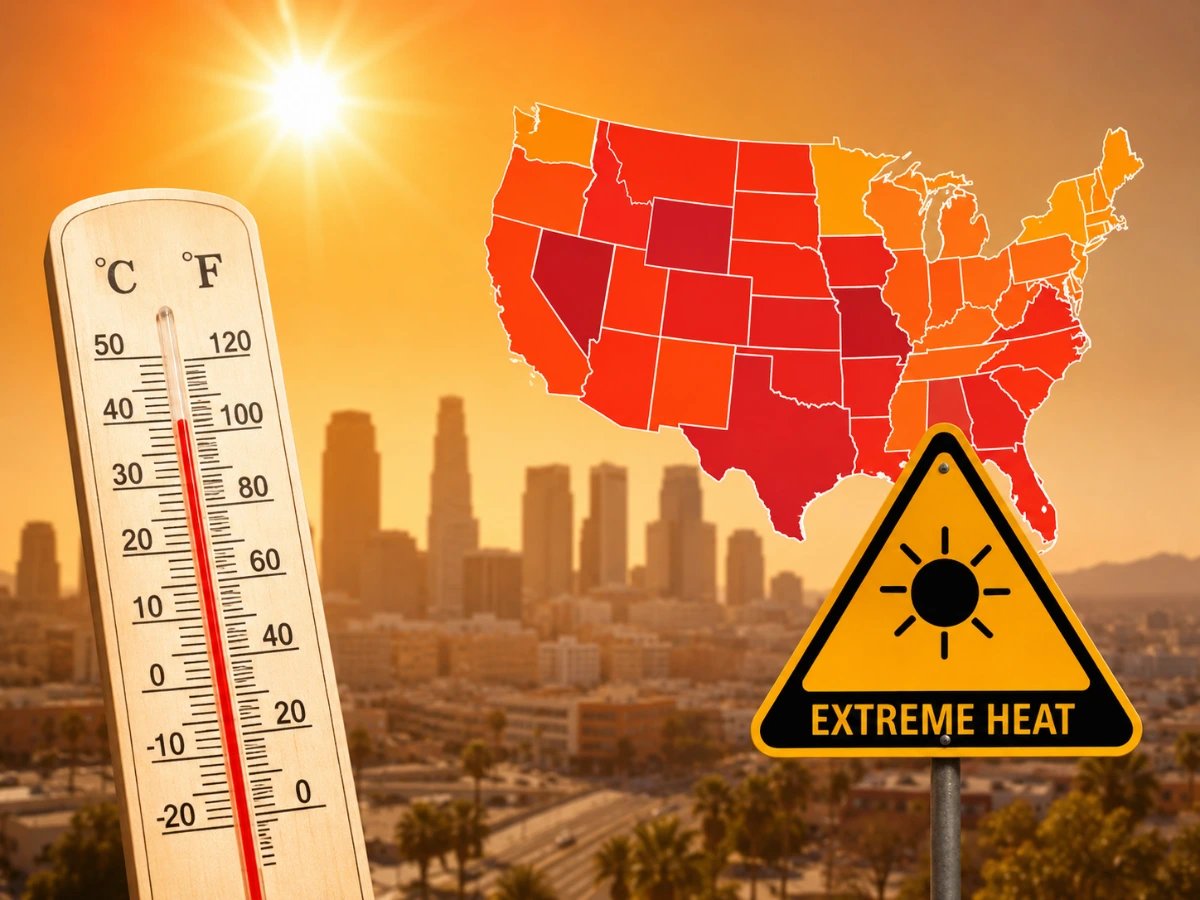
Live Science projects climate change will triple the number of days above 105 degrees Fahrenheit in the United States, citing a Purdue and University of New South Wales study. Researchers set an unsurvivable wet-bulb threshold of 95 degrees Fahrenheit (35 degrees Celsius) at 100 percent humidity. Beyond that threshold, organ shock and blood clotting lead to death.
Key Facts
- Climate change will triple the number of days above 105 degrees Fahrenheit in the United States.
- Purdue University and University of New South Wales researchers began their study of human heat limits in 2010.
- The researchers calculated an unsurvivable wet-bulb threshold of 95 degrees Fahrenheit (35 degrees Celsius) at 100 percent humidity.
- Beyond that threshold, irreversible physiological processes include organ shock, blood clotting, and death.
Upper Human Survival Threshold
In 2010, researchers at Purdue University and the University of New South Wales began investigating the upper temperature limit at which humans can survive. Their calculations identified 95 degrees Fahrenheit (35 degrees Celsius) at 100 percent humidity as the wet-bulb temperature that sets an absolute unsurvivable threshold for the human body. Beyond this temperature, a cascade of irreversible physiological processes begins, sending organs into shock, causing blood to clot, and ending in inevitable death.
US Heat Day Projection
Climate change will triple the number of days above 105 degrees Fahrenheit in the United States. The additional extreme heat days will have health impacts. The projection appears in the same report that sets the 95 degrees Fahrenheit wet-bulb threshold.
1 source
Time · lag behind first