
University of Oklahoma scientists uncover nerve network fueling triple-negative breast cancer
This digest was compiled by AI from multiple sources — links to the originals are below.
University of Oklahoma scientists report in Cell Death & Differentiation that immune cells called macrophages release the protein BDNF inside triple-negative breast cancer tumors, drawing nerves into the cancer. In mice, blocking BDNF signaling stopped nerve ingrowth and significantly reduced tumor growth; patient tumor samples linked higher macrophage and BDNF levels to poorer survival.
Key Facts
- University of Oklahoma researchers report that macrophages release the protein BDNF inside triple-negative breast cancer tumors, prompting nearby nerves to grow into the cancer.
- In mice, a drug that blocks BDNF signaling stopped nerve ingrowth and significantly reduced tumor growth.
- Tumor samples from triple-negative breast cancer patients with higher macrophage and BDNF levels were associated with poorer survival.
- Maureen Cox, an assistant professor at the OU College of Medicine, said the BDNF-blocking drug is already on the market.
The Immune Mechanism
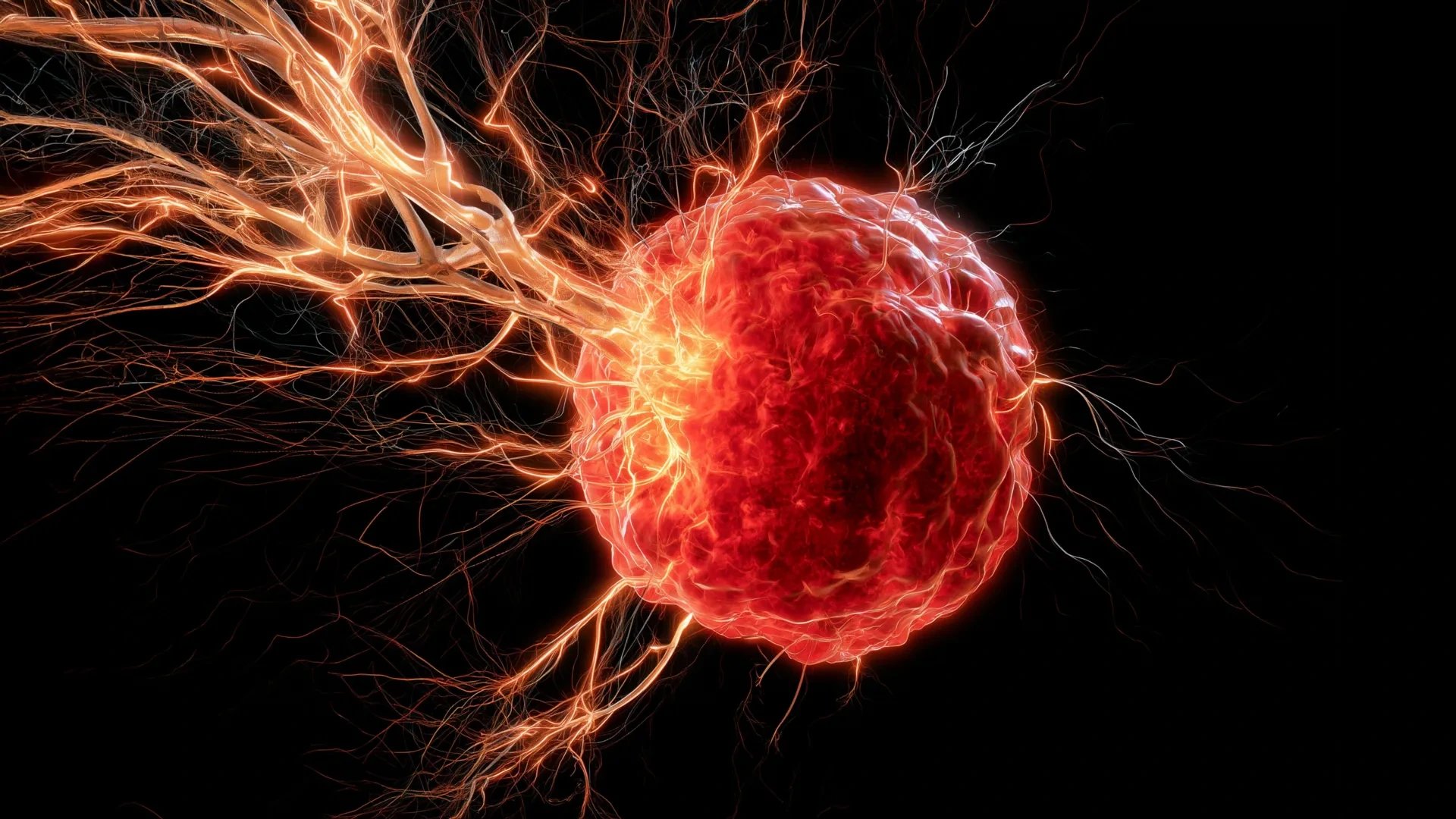
University of Oklahoma scientists have found that triple-negative breast cancer tumors attract macrophages, an immune cell type that normally fights infection and repairs damaged tissue. Inside the tumor, these macrophages release brain-derived neurotrophic factor (BDNF), a protein best known for supporting the growth and survival of nerve cells in the brain. The tumors use this same biological signal to encourage nearby nerves to grow toward and into the cancer. The findings were published in Cell Death & Differentiation.
Mouse Treatment Results
Cox and her colleagues tested a strategy to interrupt the signaling between macrophages and nerves in mice. They used a drug that blocks BDNF signaling and found that nerves no longer grew into the tumors. Tumor growth was also significantly reduced in the treated mice. Maureen Cox, an assistant professor in the OU College of Medicine Department of Microbiology and Immunology and a research member of OU Health Stephenson Cancer Center, said the drug is already on the market and appears promising as a way to target BDNF.
Human Patient Evidence
The researchers also examined data from people with triple-negative breast cancer to see whether the same biological pattern appears in humans. Tumors containing higher levels of macrophages and BDNF were linked with poorer survival. Cox and her team now plan to study exactly how nerves contribute to tumor growth.
1 source
Time · lag behind first