
Stanford researchers engineer natural killer cells to infiltrate solid tumors
This digest was compiled by AI from multiple sources — links to the originals are below.
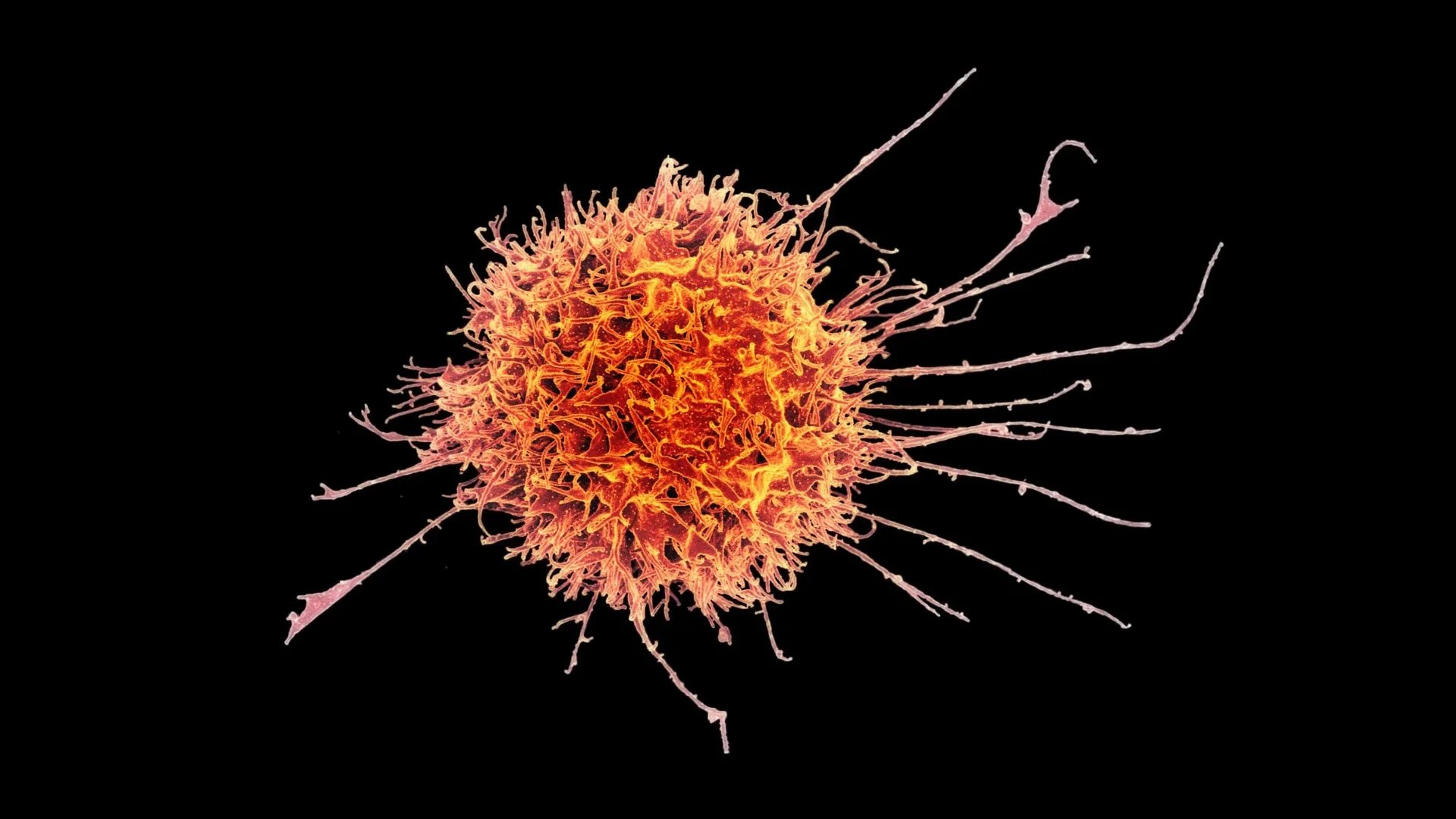
Stanford Medicine researchers have engineered natural killer cells into a tissue-resident form that infiltrates solid tumors and destroys cancer cells. In mice, the modified cells slowed growth of several solid tumor types, with stronger effects when paired with an antibody guiding them to cancer cells. The approach could enable off-the-shelf cell therapy, as natural killer cells do not typically trigger immune rejection between individuals.
Key Facts
- The study was published last month in Science Translational Medicine.
- Senior author John Sunwoo, MD, is the Edward C. and Amy H. Sewall Professor in the School of Medicine.
- Co-lead authors are Nina Horowitz, PhD, Imran Mohammad, PhD, and June Ho Shin, PhD.
- Natural killer cells were first identified in the 1970s.
- The modified cells slowed growth of several solid tumor types in mice.
Tumor Infiltration
The team tested the experimental therapy in mice and found that the modified natural killer cells slowed the growth of several kinds of solid tumors. The effect became stronger when the cells were paired with an antibody treatment that helps guide natural killer cells toward cancer cells. John Sunwoo, MD, senior author of the study, said the tissue-resident natural killer cells infiltrate solid tumors much better than conventional natural killer cells. He described the result as very reproducible, very striking and very clear.
Off-the-Shelf Potential
Natural killer cells do not typically trigger an immune reaction when transferred from one person to another. Most current immune cell therapies must be individually manufactured from a patient's own cells. A treatment based on these modified natural killer cells could potentially be produced in large batches, frozen and made available to many patients. Sunwoo said it would be almost an off-the-shelf drug and could make cell therapy much more accessible to a wider variety of patients.
Natural Killer Cell Biology
Natural killer cells were first identified in the 1970s. Their name comes from their ability to rapidly recognize and destroy abnormal cells, including cancer cells and cells infected by viruses. Unlike B cells and T cells, natural killer cells do not need to encounter a specific target beforehand, allowing them to respond quickly. Some immune cells circulating in the bloodstream eventually settle inside tissues and take on functions tailored to their local environment.
1 source
Time · lag behind first