
US Fish and Wildlife Service installs 46 water-control gates in Great Dismal Swamp
This digest was compiled by AI from multiple sources — links to the originals are below.
The US Fish and Wildlife Service has installed 46 weirs and gates along roughly 240 km of old drainage canals in the Great Dismal Swamp National Wildlife Refuge on the Virginia–North Carolina border. The project aims to rewet drained peatland and keep an estimated 200,000 metric tons of carbon per year in the soil.
Key Facts
- Great Dismal Swamp was once part of a wetland of about 1 million acres before two centuries of drainage canals lowered the water level.
- Rewetting the peat is estimated to keep about 200,000 metric tons of carbon per year in the refuge's peatlands.
- At Pocosin Lakes National Wildlife Refuge in North Carolina, a similar method restored natural water levels on more than 37,000 acres of peatland.
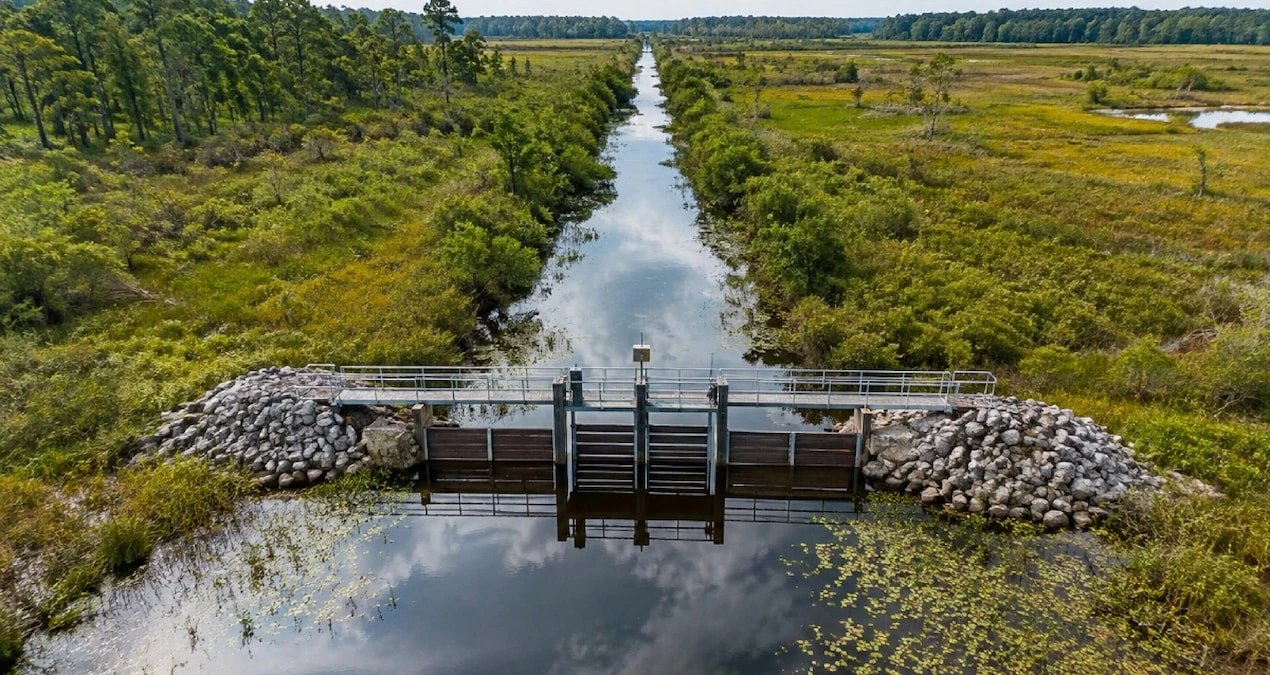
- The gates can be adjusted to reduce outflow in dry periods and allow controlled passage of excess water during heavy rain.
Water Control Gates
The US Fish and Wildlife Service placed 46 weirs and gates along roughly 240 kilometers of old drainage canals in the Great Dismal Swamp National Wildlife Refuge. The refuge straddles the Virginia–North Carolina border and was historically part of a wetland of about 1 million acres. Two centuries of drainage canals lowered water levels and dried the soil. The new structures block water at selected points so rain and surrounding inflow stay in the swamp instead of draining away. Gates are adjustable, reducing outflow in dry periods and allowing controlled release during heavy rain.
Peat Carbon and Fire Risk
Beneath the Great Dismal Swamp lies carbon-rich peat formed from accumulated plant material. When peat stays saturated, plant remains decompose slowly and carbon remains in the soil. When water levels fall, peat dries, air enters, and stored carbon can be released to the atmosphere. Dried peat also catches fire more easily, increasing fire risk in the area. The restoration is estimated to keep about 200,000 metric tons of carbon per year in the peatlands.
Pocosin Lakes Parallel
A similar method is being applied at Pocosin Lakes National Wildlife Refuge in North Carolina. Water outflow from old drainage canals was reduced there as well. More than 37,000 acres of peatland returned to natural water levels.
1 source
Time · lag behind first