
India revives ancient water systems as modern supplies run dry
This digest was compiled by AI from multiple sources — links to the originals are below.
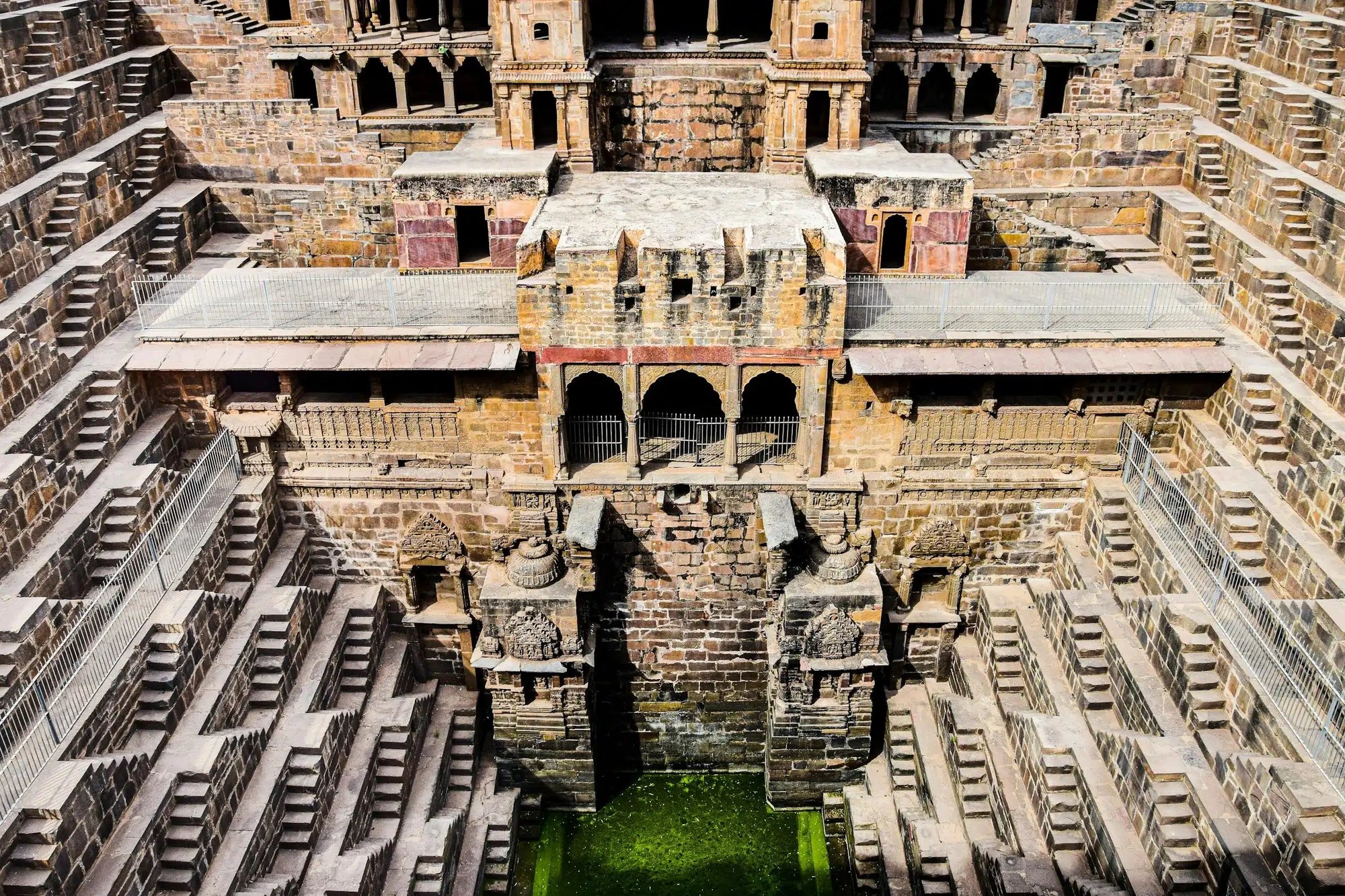
Communities across India are restoring centuries-old water harvesting structures to combat water scarcity and climate change. The Moosi Rani Sagar stepwell in Alwar, Rajasthan, overflowed in 2025 for the first time in over 30 years after a 2021 restoration. Traditional systems like stepwells, johads, and tankas are being recognized as climate-resilient alternatives to modern reservoirs.
Key Facts
- The Moosi Rani Sagar stepwell in Alwar, Rajasthan, overflowed in 2025 for the first time in more than 30 years.
- The stepwell now holds water at depths of up to 30 feet (9 meters), rarely dropping below 20 feet (6 meters) even in the driest months.
- The restoration of Moosi Rani Sagar was undertaken in 2021 by a consortium of non-profits to combat water scarcity and rescue the 200-year-old heritage landmark.
- Traditional water structures in India include baori, johad, kund, tanka, and nadi, which supplied most of rural India for centuries.
- Open traditional structures like stepwells help move water into aquifers, keeping it cool and accessible to nearby wells and handpumps.
Restoration of Moosi Rani Sagar
The Moosi Rani Sagar stepwell, built in the early 1800s, is part of a historic water-harvesting system covering about 1.3 acres (0.5 hectares). Rainwater collects in a reservoir above and flows through a canal lined with recharge wells and a sedimentation tank before reaching the stepwell. Until 2021, water levels in the stepwell were inconsistent and heavily contaminated. A consortium of non-profits restored the system in 2021, and by 2025 it overflowed for the first time in over 30 years. Vijay Sarswat, a 60-year-old Alwar resident, says the water level rarely drops below 20 feet (6 meters) even in the driest months.
Traditional Systems vs Modern Reservoirs
Modern open reservoirs like canals and dams are less effective at restoring groundwater and can lose water to evaporation at a high rate. Open traditional structures like stepwells do not escape evaporation completely, but they help move water beyond reach of the Sun into aquifers. This keeps water cool and reachable by any well or handpump nearby. India's revived systems have many names: baori, johad, kund, tanka, nadi – all traditional structures which supplied most of rural India for centuries. Many of these systems fell out of use only in the last 200 years.
1 source
Time · lag behind first