
1948 Arctic fossil yields largest known plagiosaurid predator species
This digest was compiled by AI from multiple sources — links to the originals are below.
Palaeontologists have identified a fossil left on a remote Arctic island in 1948 as a new species of giant Triassic predator. Arctobatrachus urdensis grew to 2.7 meters, making it by far the largest plagiosaurid ever discovered, according to a study in Papers in Palaeontology.
Rediscovery After Decades
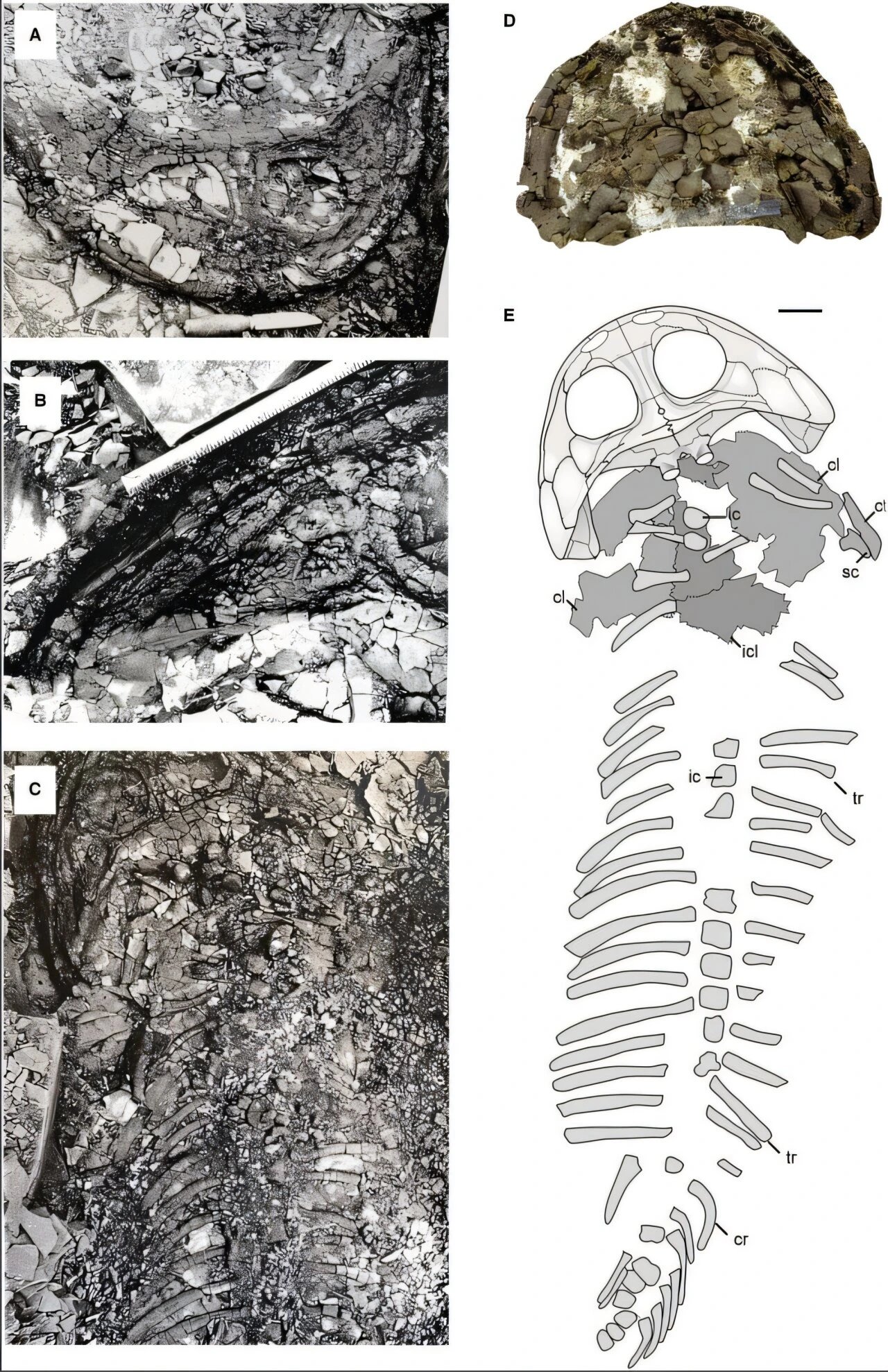
The fossil was first spotted in 1948 by a British expedition on the island of Bjørnøya, roughly midway between Norway and Svalbard. Unprepared for the heavy extraction, the team documented the site with photographs and took some bones but left the main specimen exposed. It was not until 1984 that a Norwegian field party relocated the fossil, now severely weathered by 37 Arctic winters. After a weeklong excavation, the remains were transported to the State Museum of Natural History Stuttgart, where decades later they were fully prepared for study.
A Boomerang-Shaped Skull
The newly named Arctobatrachus urdensis measured approximately 2.7 meters from nose to tail, making it the largest plagiosaurid known. Its skull, 70 cm wide and only 21 cm long, formed a near-perfect semicircle reminiscent of a boomerang. Large teeth and a wide gape indicate it was an active hunter, lying in wait on the bottom of Triassic seas and rivers to suction unsuspecting prey. Plagiosaurids thrived globally, with fossils ranging from Brazil to China, but none this size had been documented before.
1 source
Time · lag behind first