
Antarctic ice sheet formed 34 million years ago in warmer world, study finds
This digest was compiled by AI from multiple sources — links to the originals are below.
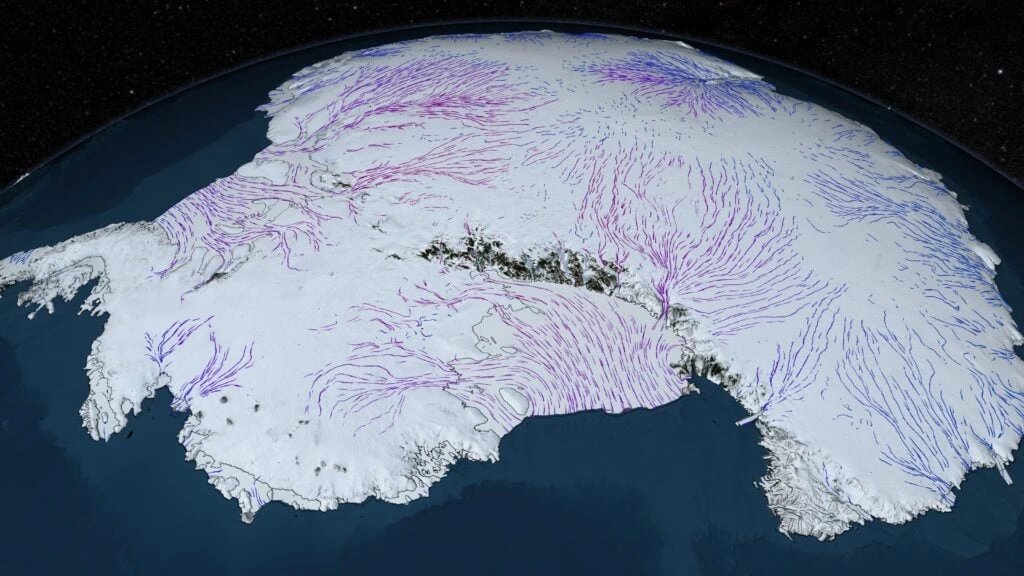
A continental-scale ice sheet formed across East Antarctica about 34 million years ago while global temperatures were roughly 5°C warmer than today, according to a 2026 study in Science. The study links the glaciation to mantle processes from the Jurassic breakup of Antarctica and Africa that slowly lifted the continent into a high plateau. The Arctic remained largely ice-free for almost another 30 million years despite the same greenhouse forcing.
Key Facts
- The East Antarctic Ice Sheet reached continental scale about 33.9 million years ago after roughly ten million years of generally declining atmospheric CO₂.
- Global temperature at the Eocene-Oligocene transition was still about 5°C above the modern level when the ice sheet formed.
- The Arctic did not gain comparable permanent ice until almost 30 million years later.
- The 2026 study in Science integrates geodynamic and topographic reconstructions with energy-balance and ice-sheet models.
- Mantle processes linked to the Jurassic breakup of Antarctica and Africa gradually lifted East Antarctica into a plateau crowned by mountains.
The Eocene-Oligocene Transition
The transition near 34 million years ago was one of the largest climate reorganisations of the Cenozoic Era. Earth moved from the warm greenhouse conditions of the Eocene into the colder Oligocene. A continental-scale East Antarctic Ice Sheet assembled, sea level fell sharply and bright ice began feeding back on the global climate. Geological evidence indicates that isolated and unstable glaciers appeared in Antarctica before the main transition. The event did not create Antarctica’s first patch of ice but established a lasting ice sheet at continental scale.
Mantle Uplift Mechanism
The proposed preparation began during the Jurassic, when Antarctica and Africa were separating as Gondwana broke apart. Stretching and rifting altered the thick continental plate and the mantle beneath it. According to the model, dense material at the plate’s underside detached in coordinated drips. The extra height allowed snow to outlast summer and gave ice a place to begin accumulating. Their simulations show that uplift could have moved the landscape across a glaciation threshold long before global climate reached modern temperatures.
Polar Asymmetry
The Arctic did not gain comparable permanent ice until almost 30 million years later, despite experiencing the same broad change in greenhouse forcing. Antarctica had a continental landmass centred on the pole and, in the new reconstruction, a growing high interior. The asymmetry suggests that global temperature alone cannot explain when each pole crossed its glaciation threshold.
1 source
Time · lag behind first