SNU researchers discover hidden switch in silver nanocatalysts
This digest was compiled by AI from multiple sources — links to the originals are below.
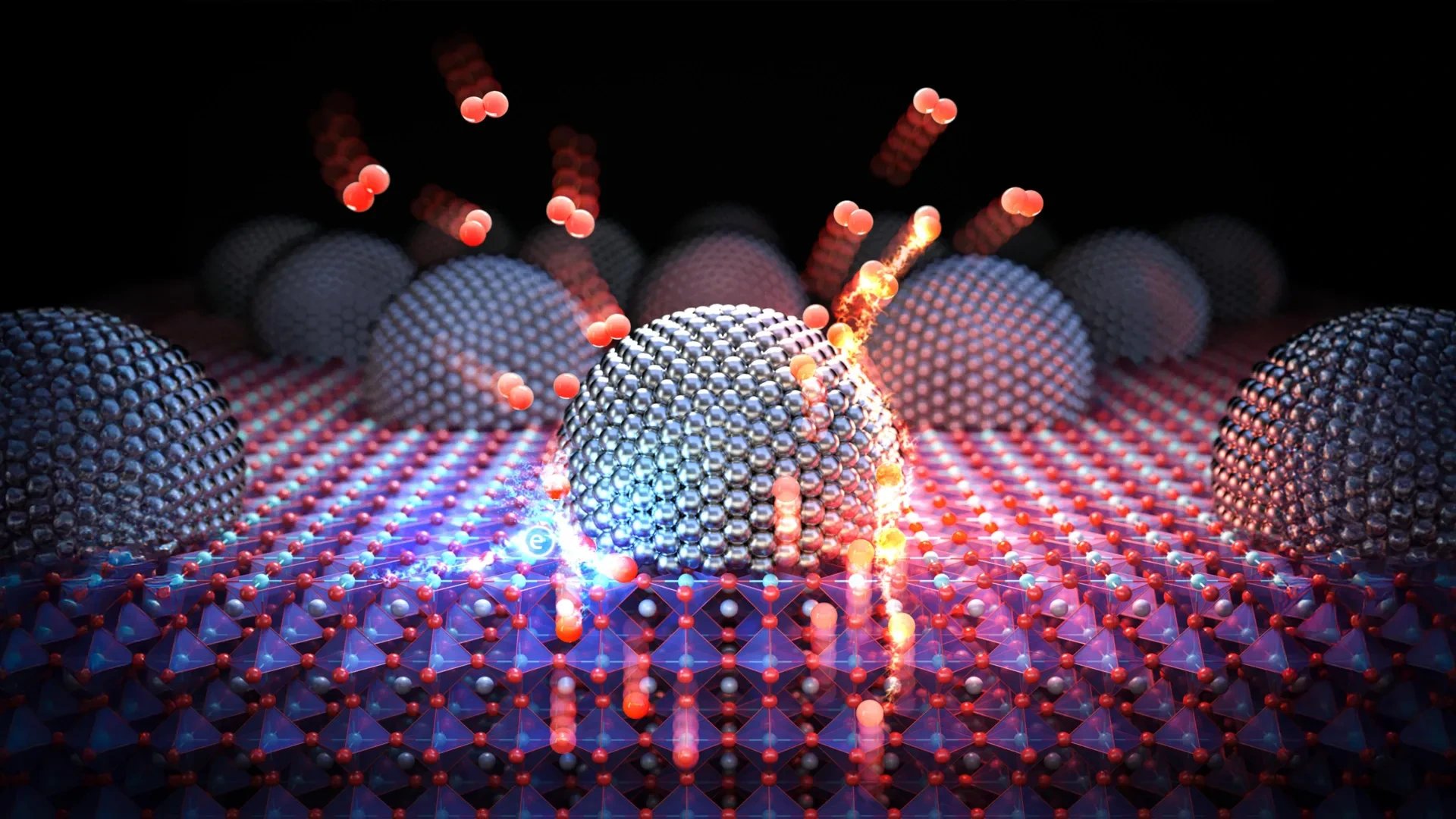
Researchers at Seoul National University and collaborating institutions have discovered that silver nanocatalysts switch their primary reaction sites depending on whether a solid oxide cell is producing electricity or hydrogen. The finding, published today in Energy & Environmental Science, clarifies how these catalysts improve performance and could enable smarter designs for clean power generation and green hydrogen production. The breakthrough overcomes long-standing difficulty in pinpointing catalyst activity within complex electrode structures.
The Site-Switching Discovery
Researchers from Seoul National University, KAIST, and the Korea Basic Science Institute have shown that silver nanocatalysts change their primary reaction location when a solid oxide cell switches between electricity generation and hydrogen production. Using high-resolution analysis, the team found that oxygen reduction and evolution reactions occur at different sites depending on the cell's operating mode. The study, published in Energy & Environmental Science and featured on its outside back cover, resolves a long-standing puzzle about where nanocatalysts are most active within complex electrode structures. Lead authors Professors WooChul Jung and Jeong Woo Han emphasized that this dual-site behavior had not been observed before.
Clean Energy and Hydrogen Impact
Solid oxide cells are a versatile technology that can both generate power and produce green hydrogen by splitting water, making them attractive for renewable energy storage and distributed heat-and-power systems. The discovery that catalyst activity is mode-dependent suggests that electrodes can be engineered to optimize each function separately. This could lead to more efficient electricity generation from hydrogen or natural gas and lower the energy cost of green hydrogen production. With global investments in hydrogen infrastructure expanding, such efficiency gains are critical for commercial viability. The work opens a new design avenue: tailoring catalyst placement to the intended use of the cell.
What's Next
The Seoul National University team plans to extend its investigation to other metal nanocatalysts and evaluate how the site-switching affects long-term durability under industrial conditions. It remains uncertain whether existing solid oxide cell manufacturing processes can be adapted to incorporate spatially optimized catalyst designs for dual-mode operation.
1 source
SNU researchers discover hidden switch in silver nanocatalysts