
Harvard engineers knit shape-shifting fabrics that snap between stable forms
This digest was compiled by AI from multiple sources — links to the originals are below.
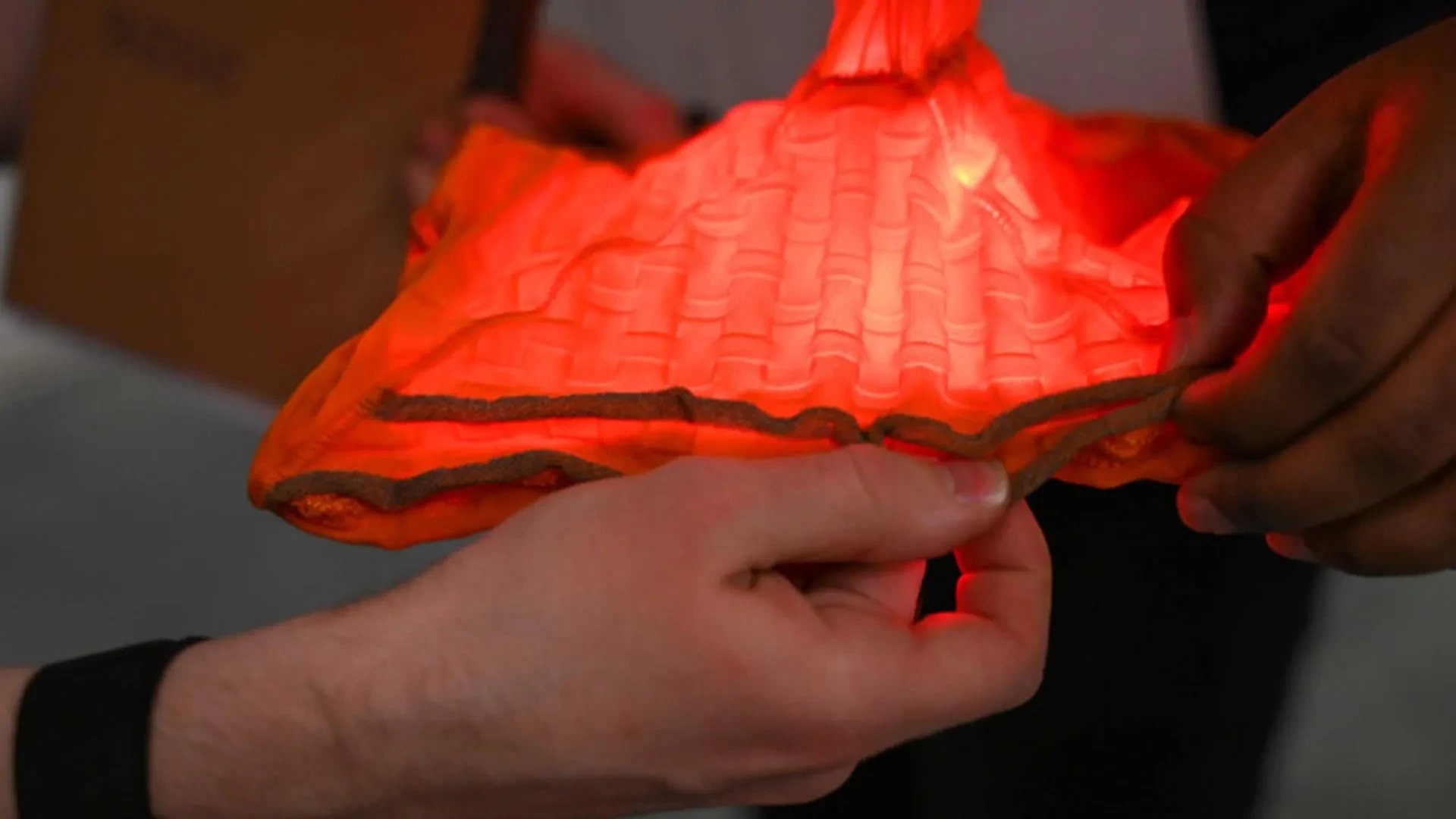
Harvard SEAS researchers have developed machine-knitted fabrics that snap between multiple stable shapes using conventional weft knitting. The team, led by Kausalya Mahadevan, published the findings in Advanced Functional Materials. The work demonstrates programmable textiles that can sense movement and act as switches.
Key Facts
- The research was led by Kausalya Mahadevan, a recent Ph.D. graduate and postdoctoral associate in Katia Bertoldi's lab at Harvard SEAS.
- The findings were published in the journal Advanced Functional Materials.
- The team used weft knitting, the same industrial method used for hats and gloves, to create complex curved structures from yarn alone.
- The fabrics achieve multistability by combining highly elastic yarns with a knitting method called plating, which places different yarns on opposite faces of the textile.
- The researchers simulated the fabric's snap-through behavior by treating each textile as a continuous material rather than modeling individual yarn strands.
Multistable Knitted Textiles
The Harvard team developed machine-knitted fabrics that can snap from one stable shape to another, a property physicists call multistability. The fabrics were created using weft knitting, the industrial method commonly used to produce hats and gloves. By arranging horizontal and vertical stripes in systematic combinations, the researchers produced textiles that could snap between different configurations and remain stable in each one. The snap-through behavior is analogous to a light switch that stays either on or off.
Materials and Mechanism
The team selected highly elastic yarns and used a knitting method called plating, which places different yarns on opposite faces of the textile. This combination produced dense, thick fabrics that naturally curl into three-dimensional forms. The effect relies on the same basic behavior that can cause the bottom edge of a cut T-shirt to curl upward. By studying how the fabric's geometry and material properties influenced snap-through behavior, the team determined the physical conditions that allow knitted textiles to become multistable. They also successfully simulated the behavior by treating each textile as a continuous material rather than attempting to model every individual strand of yarn.
2 sources
Time · lag behind first