Afghanistan’s Qosh-Tepa Canal raises water security risks for Central Asia
This digest was compiled by AI from multiple sources — links to the originals are below.
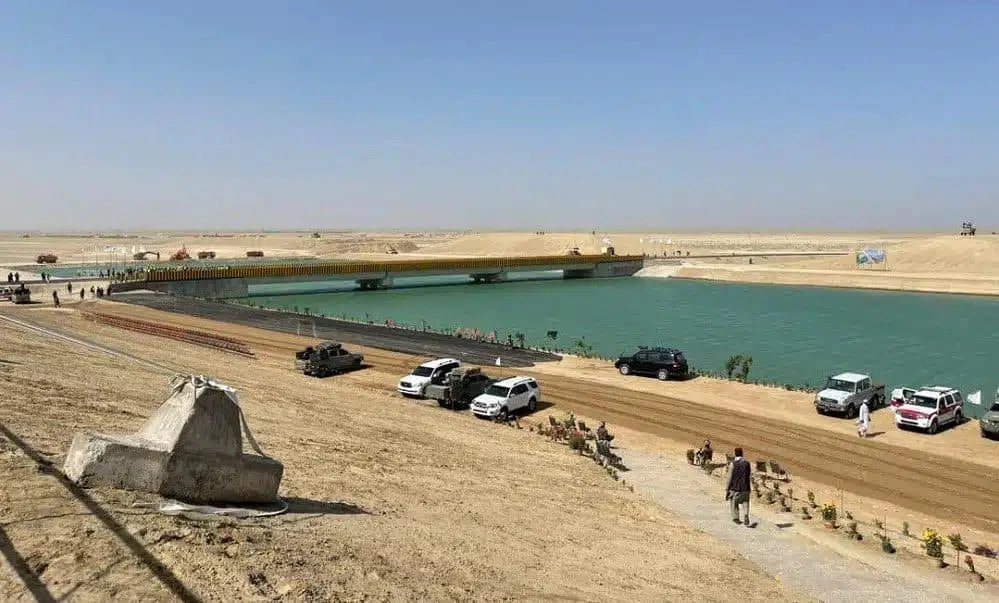
Afghanistan’s Qosh-Tepa Canal, designed to irrigate 550,000 hectares of new farmland, is set to intensify competition for the Amu Darya’s waters, fueling anxiety in downstream Uzbekistan and Turkmenistan. Afghan officials insist the 290-km canal will not significantly lower river levels, citing large volumes of glacial meltwater. However, regional experts warn that full-scale operation could strain water supplies already vital for agriculture in the Aral Sea basin.
Project Scope and Origins
The Qosh-Tepa Canal is a 290-km irrigation artery diverting water from the Amu Darya to Afghanistan’s northern provinces. With a width of 125 meters and depth of 8 meters, it is designed to supply over 500 km of distribution canals and bring 550,000 hectares under cultivation. Estimated costs range from $680 million to $2 billion. The concept originated in the 1970s and was revived in 2018 when the Afghan government engaged U.S. firm AECOM for a USAID-funded feasibility study. By the time the Taliban took power in 2021, the technical documentation was largely complete, allowing construction to begin under the new authorities.
Downstream Water Security
Afghanistan has no formal water-sharing treaty with downstream Uzbekistan and Turkmenistan, leaving Amu Darya allocations governed by outdated Soviet-era frameworks. Project manager Said Zabihullah Miri argues the canal will not significantly affect river levels due to abundant glacial meltwater. However, independent hydrologists estimate that at full capacity, the canal could divert up to 25% of the Amu Darya’s average flow. Former Afghan emergency minister Najib Aga Fahim notes the project predates the Taliban and reflects a long-standing ambition to reduce the country’s reliance on food imports. Downstream states fear the canal will exacerbate water scarcity in the Aral Sea basin, where agricultural economies depend heavily on the river.
What's Next
The canal’s second phase is scheduled for completion in 2028, with full irrigation capacity expected soon after. It remains unclear whether Afghanistan and downstream states can agree on a modern water-sharing framework before the Qosh-Tepa project reaches its maximum withdrawal potential.
1 source
Afghanistan’s Qosh-Tepa Canal raises water security risks for Central Asia