
Stick insects preserve gene dosage mechanism after 1 million asexual years
This digest was compiled by AI from multiple sources — links to the originals are below.
Scientists led by Bangor University's Dr. Darren Parker have found that Timema stick insects retain fully functional dosage compensation mechanisms on sex chromosomes despite reproducing asexually for 1 million years. The discovery, published in PNAS, challenges expectations that such systems decay under relaxed evolutionary pressure.
The Research
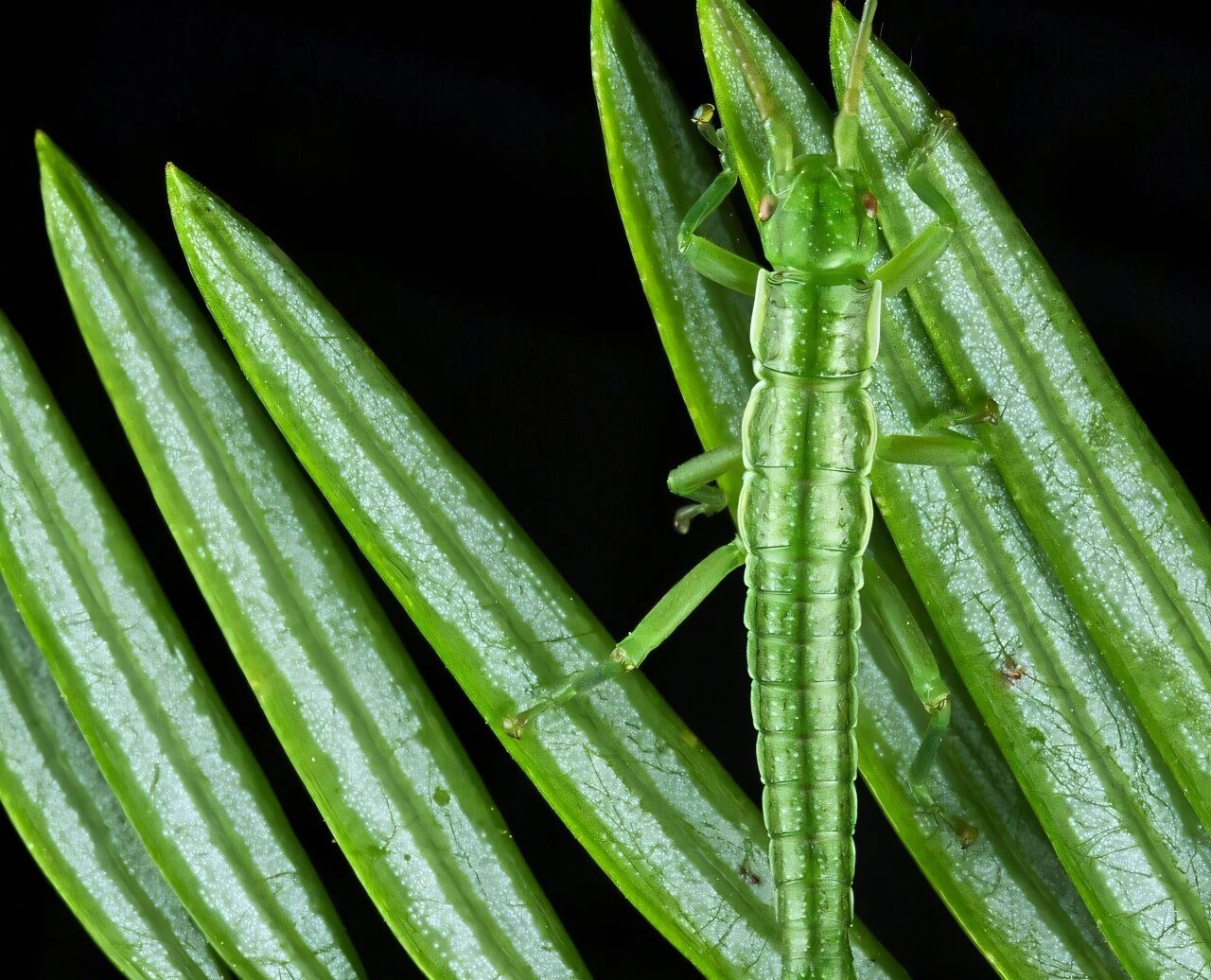
The study examined gene expression in several species of wingless Timema stick insects native to the western United States. These insects reproduce exclusively through parthenogenesis—development of embryos from unfertilized eggs—for over 1 million years, the longest known asexual period for any insect. Led by Dr. Darren Parker of Bangor University, the team focused on the X chromosome dosage compensation system that normally balances gene expression between males (XY) and females (XX). The findings were published in the Proceedings of the National Academy of Sciences.
Dosage Compensation Preserved
In sexually reproducing species, females have two X chromosomes while males have one, requiring mechanisms to equalize gene expression. Timema females reproduce without males, so researchers expected the compensation system to erode over time. Instead, analysis of rare individuals showed the mechanism remained fully operational. Parker noted that the system did not decay away as predicted, defying evolutionary assumptions.
Evolutionary Implications
The persistence of the dosage compensation system after 1 million years of disuse suggests evolution does not rapidly discard all unnecessary biological machinery. The results challenge traditional models that predict degradation of unused genetic systems under relaxed selection. This finding may prompt re-examination of how long certain traits can persist without active maintenance.
1 source
Time · lag behind first