Researchers Identify C/EBPγ Protein Linking EMT and DNA Repair in Lung Adenocarcinoma
This digest was compiled by AI from multiple sources — links to the originals are below.
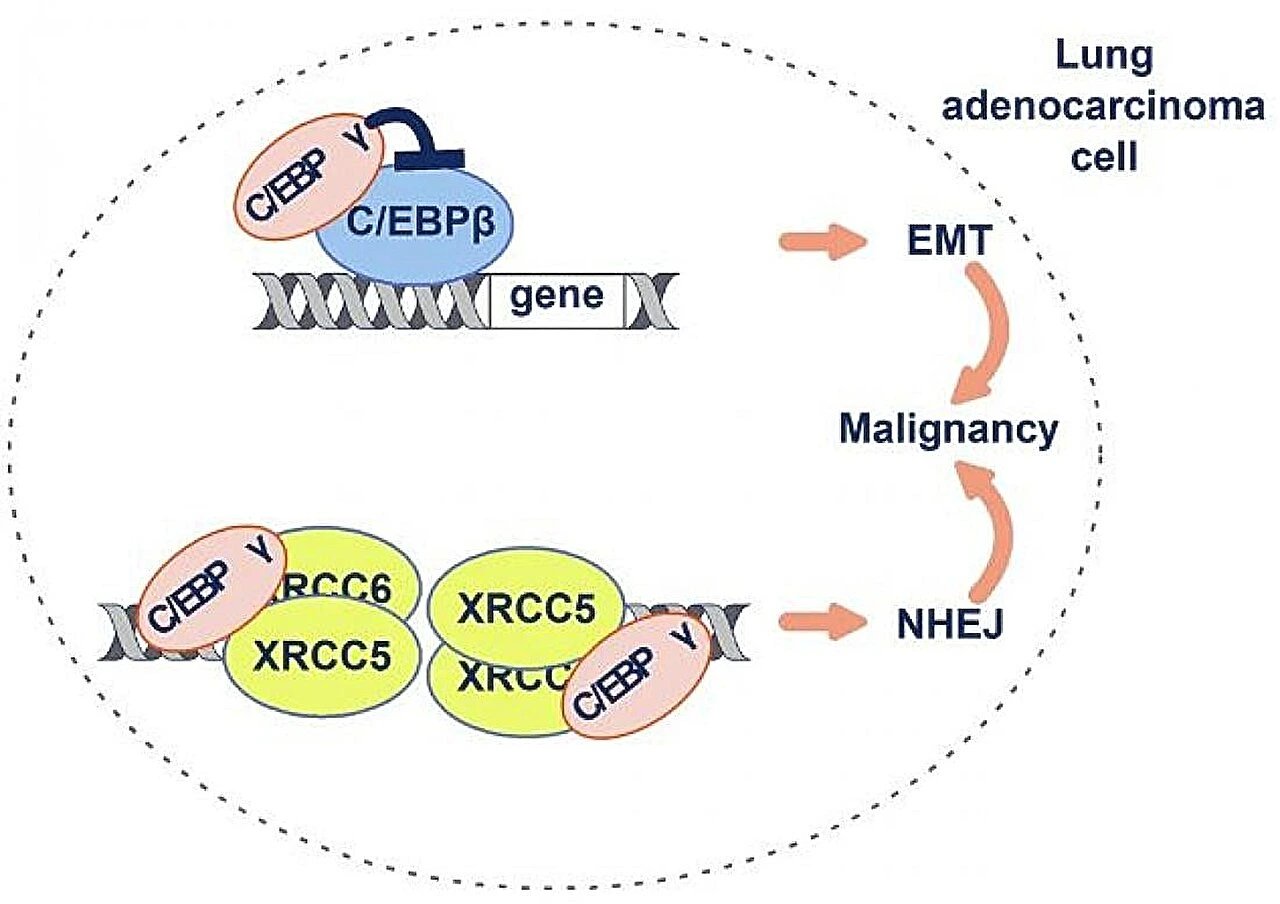
A research team has identified transcription factor C/EBPγ as a novel regulator that simultaneously promotes epithelial-mesenchymal transition (EMT) and DNA double-strand break repair in lung adenocarcinoma cells, according to a study published in Cell Death Discovery. The protein enables cancer cells to acquire aggressive features and resist anticancer therapies by operating through multiple protein interactions.
Epigenomic Screening Approach
Scientists employed an epigenomic method focusing on broad domains of histone H3 lysine 4 trimethylation (H3K4me3), a chromatin signature of cell identity genes, during TGF-β-induced EMT in lung adenocarcinoma cells. They identified C/EBPγ as a candidate when its H3K4me3 domains expanded, signaling a shift in gene regulation. The screen uncovered a previously unrecognized factor connecting cellular plasticity and DNA repair pathways.
EMT Promotion Mechanism
Introducing C/EBPγ into lung adenocarcinoma cells induced classic EMT features: elongated mesenchymal morphology, loss of E-cadherin, and heightened migratory capacity. Depletion of endogenous C/EBPγ suppressed EMT-associated gene expression. Surprisingly, the protein’s EMT function required its leucine zipper domain but not direct DNA binding, indicating reliance on protein partners. Proteomic analyses identified C/EBPβ as a key interactor, with C/EBPγ antagonizing C/EBPβ to drive EMT.
DNA Repair Enhancement
C/EBPγ also physically associates with XRCC5 and XRCC6, core components of the non-homologous end joining (NHEJ) pathway. This interaction accelerates XRCC6 recruitment to damaged DNA, reduces accumulation of DNA damage markers after etoposide treatment, and improves overall repair efficiency. The finding reveals an independent mechanism by which C/EBPγ fortifies cancer cells against DNA-damaging therapies.
What's Next
The findings open avenues for targeting C/EBPγ to sensitize lung cancer cells to treatment. However, it remains unclear whether the protein’s dual function operates similarly in other cancer types or how therapeutic interventions might disrupt these interactions without unintended consequences.
1 source
Researchers Identify C/EBPγ Protein Linking EMT and DNA Repair in Lung Adenocarcinoma