Rhine water levels drop to historic lows at Cologne, Düsseldorf, and Duisburg
This digest was compiled by AI from multiple sources — links to the originals are below.
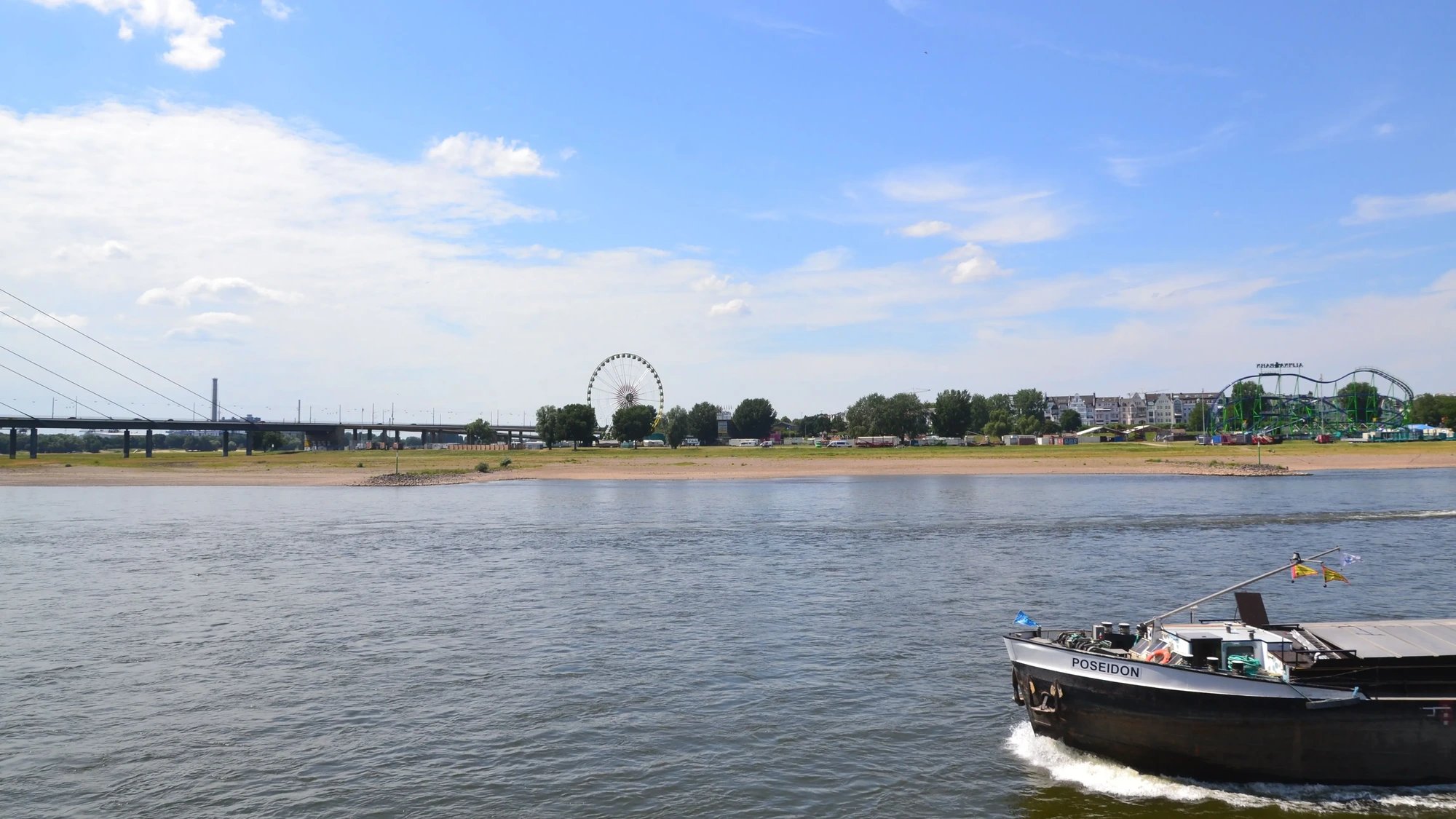
The Rhine River has fallen to record low water levels at three key German gauges, the Federal Waterways and Shipping Administration reported on Monday. Barges are now loading at only 20% capacity to avoid grounding, threatening coal deliveries and potentially reducing German GDP by 0.2%. The crisis follows a prolonged heatwave and drought across Europe.
Record Low Water Marks
In Cologne, the gauge dropped to 68 cm, surpassing the previous historic low of October 2018. Düsseldorf saw water levels fall to a critical 21 cm, while Duisburg-Ruhrort registered 149 cm, also below past records. The Federal Waterways and Shipping Administration published the measurements from these three stations along the Rhine.
Economic Disruption
Barge operators are limiting loads to 20% of capacity to prevent vessels from running aground. The low water hinders coal shipments to thermal power plants and reduces the river's cooling capacity for energy stations. Analysts warn the disruption could shave 0.2% off Germany's GDP. The Rhine is a vital artery for transporting coal and other raw materials.
Wider European Drought
The crisis on the Rhine mirrors extreme conditions across the continent, where a persistent heatwave and drought have strained waterways. In Hungary, the Paks nuclear power plant partially suspended operations due to critically low Danube levels. Over 300,000 people were evacuated in late July as wildfires swept through France and Spain. Meteorologists see no immediate relief in sight.
What's Next
Germany's weather service forecasts no significant rainfall in the coming days. It remains unclear whether water levels will recover in time to avert severe economic fallout.
1 source
Rhine water levels drop to historic lows at Cologne, Düsseldorf, and Duisburg