
Smooth septate junction proteins suppress stem cell overgrowth in fly intestine, study finds
This digest was compiled by AI from multiple sources — links to the originals are below.
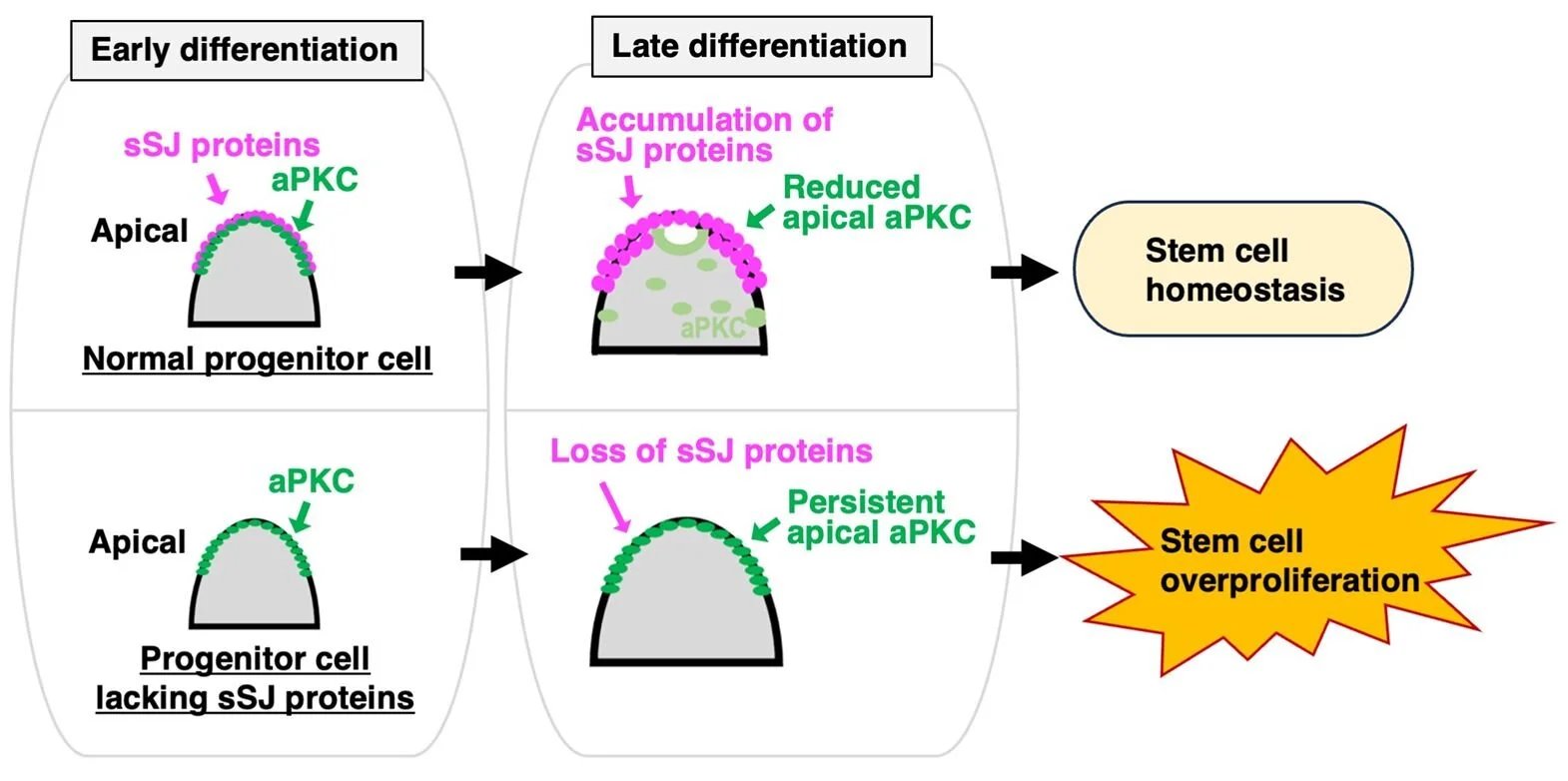
Researchers at the National Institute for Physiological Sciences have discovered that smooth septate junction proteins regulate intestinal stem cell proliferation in fruit flies by expelling the enzyme aPKC from progenitor cells. The mechanism preserves the Hippo signaling pathway, which normally limits cell division, according to a study published in the Journal of Cell Biology. The work reveals an unexpected signaling role for cell-cell adhesion molecules beyond mere structural connections.
Smooth Septate Junctions
Smooth septate junction (sSJ) proteins are cell adhesion molecules located in the intestinal epithelium of fruit flies (Drosophila). Earlier research by the same team at the National Institute for Physiological Sciences demonstrated that loss of sSJ proteins causes intestinal stem cells to overproliferate, though the molecular basis was not understood. The new study turned to progenitor cells, which are generated from stem cells and differentiate into mature enterocytes, to uncover the regulatory mechanism.
aPKC Displacement
In normal progenitor cells, sSJ proteins accumulate at the apical region as differentiation proceeds, while the enzyme aPKC — a known driver of cell proliferation — is progressively removed from that site. In contrast, progenitor cells lacking sSJ proteins retain aPKC at the apical cortex. The researchers found that artificially maintaining aPKC at the apical region was sufficient to trigger excessive intestinal stem cell division, demonstrating that proper spatial control of aPKC is essential for tissue homeostasis.
Hippo Pathway Preservation
Persistent apical aPKC suppresses the activity of Kibra, a key activator of the Hippo signaling pathway, which normally restricts cell proliferation. By forcing aPKC out, sSJ proteins allow Kibra to function, thereby keeping the Hippo pathway active and preventing growth-promoting signals. Associate Professor Yasushi Izumi of the National Institute for Physiological Sciences noted that this reveals an unexpected signaling role for cell-cell adhesion molecules, with potential relevance to understanding tissue maintenance and cancer development in higher organisms.
1 source
Time · lag behind first