
Scientists discover BatR protein critical for biofilm formation in Pseudomonas aeruginosa
This digest was compiled by AI from multiple sources — links to the originals are below.
Researchers at the John Innes Centre and the University of Warwick have identified a protein called BatR that regulates biofilm architecture in Pseudomonas aeruginosa. The discovery, published in PLOS Pathogens, reveals a molecular network that could lead to new treatments for chronic infections like those in cystic fibrosis patients.
The Discovery
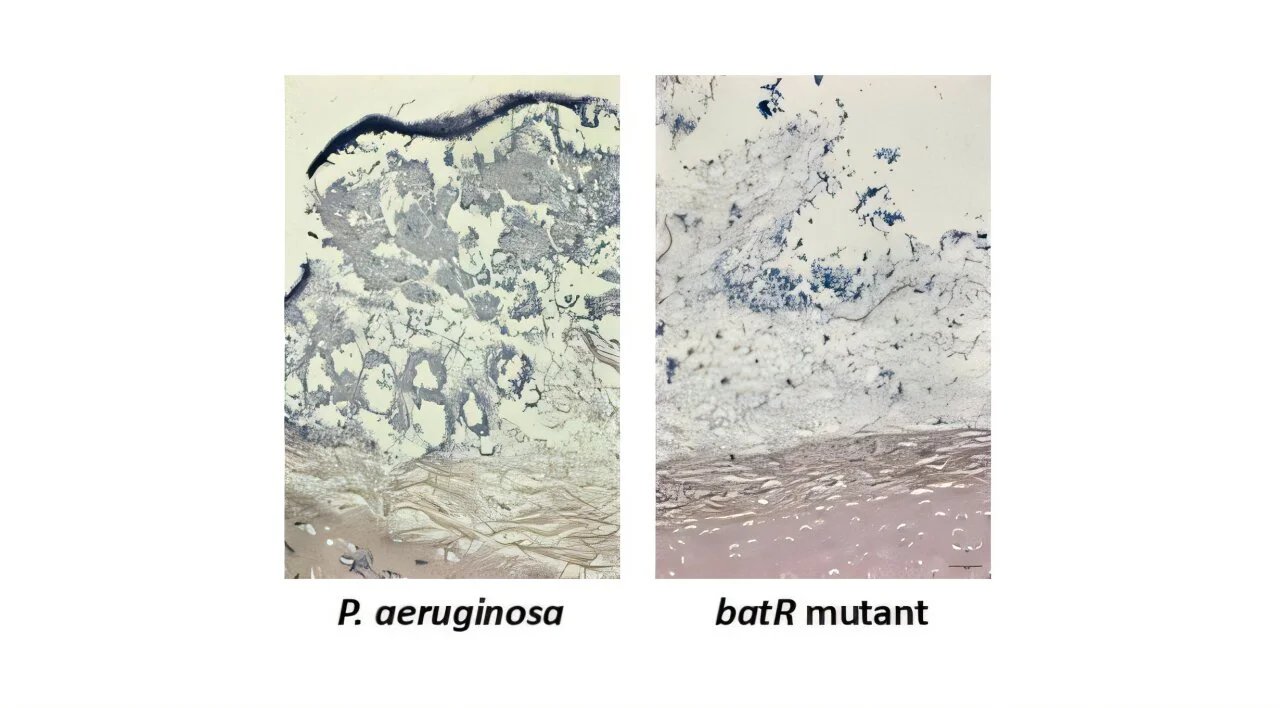
A team at the John Innes Centre, in collaboration with the University of Warwick, identified a novel protein called Biofilm Architecture Regulator (BatR) in Pseudomonas aeruginosa. The research, published in PLOS Pathogens, used experimental models including infected pig lung tissues that mimic cystic fibrosis infections and a synthetic chronic wound model. Microscopy, proteomics, and molecular analyses revealed that BatR is part of a signaling network involving the stress response enzyme SrkA.
Mechanism of Action
Experiments comparing standard P. aeruginosa with mutant strains showed that disrupting the BatR/SrkA network markedly reduced biofilm viability under low-dose antibiotic exposure. BatR was found to be a small protein with no obvious structural resemblance to known regulators, yet its disruption had severe effects on biofilm stability and robustness. The network plays a significant role in how biofilms respond to antibiotic challenges, contributing to the resilience of chronic infections.
Therapeutic Potential
The study's authors suggest that BatR and its associated pathway could serve as new targets for anti-infective treatments. Professor Jacob Malone, corresponding author, stated that the findings have implications for understanding biofilm architecture and present potential targets for future therapies. The research is particularly relevant for conditions like cystic fibrosis, where P. aeruginosa biofilms cause persistent lung infections that are difficult to treat.
1 source
Time · lag behind first