Hubble Deep Field reveals 3,000 galaxies in empty patch of sky
This digest was compiled by AI from multiple sources — links to the originals are below.
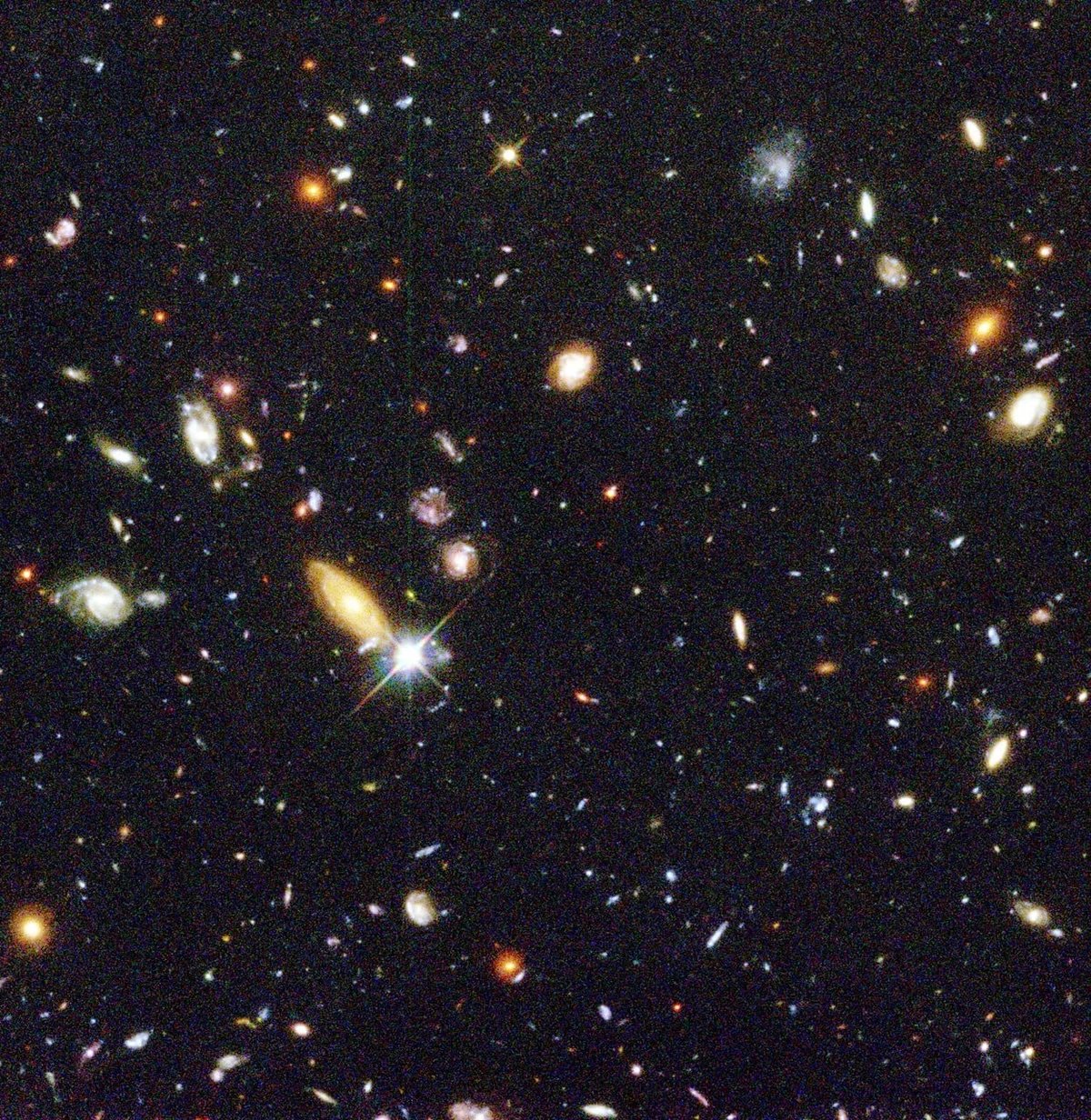
In December 1995, astronomers aimed the Hubble Space Telescope at a seemingly empty patch of sky near the Big Dipper for ten days, capturing 342 exposures. The resulting image revealed approximately 3,000 distant galaxies in various stages of evolution. The field, chosen for its lack of bright objects, became a core sample of the universe.
The Decision
The project was initiated by Robert Williams, then director of the Space Telescope Science Institute, who used director's discretionary time for a long public exposure. Williams and his team spent nearly a year preparing, taking test images and selecting a field in Ursa Major that would avoid bright objects and remain viewable without interruption. The patch was about the width of a dime seen from 75 feet away, chosen precisely because it looked unpromising.
The Method
Between December 18 and 28, 1995, Hubble's Wide Field and Planetary Camera 2 took 342 separate exposures of the same dark patch. With each exposure, more faint light accumulated, revealing objects too dim to register in a short image. The final image combined over 100 hours of total exposure time, showing almost 3,000 galaxies.
What's Next
The Hubble Deep Field remains a benchmark for deep-sky imaging, with subsequent surveys like the Hubble Ultra Deep Field pushing further back in time. It remains unclear how many more galaxies await discovery in even deeper exposures.
1 source
Hubble Deep Field reveals 3,000 galaxies in empty patch of sky