
Astronomers find third giant planet hidden in Beta Pictoris debris disk
This digest was compiled by AI from multiple sources — links to the originals are below.
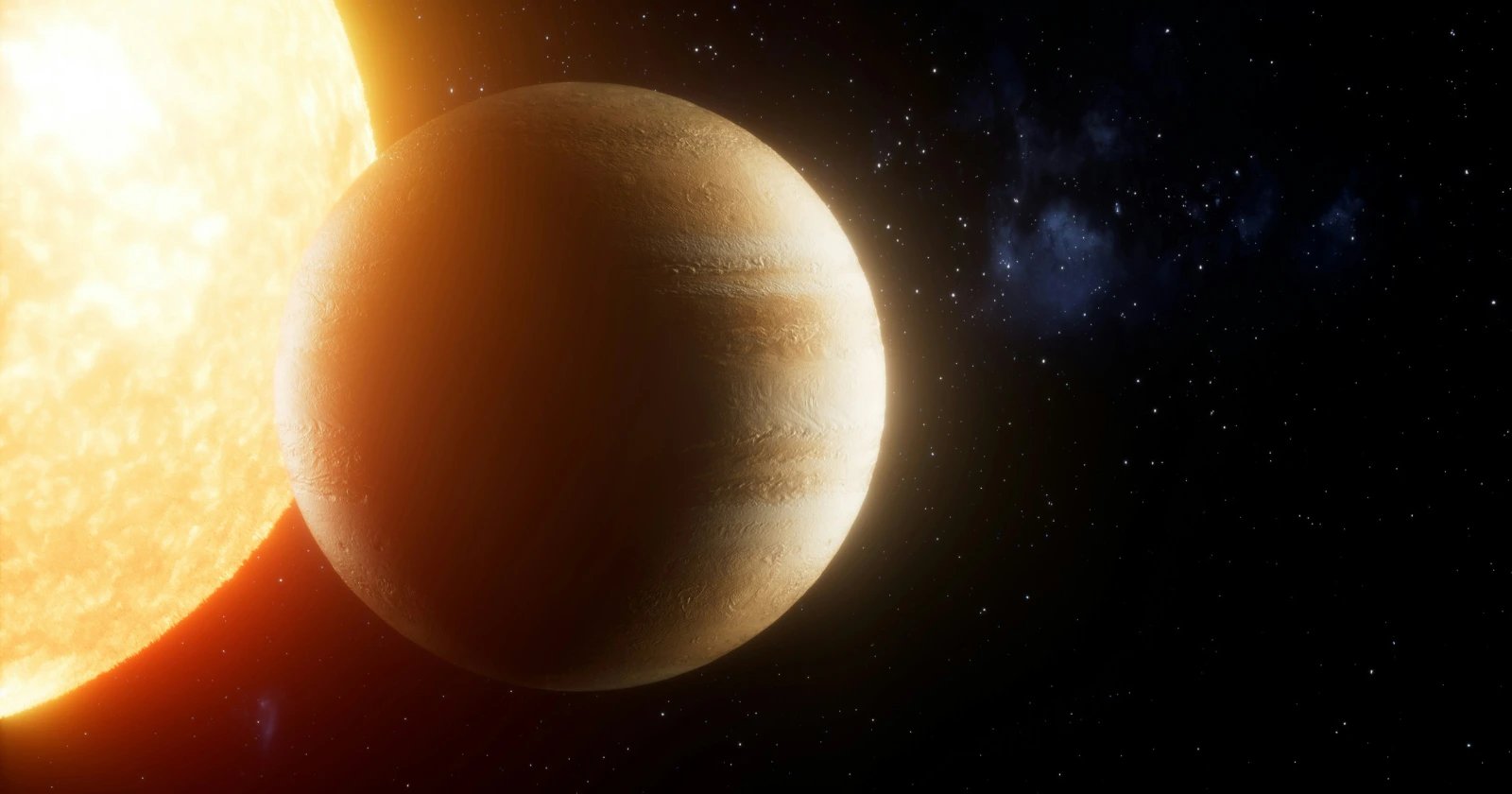
Two research teams have announced the discovery of a third giant planet, Beta Pictoris d, orbiting the young star Beta Pictoris, 63 light-years from Earth. The planet, with a mass two to four times that of Jupiter, was found hiding in the glare of the star’s bright debris disk while astronomers were studying the system’s known planets with the James Webb Space Telescope.
An Unexpected Signal
The discovery was made when Aidan Gibbs and colleagues at the University of California, San Diego, used the James Webb Space Telescope’s NIRSpec instrument to study the atmosphere of Beta Pictoris b, one of the system’s known giant planets. An unexpected signal appeared in the data, later confirmed by a separate team using ground-based telescopes in Chile’s Atacama Desert. The new planet, designated Beta Pictoris d, had been overlooked despite the star being one of the most intensively observed in the night sky for over 30 years.
Hidden in the Glare
Beta Pictoris is encircled by a bright debris disk, which scatters starlight and produced a glare that masked the planet’s presence. The planet orbits at a distance comparable to Neptune’s in the solar system, right at the inner edge of the disk. With an estimated mass of 2–4 Jupiters, it is smaller than its siblings Beta Pictoris b and c but still a gas giant. The disk’s brightness made Beta Pictoris d appear indistinguishable from background noise in earlier observations.
A Well-Studied Star System
Beta Pictoris, a 23-million-year-old star, has long served as a model for planetary formation in astronomical textbooks. It was already known to host two massive planets, Beta Pictoris b and c, with b being one of the first exoplanets directly imaged. The discovery of a third planet underscores how even the most familiar astronomical targets can harbor hidden complexity. Researchers say the find demonstrates the power of JWST to reveal objects that ground-based telescopes alone could not resolve.
1 source
Time · lag behind first