
Uzbekistan to challenge Kazakhstan as Central Asia logistics hub
This digest was compiled by AI from multiple sources — links to the originals are below.
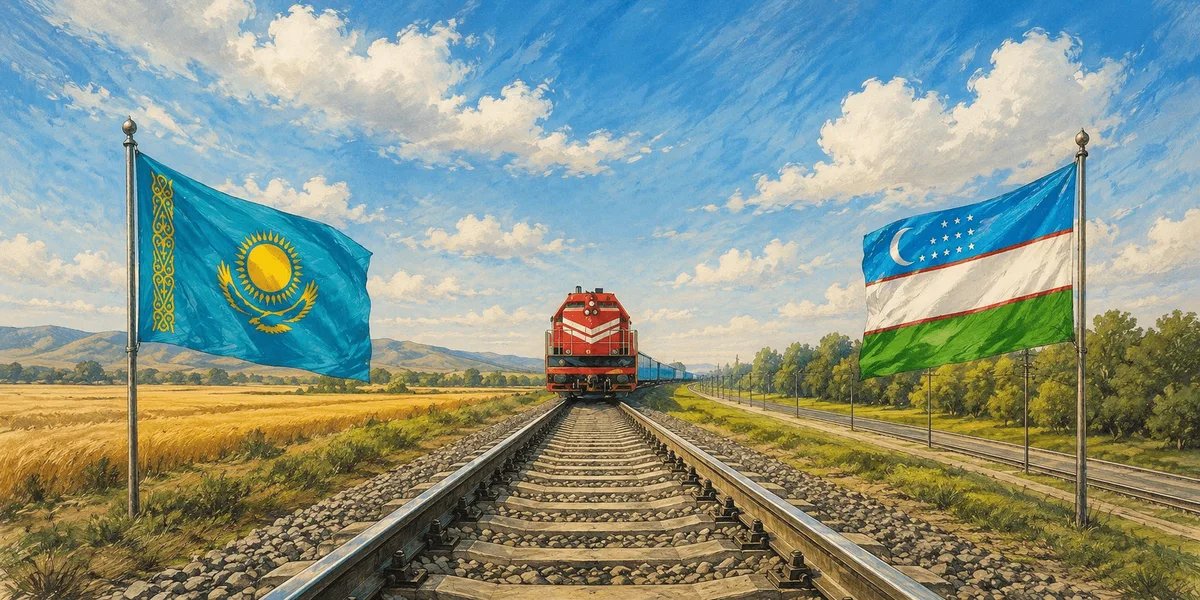
Uzbekistan is pursuing new transport corridors and infrastructure projects to rival Kazakhstan's dominance in Central Asian logistics. The push includes expanded rail links and investments in multimodal hubs, aiming to capture a larger share of regional trade flows.
Logistics Ambitions
Uzbekistan is investing in the Trans-Afghan Corridor, a rail route through Afghanistan to Pakistan and Indian Ocean ports, bypassing Kazakhstan. The project, backed by the Asian Development Bank, could reduce transit times for Uzbek exports by 30%. Tashkent is also expanding the Navoi International Airport as a regional air cargo hub, targeting 200,000 tons of annual throughput by 2028.
Kazakhstan's Response
Kazakhstan, which handles over 60% of Central Asia's rail freight, is modernizing its Khorgos dry port on the China border. The country plans to increase transshipment capacity by 40% by 2027, according to Kazakhstan Railways. Astana is also negotiating tariff reductions with Chinese partners to retain transit traffic.
Regional Competition
Both nations are vying for Belt and Road Initiative investments, with China funding $2.5 billion in Kazakh logistics projects and $1.8 billion in Uzbek ones since 2020. The rivalry extends to digital customs systems, where Uzbekistan's new single-window platform reduced clearance times to 4 hours, versus Kazakhstan's 6-hour average.
1 source
Time · lag behind first