Superionic conduction mechanism revealed by Osaka team
This digest was compiled by AI from multiple sources — links to the originals are below.
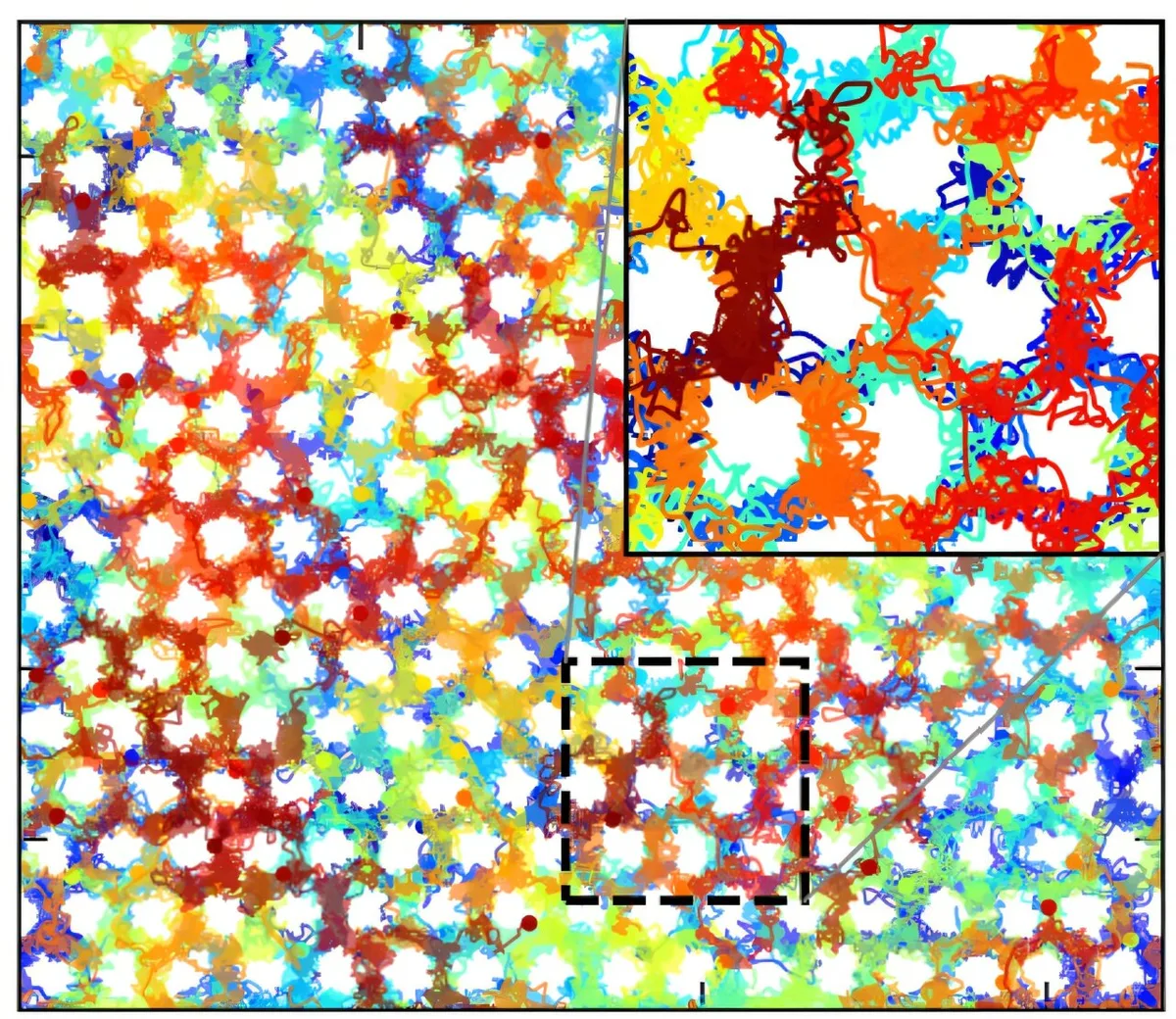
A research team led by the University of Osaka, in collaboration with AIST, RIKEN, and the Institute of Science Tokyo, has uncovered a fundamental mechanism behind superionic conduction, where ions move rapidly through a solid crystal while its lattice remains intact. The discovery explains how ions flow like a liquid within a solid framework, potentially enabling advances in battery and fuel cell design. The findings were published in a peer-reviewed journal.
The Discovery
Researchers at the University of Osaka, working with AIST, RIKEN, and the Institute of Science Tokyo, have identified the mechanism enabling superionic conduction. In this phenomenon, ions move through a solid crystal at rates comparable to liquids, while the crystal lattice remains intact. The team used advanced imaging techniques to observe ion dynamics in real time.
Implications for Energy Storage
Superionic conductors are key to next-generation batteries and fuel cells, offering higher efficiency and faster charging. The new understanding could guide the design of materials with enhanced ionic conductivity. The study provides a framework for predicting ion behavior in solid electrolytes.
What's Next
The team plans to explore how the mechanism applies to other crystalline materials. It remains unclear whether the findings will translate into commercial applications within the next decade.
1 source
Superionic conduction mechanism revealed by Osaka team