
Tenge nominal effective rate falls 2.5% in June, real rate dips in May
This digest was compiled by AI from multiple sources — links to the originals are below.
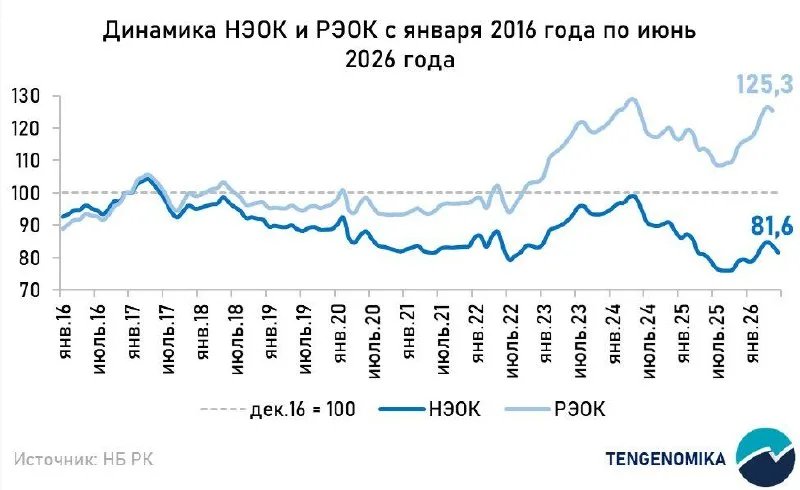
The nominal effective exchange rate (NEER) of the tenge fell to 81.6 points in June, down 2.5% month-on-month, marking the second consecutive monthly decline. The real effective exchange rate (REER) for May dropped to 125.3 points, a 0.9% decrease, pausing the trend of deteriorating price competitiveness seen since early 2026.
Nominal Effective Rate Decline
The NEER index, which measures the tenge against a basket of currencies weighted by trade, fell to 81.6 points in June, a 2.5% month-on-month drop. Excluding oil and gas condensate trade, the index declined to 86.4 points (-2.7% m/m). This signals a broad weakening of the tenge against currencies of key trading partners, continuing the trend from May.
Real Effective Rate Reversal
The REER for May, the latest available, fell to 125.3 points, down 0.9% from April, after months of rapid growth. The index excluding oil trade dropped to 129.4 points (-1.4% m/m). The decline suggests that nominal tenge weakness is beginning to offset high domestic inflation, though the REER remains well above early-2026 levels.
Bilateral Rate Divergence
In May, the real bilateral exchange rate (ROK) against the Russian ruble fell sharply by 4.7% to 108.1 points. Changes against other currencies were modest: the yuan ROK edged down 0.2% to 143.0 points, the dollar ROK slipped 0.3% to 119.0 points, and the euro ROK rose 0.5% to 113.5 points. The ruble's decline drove the overall REER drop.
1 source
Time · lag behind first