
Bismuth-MoS₂ interface enables bidirectional quantum state control
This digest was compiled by AI from multiple sources — links to the originals are below.
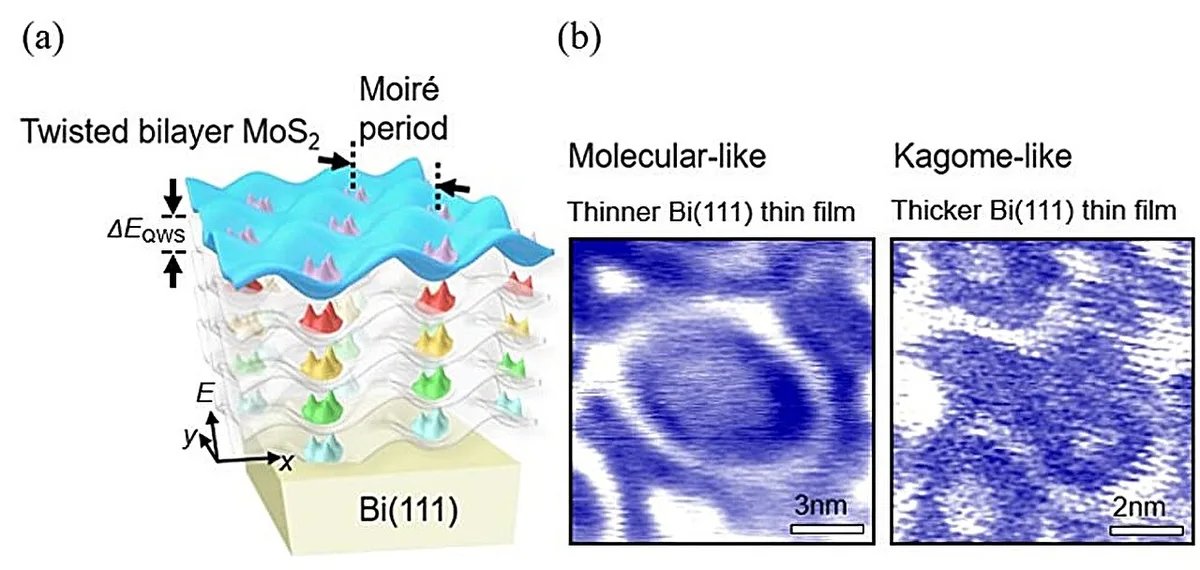
Researchers demonstrated precise bidirectional control of electron spatial arrangement in quantum electronic states without applied voltage, using interface engineering between bismuth thin films and MoS₂. The study, published in Nature Communications, achieves gate-free manipulation of electron wavefunctions in two directions simultaneously.
Interface Engineering
The team engineered interfaces between semimetal bismuth (Bi) thin films and two-dimensional semiconductor MoS₂. This approach allowed control over electron spatial arrangement in two directions without any applied voltage, a first for quantum electronic states.
Bidirectional Control
The method enables gate-free manipulation of electron wavefunctions, achieving bidirectional control simultaneously. This contrasts with conventional techniques that require external voltages and typically allow only one-directional control.
1 source
Time · lag behind first