
Madrid: housing and migration protests take to the streets
In late September, Madrid was the scene of two waves of protest: the eviction of an 87-year-old woman sparked days of demonstrations against the housing crisis, while migration policy drew a separate rally. Both protests are aimed at the government of Pedro Sánchez.
Sources
· 8Протесты из-за жилья в Мадриде идут третий день после выселения 87-летней женщины
1В Мадриде 20 тысяч человек вышли на протест против миграционной политики Испании
2В Мадриде протесты после выселения 87-летней женщины из квартиры
3Испания просит Frontex обработать 5000 мигрантов в Сеуте на фоне беспорядков
4Испания вернула 70 000 мигрантов в Марокко после перехода в Сеуте, унесшего жизни 88 человек
5Санчес отрицает, что знал заранее о наплыве 72 000 мигрантов в Сеуту
6Protesters camp overnight after eviction of elderly Spanish woman | AP News
7Across Spain, tens of thousands march to protest the growing housing crisis | AP News
8Key points
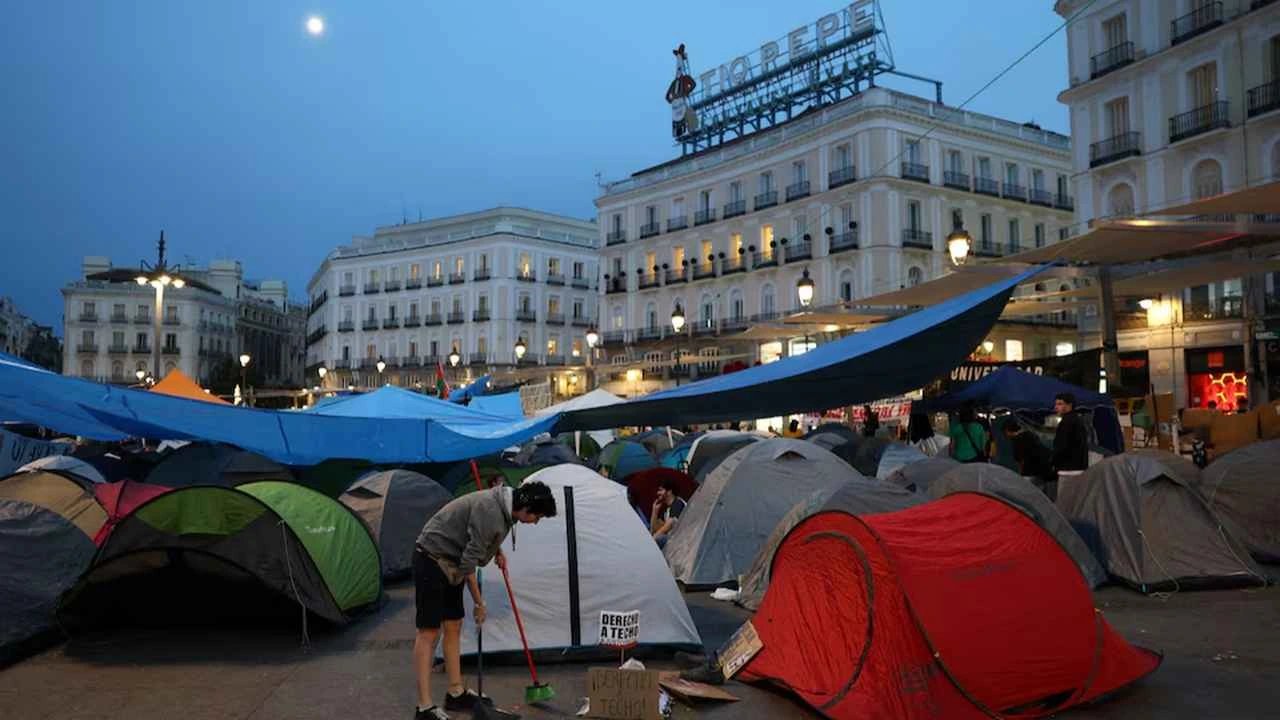
- Housing protests in Madrid are in their third day: demonstrators have set up hundreds of tents in Puerta del Sol and called for an indefinite action.
- On Saturday, tens of thousands of people marched against the housing crisis demanding protection for tenants and a ban on evictions without alternative housing.
- Prime Minister Pedro Sánchez announced new measures to protect tenants.
- A separate rally against migration policy drew around 20,000 people, according to the government; organizers claimed 180,000.
What happened
Housing protests in Madrid entered their third day on Monday after the eviction of 87-year-old Maricarmen Abascal. Demonstrators set up hundreds of tents in Puerta del Sol and called for an indefinite action. On Saturday, tens of thousands of people took part in a protest against the housing crisis, and the protest ended with the occupation of Puerta del Sol.
A separate rally against the Spanish government's migration policy and its handling of the crisis in Ceuta was held in Madrid. The government estimated the number of participants at around 20,000, while organizers claimed 180,000. The rally was supported by the conservative People's Party and the far-right Vox party.
Why it matters
Average rent in Spain has almost doubled over the past 10 years: the price per square meter rose from €7.2 in 2014 to €13 last year, according to Idealista. The Bank of Spain estimated a shortage of around 550,000 homes last year. The share of subsidized rental housing in the country is less than 2%, compared with an EU average of 8%.
Previously
- Spain asked Frontex to process around 5,000 migrants in Ceuta who had crossed from Morocco a month earlier.
- After the mass crossing into Ceuta, during which 88 people drowned, Spain returned most of the roughly 70,000 people.
- Prime Minister Sánchez denied knowing in advance about the influx of 72,000 migrants to Ceuta.