
AfD Leads in Elections in Saxony-Anhalt and Mecklenburg-Vorpommern
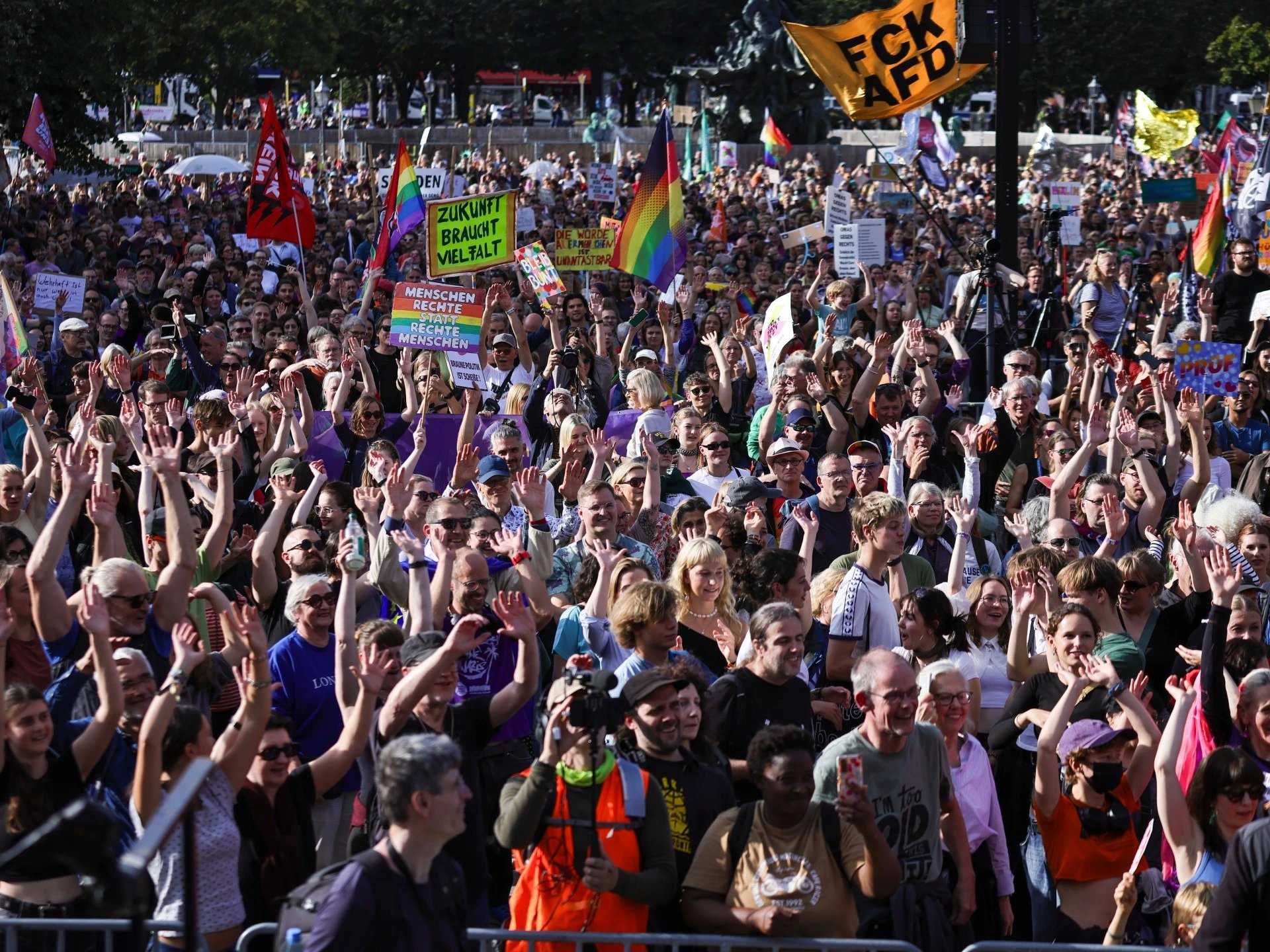
The far-right Alternative for Germany is winning a majority of the vote in Mecklenburg-Vorpommern after its victory in Saxony-Anhalt. Against this backdrop, thousands-strong protests took place in German cities, and Chancellor Friedrich Merz called his party's result a catastrophe.
Sources
· 8АдГ получает большинство голосов в Мекленбурге-Передней Померании и Саксонии-Анхальт
1AfD лидирует на выборах в Мекленбурге-Передней Померании с 37%, у ХДС Мерца 5,5%
2Победа ультраправой AfD в Саксонии-Анхальт создаёт долгосрочные риски для энергоперехода Германии
3Десятки тысяч вышли на улицы Германии с требованием запретить АдГ после победы на выборах
4В Магдебурге 3 000 человек вышли на прайд под лозунгом «Голосуй за любовь» перед выборами
5АдГ лидирует в опросах Германии, 84% недовольны правительством
6Туск назвал идиотами радующихся триумфу АдГ в Саксонии-Анхальт
7Канцлер Германии Мерц исключил коалицию с АдГ после победы в Саксонии-Анхальт
8Key points
- The AfD won almost 44% of the vote in the Saxony-Anhalt election and took 39 of 83 seats in the state parliament.
- According to exit polls, the AfD leads in Mecklenburg-Vorpommern with 37%, while the CDU received 5.5% and the SPD 35.5%.
- To enter the government in Magdeburg, the AfD needs the support of three deputies; the Sahra Wagenknecht Alliance expressed readiness to cooperate.
- Around 150,000 people in 20 German cities took to the streets demanding a ban on the AfD.
- Chancellor Merz called the CDU result in Mecklenburg-Vorpommern a catastrophe and ruled out a coalition with the AfD.
What happened
The Alternative for Germany (AfD) received the largest number of votes in the Mecklenburg-Vorpommern election, repeating its result in Saxony-Anhalt earlier this month. According to exit polls, in Mecklenburg-Vorpommern the AfD leads with about 37%, while Chancellor Friedrich Merz's CDU received 5.5% and the SPD 35.5%.
Why it matters
If the AfD forms a government in Saxony-Anhalt, it will become the first far-right party to lead a German state since 1945. The party is negotiating to form a government, and to enter the cabinet in Magdeburg it needs the support of just three deputies. The Sahra Wagenknecht Alliance expressed readiness to cooperate. Tens of thousands of people protested against the AfD victory: around 150,000 demonstrators in roughly 20 cities demanded a ban on the party. Chancellor Merz called the CDU result in Mecklenburg-Vorpommern a catastrophe and again ruled out a coalition with the AfD. The long-term consequences for Germany's energy transition could be significant, while the immediate impact will remain limited.
Context
At the federal level, the AfD led in the September ARD-Deutschlandtrend poll with 27% support, ahead of the CDU/CSU bloc with 21%; 84% of Germans are dissatisfied with the government's work. Around 3,000 people took part in a pride parade in Magdeburg before the election under the slogan 'Vote for love'. Polish Prime Minister Donald Tusk said that only 'idiots or traitors' could rejoice at the AfD triumph.
What's Next
Federal elections in Germany are scheduled for 2029; the AfD called the victory in Saxony-Anhalt a first step toward gaining power at the national level.
Related original articles
- 14h agoАдГ получает большинство голосов в Мекленбурге-Передней Померании и Саксонии-АнхальтExclusive.kz
- 4d agoAfD лидирует на выборах в Мекленбурге-Передней Померании с 37%, у ХДС Мерца 5,5%Arbat Media
- 6d agoПобеда ультраправой AfD в Саксонии-Анхальт создаёт долгосрочные риски для энергоперехода ГерманииClean Energy Wire
- Sep 13Десятки тысяч вышли на улицы Германии с требованием запретить АдГ после победы на выборахAl Jazeera English