
Iran announced new restrictions around the Strait of Hormuz
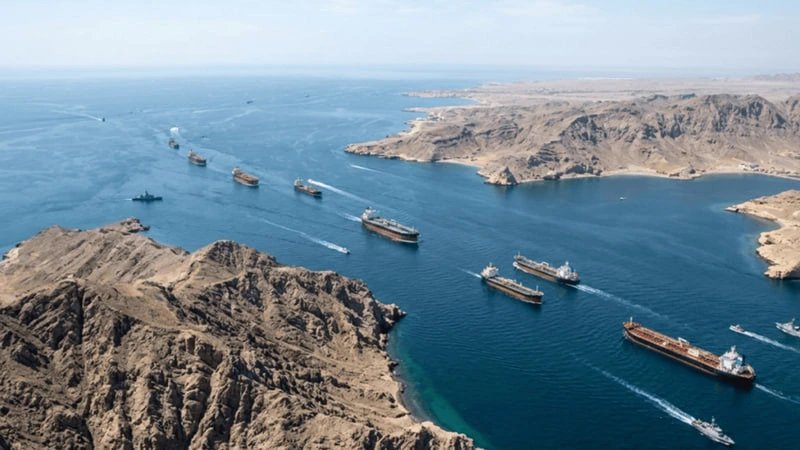
Iran announced the introduction of an exclusion zone around the Strait of Hormuz and reached agreements with Oman on a temporary transit corridor. A parliamentary committee had earlier approved the closure of the strait and mandatory fees for vessels. Tehran links the reopening of the strait to the fulfillment of its demands toward the United States.
Sources
· 9Иран объявил о создании запретной зоны вокруг Ормузского пролива
1Иран закрыл Ормузский пролив до выплаты транзитных тарифов и репараций
2Иран объявил о 7-мильном транзитном коридоре с Оманом в Ормузском проливе
3Иран объявил о соглашении с Оманом по доходам от Ормузского пролива, открытие зависит от США
4Комитет парламента Ирана одобрил сборы за проход иностранных судов через Ормузский пролив
5Иранский чиновник заявил: Ормузский пролив останется закрытым, пока угрозы Ирану не прекратятся
6Иран заявил, что суда США и Израиля не имеют права прохода через Ормузский пролив
7Oil prices to remain high for days with Strait of Hormuz in spotlight, analysts say
8How the Strait of Hormuz closure affects global oil supply
9Key points
- Iran announced the creation of an exclusion zone around the Strait of Hormuz, which merchant vessels are prohibited from entering under threat of being added to the sanctions list.
- On September 1, Iran's parliamentary committee approved closing the strait, requiring vessels to obtain insurance, secure bank guarantees, and pay transit tariffs.
- Iran and Oman agreed on a temporary joint corridor 7 miles wide, while the southern route is closed and the strait remains closed to shipping.
- The reopening of the strait is linked to the United States fulfilling its obligations and ending the naval threat.
- Amid the restrictions, oil rose to $119 per barrel, its highest level since 2022.
What happened
Secretary of Iran's Supreme National Security Council Mohsen Rezaei announced that Tehran will soon declare an exclusion zone around the Strait of Hormuz that will start from the blockade area declared by the U.S. Navy and extend into the Persian Gulf. According to him, any merchant vessel attempting to enter this zone will be added to the sanctions list. On September 1, the National Security and Foreign Policy Committee of Iran's parliament approved closing the Strait of Hormuz, making insurance, bank guarantees, and transit tariffs mandatory for all vessels. Earlier, Iran and Oman agreed to activate a joint transit corridor 7 miles wide, while the southern route was completely closed.
Iranian official Kazem Gharibabadi said the corridor with Oman is temporary and the strait remains closed to shipping until the United States fulfills its obligations. Brigadier General Hossein Muhibbi added that reopening depends on the United States returning to the June 17 memorandum and accepting Iran's conditions.
Why it matters
More than 20% of the world's oil passes through the Strait of Hormuz. Amid the restrictions, oil rose to $119 per barrel on Monday, its highest level since 2022.
Who's affected
The restrictions apply to all merchant vessels: according to Mohsen Rezaei, any vessel attempting to enter the exclusion zone will be added to the sanctions list. The passage is closed to U.S. and Israeli vessels, as well as to foreign-flagged ships carrying Israeli cargo, said parliamentary committee secretary Behnam Saidi. Foreign vessels allowed to pass will have to pay fees for maritime, environmental, fuel, insurance, and security services.
What to watch
In the coming days, Iran and Oman, according to Mohsen Rezaei, will sign an agreement on new shipping routes.
What's Next
Iran and Oman will sign an agreement on new shipping routes in the coming days.