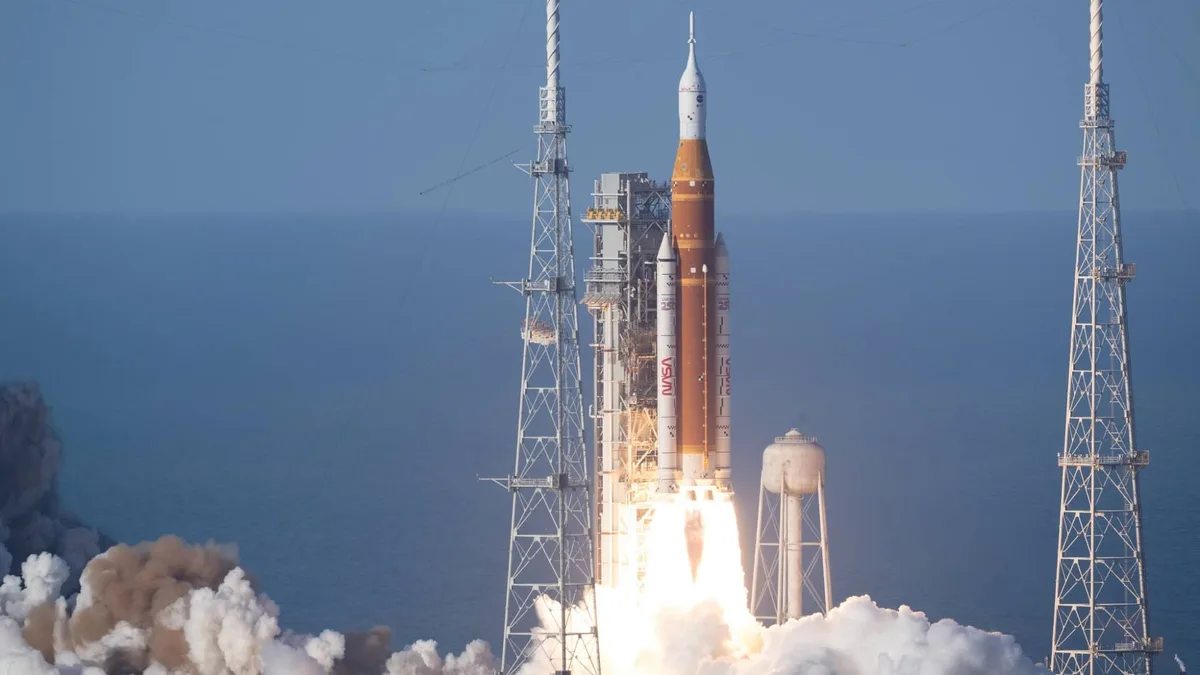
NASA coordinates Artemis II Moon fly-by amid scientific anticipation
This digest was compiled by AI from multiple sources — links to the originals are below.
NASA successfully coordinates the Artemis II Moon fly-by on April 10, 2026. The mission's scientific team monitored the event from NASA's control center. This occurs even as scientists anticipate new lunar data.
The Moon Fly-by
NASA conducted the Artemis II Moon fly-by on April 10, 2026, marking a significant milestone in lunar exploration. The mission involved a close approach to the Moon, with data collection as a primary objective. Scientists at NASA's control center in Houston closely monitored the spacecraft's trajectory and systems. The Artemis II mission is part of NASA's broader Artemis program, which aims to establish a sustainable human presence on the Moon by the end of the decade.
Scientific Team's Role
The scientific team at NASA's control center played a crucial role in the Artemis II mission. Alexandra Witze, a correspondent from Nature, reported from the nerve center, highlighting the team's efforts in data analysis and mission coordination. The team included experts from various fields, ensuring comprehensive data collection and analysis. This mission is expected to provide valuable insights into the Moon's surface and environment, contributing to future lunar exploration efforts.
New Distance Record Set
The Artemis II mission set a new human spaceflight distance record. The Orion spacecraft flew around the Moon, including its far side, and conducted scientific observations. The crew safely returned to Earth after the mission.
Artemis as Mars Proving Ground
The Artemis program aims to use the lunar surface as a testing ground for future human missions to Mars. This strategy involves developing sustainable living and working capabilities on the Moon before attempting longer-duration missions to the Red Planet.
What's Next
NASA plans to analyze the data collected during the Artemis II fly-by. It remains unclear how these findings will influence future lunar missions.
3 sources
NASA coordinates Artemis II Moon fly-by amid scientific anticipation