
Gold nuclei collisions reveal unexpected dip in quark-gluon plasma fluctuations
This digest was compiled by AI from multiple sources — links to the originals are below.
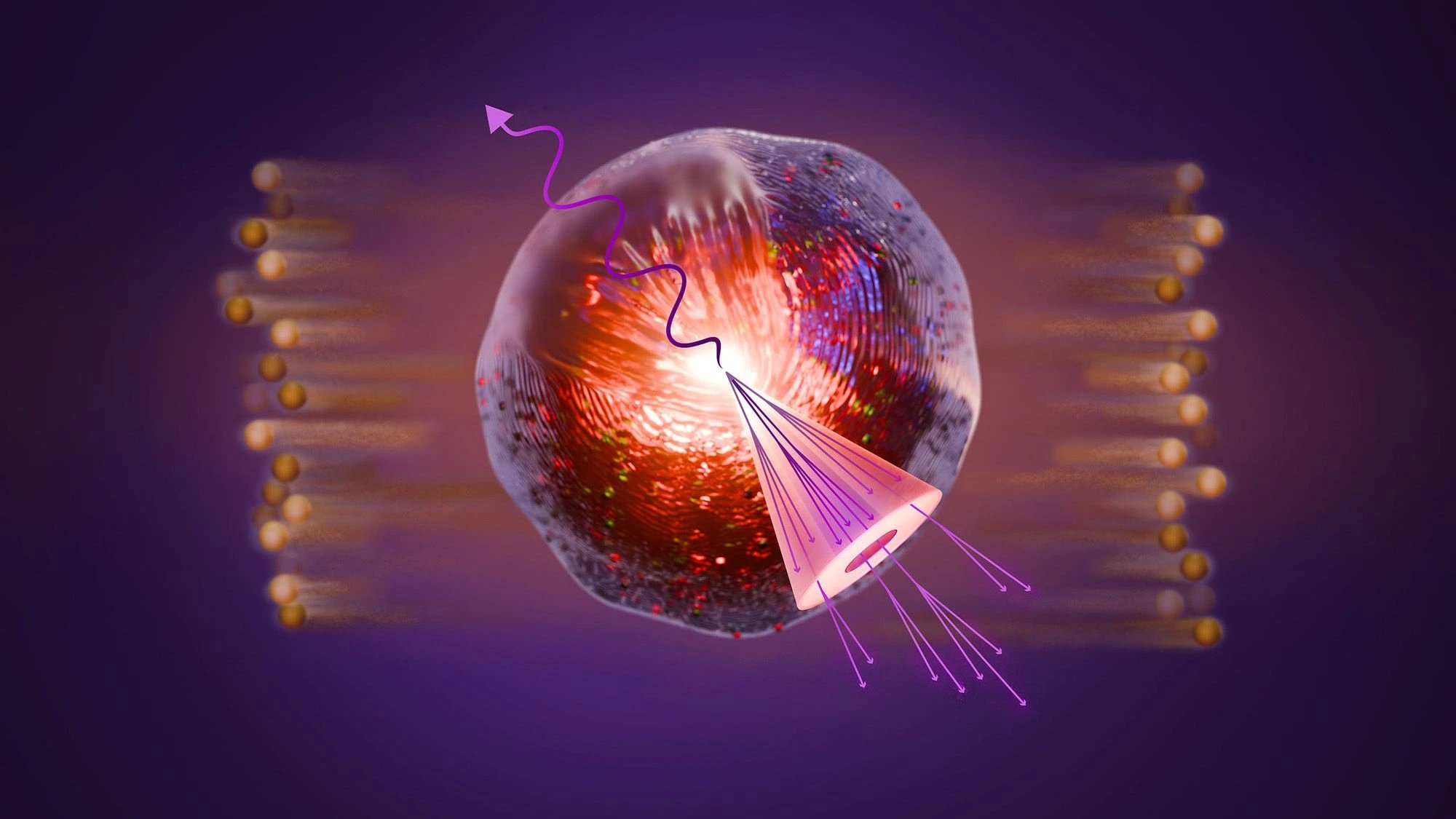
Physicists smashed gold nuclei at nearly light speed and found an unexpected dip in how particles are flung out sideways, a pattern that could signal a long-sought critical point in nuclear matter. The dip appeared as collision energy was adjusted, shrinking and then growing again. The finding may help explain how the early universe's quark-gluon soup cooled into protons and neutrons.
Key Facts
- Gold nuclei were smashed together at nearly the speed of light in a particle collider experiment.
- The size of side-to-side particle spray variations dipped, shrinking and then growing again, as collision energy was adjusted.
- The dip could be a sign of a long-sought 'critical point' where nuclear matter changes how it transforms from one form to another.
- The experiment recreates the quark-gluon plasma that filled the universe in the first few microseconds after the Big Bang.
Unexpected Fluctuation Pattern
In every collision, particles are flung out sideways, and how hard they are flung varies slightly from one collision to the next. Physicists expected the size of these variations to change smoothly as they adjusted the collision energy. Instead, the variations dipped, shrinking and then growing again.
Critical Point Hypothesis
This dip could be a sign of a long-sought 'critical point,' a special set of conditions at which nuclear matter changes the way it transforms from one form to another. If confirmed, that pattern could help reveal how the hot soup of quarks and gluons that filled the universe in the first few microseconds after the Big Bang cooled and condensed into the protons and neutrons that make up ordinary matter today.
1 source
Time · lag behind first